
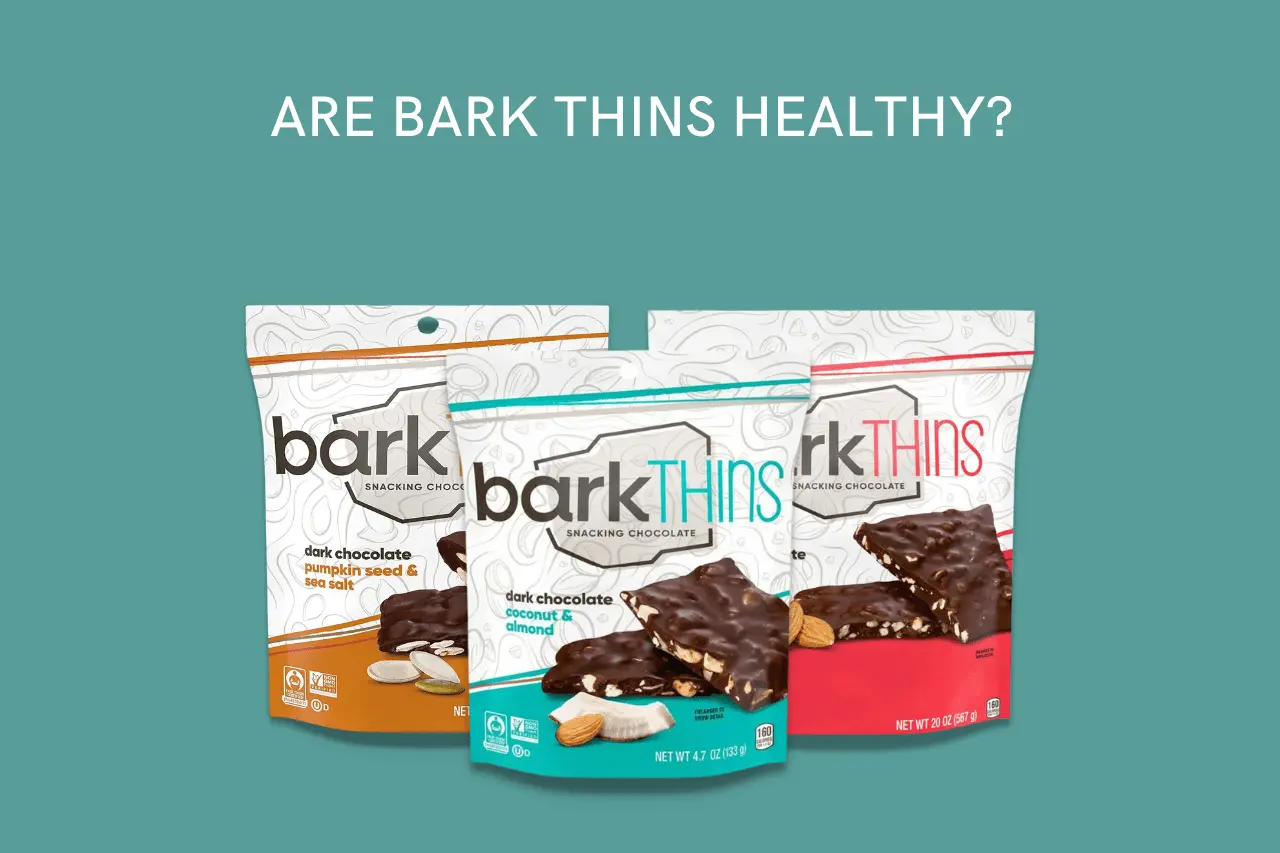
You’re at the checkout line, and a colorful display catches your eye: Bark Thins.
Dark chocolate. Thin and crispy. Topped with nuts, seeds, and fruit. The packaging whispers “indulgence without the guilt.”
You grab a bag, thinking it’s a smarter choice than a regular candy bar. But then the question hits you: Are Bark Thins actually healthy, or is this just clever marketing making you feel better about eating chocolate?
Let’s find out.
The Quick Verdict (For Those in a Hurry)
Bark Thins are a better-for-you chocolate snack, but they’re not health food.
They’re made with clean ingredients, are a good source of iron, low in sodium, and free from artificial additives. However, they’re high in sugar and not suitable for everyone (not gluten-free or vegan). Enjoy them as an occasional treat, not a daily snack.
Want the full breakdown? Keep reading.
What Are Bark Thins, Anyway?
Bark Thins launched in 2013 and are now owned by Hershey’s (under the Hersheyland brand).
These snacks are made from dark chocolate (55% cocoa) broken into thin, irregular pieces that resemble tree bark—hence the name.
They come in flavors like:
- Dark Chocolate Peanut & Sea Salt
- Dark Chocolate Pumpkin Seed & Sea Salt
- Dark Chocolate Blueberry & Quinoa
- Dark Chocolate Pretzel & Sea Salt
- Dark Chocolate Mint
- Dark Chocolate Almond & Sea Salt
- Dark Chocolate Coconut & Almond
The big selling points? Dark chocolate (the “healthy” chocolate), crunchy toppings like nuts and seeds, and a thinner profile that feels lighter than a traditional chocolate bar.
But does “dark chocolate” automatically mean healthy? Let’s dig in.
The Ingredients: Actually Pretty Clean
Here’s what goes into Bark Thins.
The base:
- Dark chocolate (55% cocoa) made with chocolate, sugar, cocoa butter, milk fat, soy lecithin, and vanilla
Other ingredients:
- Sea salt
- Sugar
- Seeds (pumpkin, quinoa, etc.)
- Dried fruits (blueberries, coconut, etc.)
- Nuts (peanuts, almonds)
- Rice syrup
- Vegetable oils (sunflower, soybean)
The good news:
The ingredient list is straightforward and easy to read. Plus:
- Non-GMO
- Fair Trade certified
- No artificial flavors, colors, or preservatives
That’s genuinely impressive for a chocolate snack owned by a major candy company.
The reality check:
These are still chocolate. The base ingredient is sugar-sweetened dark chocolate, and additional sugar is added for flavor. Don’t let the clean label fool you into thinking this is health food.
Bottom line on ingredients: Bark Thins are cleaner than most chocolate snacks, but they’re still candy.
Sugar: The Uncomfortable Truth
Here’s where things get real.
Bark Thins are high in sugar, containing 10-15g per serving (31g) depending on the flavor.
Nearly all of it is added sugar from multiple sources:
- Sugar in the dark chocolate
- Additional sugar in toppings
- Rice syrup
How much is that, really?
According to the American Heart Association:
- Men should limit added sugar to 36g per day
- Women should limit it to 25g per day
One serving of Bark Thins provides:
- 27-41% of the daily sugar limit for men
- 41-62% of the daily sugar limit for women
That’s nearly half your daily sugar allowance in a single serving. And let’s be honest—most people don’t stop at one serving.
Sugar breakdown by flavor:
| Bark Thins Flavor | Added Sugar (g) | Total Sugar (g) |
|---|---|---|
| Dark Chocolate Pumpkin Seed & Sea Salt | 10 | 10 |
| Dark Chocolate Peanut & Sea Salt | 11 | 11 |
| Dark Chocolate Pretzel & Sea Salt | 11 | 11 |
| Dark Chocolate Almond & Sea Salt | 11 | 11 |
| Dark Chocolate Coconut & Almond | 11 | 12 |
| Dark Chocolate Mint | 14 | 14 |
| Dark Chocolate Blueberry & Quinoa | 14 | 15 |
Per 31g serving
The high sugar content means Bark Thins should be consumed in moderation—not mindlessly snacked on while watching Netflix.
Protein and Fiber: Decent for Chocolate
Here’s some surprisingly good news.
Protein: 2-4g per serving
That’s not impressive compared to protein bars, but for a chocolate snack? It’s actually decent.
- Dark Chocolate Pumpkin Seed & Sea Salt (highest): 4g
- Most other flavors: 2-3g
For comparison, regular M&Ms, Oreos, and Brownie Brittle have less protein. So Bark Thins edge ahead in this category.
Fiber: 2-3g per serving
Again, not mind-blowing, but better than most chocolate snacks.
- Dark Chocolate Blueberry & Quinoa (highest): 3g
- Dark Chocolate Almond & Sea Salt: 3g
- Dark Chocolate Coconut & Almond: 3g
That’s 8-12% of your daily fiber needs—not bad for a treat.
Fiber helps with:
- Digestion
- Keeping you satisfied
- Blood sugar regulation (important when eating sugary snacks)
Bottom line: Bark Thins won’t fill you up like a meal, but they’re more substantial than regular chocolate candy.
Sodium: Impressively Low
Bark Thins are low in sodium, containing 0-100mg per serving depending on the flavor.
Dark Chocolate Mint has zero sodium, while Dark Chocolate Pretzel & Sea Salt has the most at 100mg (still very low).
If you’re watching sodium due to high blood pressure or heart health, Bark Thins are a safe choice.
For context, many snacks pack 150-300mg of sodium per serving. Bark Thins are genuinely low.
Saturated Fat: Here’s Where It Gets Interesting
Bark Thins are high in saturated fat, containing 5-7g per serving.
That’s about 50% of the American Heart Association’s daily limit of 13g.
Normally, that would be a red flag. But here’s the nuance:
Most of the saturated fat in Bark Thins comes from cocoa butter, which contains a specific type called stearic acid.
When you consume stearic acid, your liver converts it into oleic acid—a monounsaturated fat (the heart-healthy kind found in olive oil and avocados).
What does this mean?
The saturated fat in Bark Thins doesn’t pose the same health risk as the saturated fat in chips, cookies, or processed snacks. It’s metabolized differently and may even have cardiovascular benefits.
So while the saturated fat number looks high, it’s not as concerning as it would be in other foods.
Iron: A Genuine Surprise
Here’s an unexpected benefit: Bark Thins are a good source of iron.
Each serving provides 2.4-2.9mg of iron, which is:
- 29% of the daily requirement for men
- 18% of the daily requirement for women
Iron is essential for:
- Red blood cell production
- Oxygen transportation throughout the body
- Energy levels
This is one of the few genuinely impressive nutritional aspects of Bark Thins. Most chocolate snacks don’t provide meaningful amounts of iron.
Calories: Moderate, But Easy to Overeat
Bark Thins contain 140-160 calories per serving (31g).
That’s moderate—not too high, not too low.
But here’s the problem: The serving size is small (about 5-7 thin pieces), and it’s very easy to eat two or three servings without realizing it.
Before you know it, you’ve consumed 400+ calories and 30+ grams of sugar.
Portion control is key with Bark Thins.
Are Bark Thins Good for Weight Loss?
Not really.
They’re high in sugar, which can spike blood sugar and trigger cravings. Plus, they’re easy to overeat.
However, the calorie count is reasonable, and they do contain some protein and fiber. If you’re in a calorie deficit and can stick to one serving, they’re okay as an occasional treat.
Just don’t rely on them as a weight loss snack. You’d be better off with fruit, nuts, or Greek yogurt.
Dietary Restrictions: Who Can Eat These?
Gluten-Free: ⚠️ Mostly
Most flavors are gluten-free by ingredients, except Dark Chocolate Pretzel & Sea Salt (contains wheat). However, all Bark Thins are made on equipment that processes wheat, so there’s a cross-contamination risk.
Vegan: ❌ No
Bark Thins contain milk fat. They used to be vegan, but Hershey’s added milk fat to improve texture and appearance. Plus, they contain non-organic sugar, which may be processed using bone char (not vegan).
Keto: ❌ No
They’re high in net carbs (12-17g per serving) and contain sugar and vegetable oils—both prohibited on keto.
How Do Bark Thins Compare to Regular Chocolate?
Let’s see how they stack up against traditional chocolate snacks:
vs. Hershey’s Milk Chocolate Bar:
Bark Thins have more fiber, more iron, and less sugar per ounce. The dark chocolate base is also richer in antioxidants.
vs. M&Ms:
Bark Thins have more protein, more fiber, cleaner ingredients, and no artificial colors.
vs. Dark Chocolate Squares (Lindt, Ghirardelli):
Similar nutritionally, but Bark Thins add extra sugar through toppings and rice syrup. Plain dark chocolate is actually cleaner.
The verdict? Bark Thins are a step up from milk chocolate candy, but not necessarily better than high-quality dark chocolate squares.
The Bottom Line: Should You Buy Bark Thins?
Here’s my honest take.
Bark Thins are a better-for-you chocolate option—but they’re still chocolate candy, not health food.
Why they’re worth considering:
- Clean, Non-GMO, Fair Trade ingredients
- Good source of iron (2.4-2.9mg per serving)
- Low in sodium (0-100mg)
- No artificial additives
- More protein and fiber than regular chocolate candy
Why they’re NOT a health food:
- High in sugar (10-15g per serving = nearly half your daily limit)
- Easy to overeat (small serving size)
- Not gluten-free or vegan
- High in saturated fat (though from cocoa butter, which is less concerning)
My recommendation?
Enjoy Bark Thins as an occasional indulgence—not a daily snack.
If you’re craving chocolate and want something slightly better than a candy bar, Bark Thins are a solid choice. Just stick to one serving and savor it slowly.
Better alternatives if you want genuinely healthy:
- Plain dark chocolate (70%+ cocoa) with a handful of nuts
- Fresh fruit with a small piece of dark chocolate
- Greek yogurt with cacao nibs
At the end of the day, Bark Thins are chocolate snacks with a health-conscious twist. They’re cleaner than most candy, but don’t fool yourself into thinking they’re a superfood.
Enjoy them mindfully, and you’ll be fine.
Looking for more honest snack reviews? Check out: