
You’re standing in the cereal aisle with your kid tugging at your cart, begging for chocolate cereal.
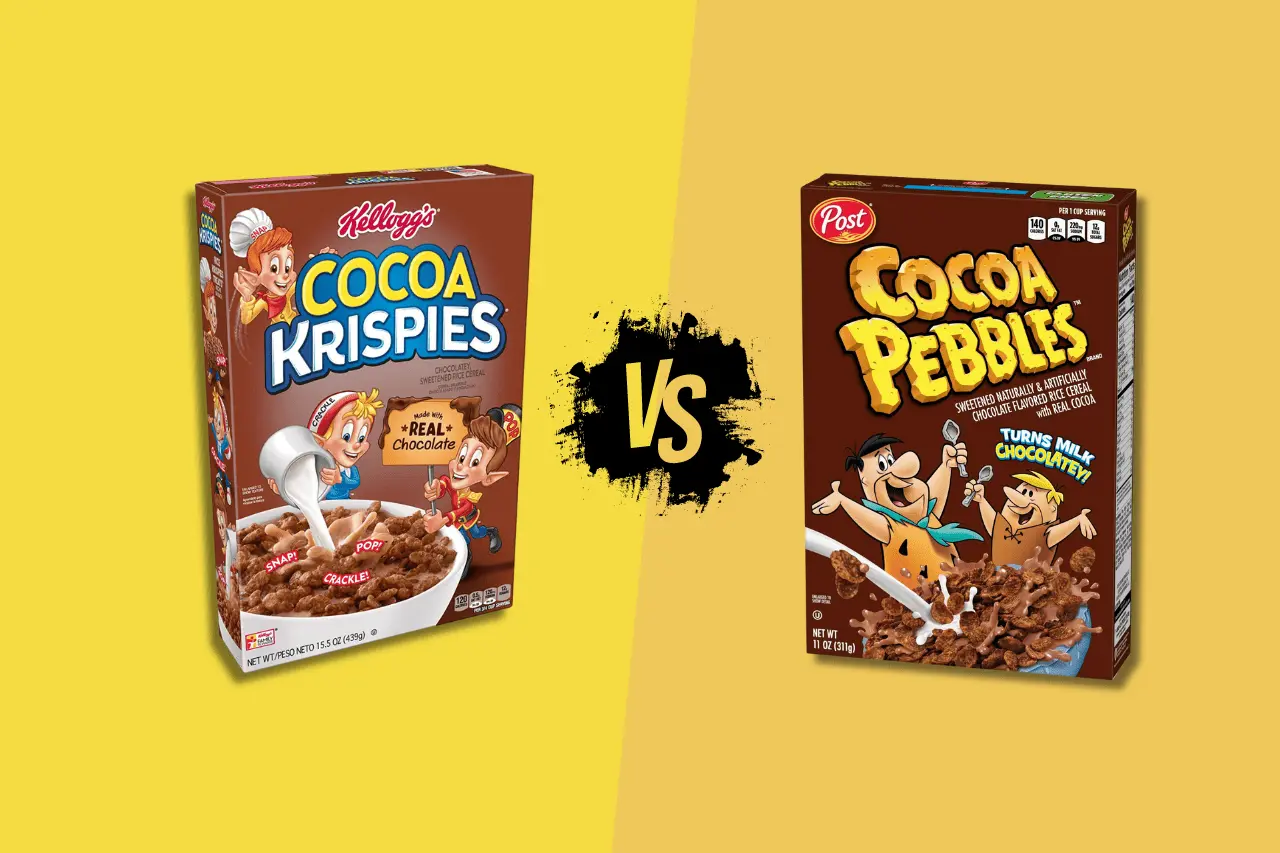
You scan the shelf and land on two nearly identical boxes: Cocoa Pebbles and Cocoa Krispies. Both promise chocolatey, crunchy rice. Both look like they could be twins separated at birth.
But which one is actually healthier?
Let’s be honest—neither of these is winning any nutritional awards. They’re chocolate cereals loaded with sugar. But if you’re going to buy one anyway (because let’s face it, sometimes you just need to pick your battles), you might as well choose the better option.
So let’s settle this once and for all: Cocoa Pebbles or Cocoa Krispies?
The Quick Verdict (For Those In a Hurry)
Cocoa Pebbles edges out Cocoa Krispies as the healthier choice.
Here’s why: Cocoa Pebbles have fewer ingredients, lower calories, no artificial colors, and a wider range of B vitamins. Cocoa Krispies fights back with lower sodium and added calcium and vitamin C, but overall, Pebbles takes the win.
Still want the full breakdown? Keep reading.
A Little Cereal History
Before we dive into the nutritional showdown, let’s talk origins.
Cocoa Pebbles debuted in 1971, made by Post Consumer Brands. They’re famous for their Flintstones branding (remember Fred and Barney?).
Cocoa Krispies hit shelves way back in 1958, made by Kellogg’s. They’re the chocolate cousin of the original Rice Krispies (minus the Snap, Crackle, and Pop mascots).
Both cereals use crunchy rice as their base and coat it in chocolate flavor. They even look nearly identical in the bowl. But when you compare ingredients and nutrition side-by-side, some interesting differences emerge.
Ingredients Face-Off: What’s Inside Each Box?
Let’s start with what you’re actually eating.
Cocoa Pebbles Ingredients
Base ingredients:
- Rice (for that crispy crunch)
- Sugar (second ingredient—yep, it’s a lot)
Other ingredients:
- Canola oil
- Cocoa (the chocolate flavor and color)
- Salt
- Caramel color
- Natural and artificial flavor
- BHT (preservative to prevent rancidity)
Fortified vitamins and minerals:
Iron, zinc, vitamins A, B1, B2, B3, B6, B9, B12, and D3
Cocoa Krispies Ingredients
Base ingredients:
- Rice (same as Pebbles)
- Sugar (also the second ingredient)
Other ingredients:
- Cocoa
- Maltodextrin
- Malt flavor
- Palm kernel oil
- Salt
- Natural and artificial flavor
- Artificial colors (Red 40, Yellow 6, Blue 1)
- BHT
Fortified vitamins and minerals:
Iron, zinc, calcium, vitamins A, C, E, B9, B12, and D3
The Winner: Cocoa Pebbles
Why?
Cocoa Pebbles skip the artificial colors entirely, while Cocoa Krispies pack in Red 40, Yellow 6, and Blue 1. If you’re trying to avoid artificial dyes (especially for kids), Pebbles are the clear choice.
Also, Cocoa Pebbles use canola oil, which is generally considered healthier than the palm kernel oil in Cocoa Krispies.
Cocoa Krispies also contain maltodextrin—a processed additive that can spike blood sugar quickly. Not a dealbreaker, but worth noting.
Bottom line: Cocoa Pebbles have a slightly cleaner, less processed ingredient list.
Note: Neither cereal is gluten-free or vegan. Both contain vitamin D3, which is typically sourced from sheep’s wool (lanolin), making them non-vegan.
Nutritional Showdown: The Numbers Don’t Lie
Now let’s get into the nitty-gritty: calories, sugar, protein, fiber, and sodium.
Calories
Cocoa Pebbles: 140 calories per 1 cup (36g)
Cocoa Krispies: 160 calories per 1 cup (42g)
Cocoa Pebbles save you 20 calories per serving. Not a massive difference, but it adds up if your kid eats this cereal daily.
The extra calories in Cocoa Krispies come from slightly more sugar and carbs.
Winner: Cocoa Pebbles
Sugar: The Elephant in the Bowl
Let’s address the obvious: both cereals are sugar bombs.
Cocoa Pebbles: 12g of added sugar per serving
Cocoa Krispies: 13g of added sugar per serving
To put this in perspective:
- The American Heart Association recommends women limit added sugar to 25g per day and men to 36g per day.
- For kids, the limit is even lower—around 24g per day for ages 2-18.
One serving of either cereal takes up nearly half of a child’s daily sugar limit. And that’s before you add milk.
Also worth noting: Cocoa Pebbles makes a marshmallow flavor with a whopping 17g of sugar per serving. Avoid that one if you can.
Winner: Cocoa Pebbles (barely—1g less sugar isn’t much, but hey, we’ll take it)
Protein: A Tie
Both cereals contain 2g of protein per serving.
That’s pretty low, even for cereal. The protein comes mainly from rice, which isn’t a great protein source to begin with.
The good news? Most people eat cereal with milk, which adds 8-10g of protein per cup. So the total protein content improves significantly when milk is factored in.
Winner: Tie
Fiber: Both Fail Here
Fiber is crucial for digestion, blood sugar regulation, and keeping kids full until lunch.
Unfortunately, both cereals fall flat.
Cocoa Pebbles: Less than 1g of fiber per serving
Cocoa Krispies: 0g of fiber per serving
Cocoa Pebbles technically wins by default (at least it has some fiber), but let’s be real—both are terrible sources.
For reference, kids need around 25g of fiber per day. These cereals barely make a dent.
Winner: Cocoa Pebbles (by a hair)
Sodium: Cocoa Krispies Strikes Back
Here’s where Cocoa Krispies finally pulls ahead.
Cocoa Pebbles: 220mg of sodium per serving (14% of the daily limit)
Cocoa Krispies: 125mg of sodium per serving (8% of the daily limit)
That’s a significant difference—nearly 100mg less sodium in Cocoa Krispies.
If you’re watching sodium intake (or your child has high blood pressure), Cocoa Krispies are the better pick here.
Winner: Cocoa Krispies
Vitamins and Minerals: Fortification to the Rescue
Both cereals are fortified with vitamins and minerals to make up for their lack of natural nutrition. Here’s how they stack up:
| Vitamins & Minerals | Cocoa Pebbles (% DV) | Cocoa Krispies (% DV) |
|---|---|---|
| Calcium | N/A | 15% |
| Iron | 15% | 25% |
| Zinc | 15% | 30% |
| Vitamin A | 50% | 30% |
| Vitamin C | N/A | 20% |
| Vitamin B1 (Thiamin) | 30% | N/A |
| Vitamin B2 (Riboflavin) | 40% | N/A |
| Vitamin B3 (Niacin) | 30% | N/A |
| Vitamin B6 (Pyridoxine) | 25% | N/A |
| Vitamin B9 (Folate) | 50% | 15% |
| Vitamin B12 (Cyanocobalamin) | 80% | 45% |
| Vitamin D3 | 10% | 10% |
Per serving
The Breakdown:
Cocoa Pebbles wins on:
- B vitamins (packed with B1, B2, B3, B6, B9, B12)—great for energy and brain function
- Vitamin A (50% vs. 30%)
Cocoa Krispies wins on:
- Calcium (15% vs. none)—important for bone health
- Iron and Zinc (higher amounts)
- Vitamin C (20% vs. none)—immune support
- Vitamin E (not shown, but present in Krispies)
If you’re prioritizing B vitamins and vitamin A, go with Pebbles. If calcium and vitamin C matter more, Cocoa Krispies edges ahead.
But let’s be real: fortified vitamins are better than nothing, but they’re not a substitute for actual whole foods.
The Final Verdict: Cocoa Pebbles Wins
After comparing every angle, Cocoa Pebbles is the healthier choice—but only slightly.
Why Cocoa Pebbles wins:
- Fewer, simpler ingredients
- No artificial colors
- Lower in calories
- Slightly less sugar
- Wide range of B vitamins
Where Cocoa Krispies fights back:
- Lower sodium
- Contains calcium and vitamin C
But overall, Cocoa Pebbles edges out Cocoa Krispies as the better option.
Real Talk: Should You Buy Either?
Let’s not sugarcoat it (pun intended).
Neither Cocoa Pebbles nor Cocoa Krispies is a “healthy” breakfast. They’re both highly processed, sugar-loaded cereals with minimal fiber and protein.
But if your kid is going to eat chocolate cereal anyway, Cocoa Pebbles is the smarter pick.
My recommendations:
- Stick to one serving (measure it out—kids pour way more than 1 cup)
- Use unsweetened almond or oat milk to avoid extra sugar
- Pair with fruit or nuts to add fiber and protein
- Don’t make it an everyday breakfast—rotate with oatmeal, eggs, or whole-grain toast
At the end of the day, both cereals are treats, not nutrition powerhouses. But if you’re choosing between the two, grab Cocoa Pebbles and call it a win.
Looking for more cereal comparisons? Check out: