
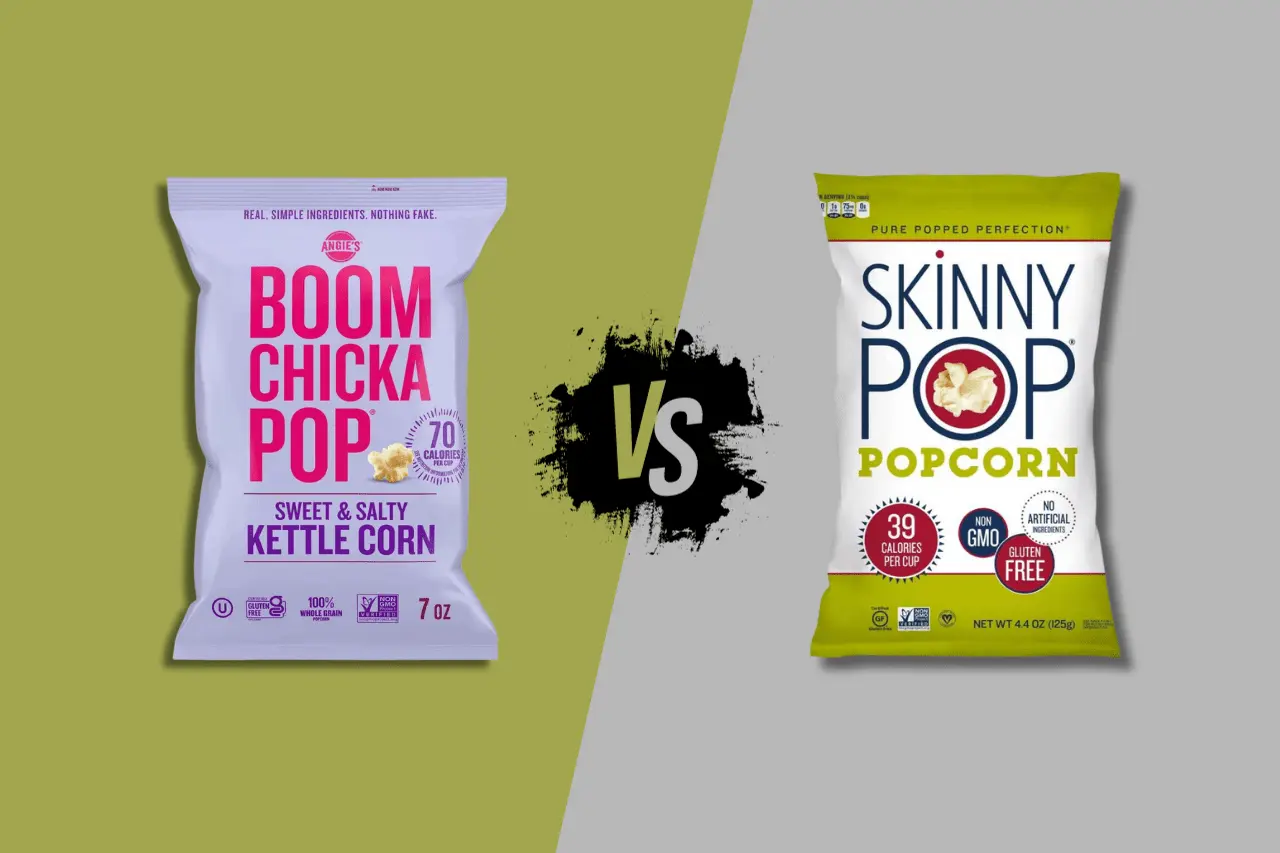
You’re standing in the snack aisle, hand hovering between two bags of popcorn.
Boom Chicka Pop on the left. Skinny Pop on the right.
Both have that clean, minimalist packaging screaming “I’m healthy!” Both promise whole grains and simple ingredients. Both cost way more than that generic microwave popcorn three shelves down.
So which one do you grab?
If you’ve stood paralyzed in this exact spot, you’re not alone. These two brands have basically cornered the “better-for-you popcorn” market, and they’re frustratingly similar at first glance.
But there ARE differences. And those differences matter if you’re trying to snack smarter.
Let me break down which bag deserves a spot in your shopping cart.
The Verdict: Skinny Pop Wins (But It’s Close)
Skinny Pop is the healthier choice between these two brands.
It has more consistent protein and fiber across flavors, lower saturated fat and sodium, and limits added sugar to just two flavors. Boom Chicka Pop, while still a solid choice, sneaks cane sugar into most of its lineup and has higher sodium in several varieties.
But before Boom Chicka Pop fans riot, let me be clear: we’re comparing two genuinely good popcorn brands here. This isn’t a battle between health food and junk food. It’s more like choosing between an A- and a B+.
The real losers? Those artificial butter-flavored microwave bags loaded with chemicals you can’t pronounce.
Now let’s dig into why Skinny Pop edges ahead.
Why These Brands Look Like Twins
First, let’s address the obvious: Boom Chicka Pop and Skinny Pop feel like the same brand wearing different outfits.
Both emerged during the “clean eating” boom of the 2010s. Both target health-conscious snackers who want something crunchy without the guilt. And both uses minimalist packaging with ingredient lists you can actually read.
Both are also significantly more expensive than regular popcorn. You’re paying premium prices for that “better-for-you” halo.
So it makes sense you’re confused. The brands have positioned themselves almost identically. But once you look past the marketing, the nutrition tells a different story.
Ingredients Showdown: What’s Actually in the Bag?
Let’s start with what you’re eating.
Boom Chicka Pop Ingredients
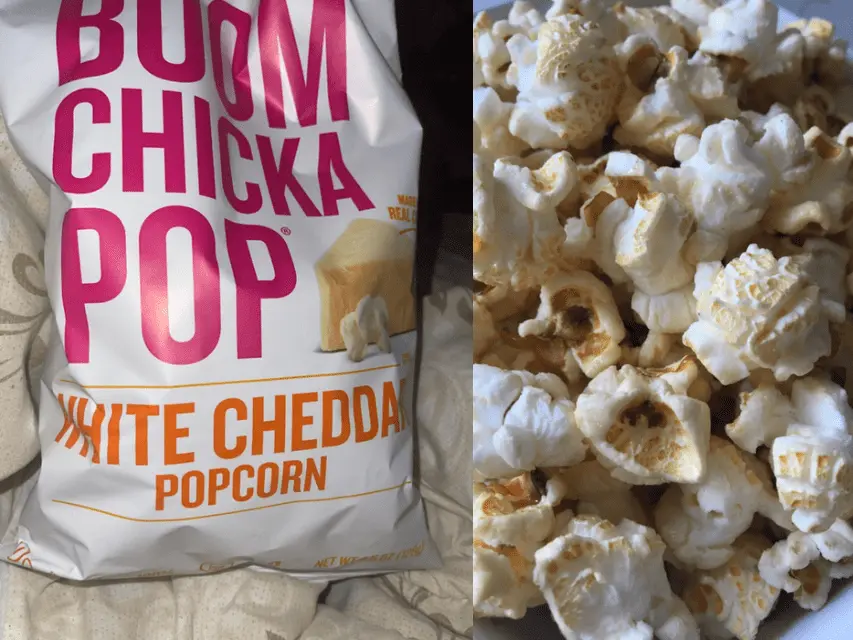
Boom Chicka Pop comes in flavors like Sea Salt, Sweet & Salty, White Cheddar, Real Butter, Light Kettle Corn, Dark Chocolate, Cheddar Cheese, and seasonal varieties.
Core ingredients: Popcorn (whole grain corn), sunflower oil, cane sugar, and sea salt.
Depending on flavor, you’ll also find lecithin, palm oil, natural flavors, butter, and cheddar cheese.
The good: No artificial flavors, colors, or preservatives. Clean ingredient deck overall.
The catch: Cane sugar appears in most flavors, not just the sweet ones. Even some savory varieties sneak it in.
Skinny Pop Ingredients
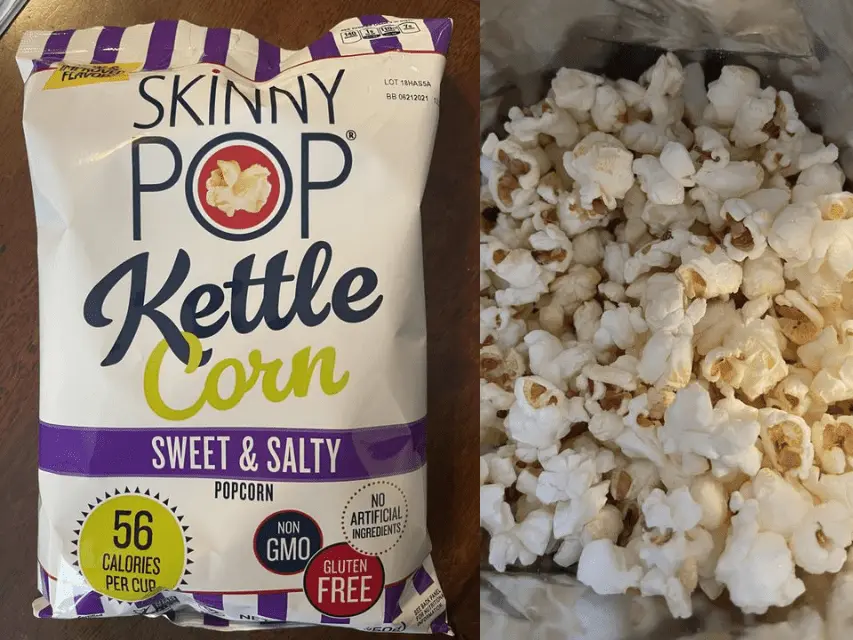
Skinny Pop offers Original, Aged White Cheddar, White Cheddar (dairy-free), Sea Salt & Pepper, Real Butter, Twist of Lime, Sweet and Salty Kettle, and Sweet Vanilla Kettle.
Core ingredients: Popcorn, sunflower oil, and sea salt/salt.
Depending on flavor, you might see rice flour, cheddar cheese, sugar, and natural flavors.
The good: Same clean approach – no artificial junk.
The difference: Sugar only appears in two dessert-style flavors (Sweet & Salty Kettle and Sweet Vanilla Kettle). The savory flavors stay sugar-free.
Ingredients Winner: Skinny Pop (Slightly)
Both brands keep it simple and avoid the chemical cocktail you’d find in cheaper popcorn.
But Skinny Pop gets the edge because it reserves added sugar for obviously sweet flavors. Boom Chicka Pop adds cane sugar more liberally, even in varieties where you wouldn’t expect it.
If you’re actively trying to reduce added sugar (which most of us should), Skinny Pop makes it easier by keeping the savory flavors actually savory.
Nutrition Face-Off: The Numbers That Actually Matter
Let’s compare these brands across the metrics that determine whether your “healthy snack” is actually healthy.
Calories: Pretty Even
Boom Chicka Pop: 120-170 per serving
Skinny Pop: 140-150 per serving
Skinny Pop offers more consistency – most flavors hover around 140-150 calories per serving. You know what you’re getting.
Boom Chicka Pop has more range. Some flavors clock in at 120 calories (great!), while others hit 170 (still reasonable for a snack, but higher).
Winner: Tie. Both are solid low-calorie snacking options.
Sugar: Major Difference Here
Boom Chicka Pop: 5-13g per serving
Skinny Pop: 1-8g per serving
This is where things get interesting.
Boom Chicka Pop packs 5-13g of sugar depending on flavor. Only two flavors – Sea Salt and Real Butter – are completely sugar-free. Everything else has cane sugar added.
Skinny Pop? Only two flavors contain added sugar: Sweet & Salty Kettle and Sweet Vanilla Kettle (7-8g each). All other flavors are either sugar-free or contain minimal natural sugar.
If you’re watching sugar intake – and honestly, we all should be – this matters.
Regularly choosing the 13g sugar Boom Chicka Pop flavor instead of the 1g Skinny Pop option adds up fast. That’s an extra 12g of added sugar you didn’t need.
Winner: Skinny Pop, decisively.
Protein: Skinny Pop Stays Consistent
Boom Chicka Pop: 1-3g per serving
Skinny Pop: 2-3g per serving
Neither brand is a protein powerhouse (it’s popcorn, not chicken breast), but there’s a subtle difference.
Boom Chicka Pop ranges from 1-3g, meaning some flavors are disappointingly low. Skinny Pop consistently delivers 2-3g across all varieties.
Popcorn will never be your main protein source, but when you’re choosing a snack, every gram helps with satiety.
Winner: Skinny Pop (slight edge).
Fiber: Another Small Win for Skinny Pop
Boom Chicka Pop: 1-3g per serving
Skinny Pop: 2-3g per serving
Same story as protein. Boom Chicka Pop fluctuates (1-3g), while Skinny Pop consistently delivers 2-3g.
Fiber is crucial for keeping you full and supporting digestive health. The difference between 1g and 3g might seem small, but it’s literally triple the fiber.
Winner: Skinny Pop (consistency matters).
Fat: Skinny Pop Wins on Saturated Fat
Boom Chicka Pop: 4-11g total fat (0.5-4g saturated)
Skinny Pop: 7-10g total fat (0.5-1.5g saturated)
Total fat is similar between brands, and that’s fine – both use sunflower oil, which provides healthier unsaturated fats.
But look at saturated fat, and Skinny Pop pulls ahead.
Skinny Pop caps saturated fat at 0.5-1.5g per serving. Boom Chicka Pop goes up to 4g in some flavors – nearly three times higher.
Saturated fat isn’t the villain it was once thought to be, but keeping it moderate is still smart for heart health.
Winner: Skinny Pop.
Carbohydrates: Quality Over Quantity
Boom Chicka Pop: 15-22g per serving
Skinny Pop: 14-18g per serving
Boom Chicka Pop runs slightly higher in carbs, largely because many flavors contain added cane sugar.
Skinny Pop keeps carbs lower and cleaner by limiting added sugars to just two dessert-style flavors.
Remember: not all carbs are created equal. Carbs from whole grain corn = good. Carbs from added sugar = less good.
Winner: Skinny Pop.
Sodium: Skinny Pop Is the Low-Salt Champion
Boom Chicka Pop: 90-310mg per serving
Skinny Pop: 20-240mg per serving
If you’re watching sodium (and if you eat any processed food, you probably should), Skinny Pop wins handily.
Boom Chicka Pop hits 310mg in some flavors – that’s 13% of your daily sodium limit in one snack. Skinny Pop maxes out at 240mg, and some flavors are as low as 20mg.
Most Americans already consume too much sodium. Choosing the lower-sodium popcorn is an easy win.
Winner: Skinny Pop.
Flavor Variety: Who Has More Options?
Boom Chicka Pop flavors:
- Sea Salt
- Sweet & Salty
- White Cheddar
- Real Butter
- Light Kettle Corn
- Dark Chocolate
- Cheddar Cheese
- Caramel & Cheddar
- Seasonal varieties
Skinny Pop flavors:
- Original
- Aged White Cheddar
- White Cheddar (dairy-free)
- Sea Salt & Pepper
- Real Butter
- Twist of Lime
- Sweet and Salty Kettle
- Sweet Vanilla Kettle
Boom Chicka Pop edges ahead with more adventurous options like Dark Chocolate and Caramel & Cheddar. If you like variety and fun flavors, Boom Chicka Pop delivers.
Skinny Pop keeps it simpler but includes unique touches like Twist of Lime and a dairy-free white cheddar option for people avoiding dairy.
Winner: Depends on your style. Boom Chicka Pop for adventurous snackers, Skinny Pop for minimalists.
Price and Value: Neither Is Cheap
Let’s be real: both brands are premium-priced popcorn.
You’ll typically pay $3.50-$5.00 for a standard bag, depending on size and where you shop. That’s significantly more than generic microwave popcorn or store brands.
Price per ounce is roughly similar between the two, so cost alone won’t determine your choice.
The question is: Are these brands worth the premium over regular popcorn?
If you value clean ingredients, no artificial junk, and better-quality oils (sunflower vs mystery “butter flavor”), then yes. You’re paying for real food ingredients and transparency.
If you’re just looking for something crunchy and salty, you can definitely find cheaper options.
Taste and Texture: The Real-World Test
Nutrition is great, but let’s be honest – if it tastes like cardboard, you won’t eat it.
Boom Chicka Pop tends to be slightly sweeter across the board (thanks to that cane sugar), with a lighter, airier crunch. The flavor coatings are more pronounced.
Skinny Pop has a more natural, corn-forward taste with a denser, crunchier texture. Less sweet, more savory, even in the plain varieties.
Which is “better” is purely personal preference. Some people love Boom Chicka Pop’s flavor-forward approach. Others prefer Skinny Pop’s cleaner, less processed taste.
My take: If you want popcorn that tastes more indulgent and dessert-like, Boom Chicka Pop wins. If you want popcorn that tastes like actual popcorn (just elevated), Skinny Pop wins.
When to Choose Boom Chicka Pop
Choose Boom Chicka Pop when:
- You want more adventurous flavors (Dark Chocolate, Caramel & Cheddar)
- You’re treating popcorn as dessert, not a savory snack
- You prefer a lighter, airier texture
- You’re not actively limiting added sugar
- You just like the taste better (valid reason!)
When to Choose Skinny Pop
Choose Skinny Pop when:
- You’re watching sugar intake
- You need a lower-sodium option
- You want more consistent protein and fiber
- You prefer a denser, crunchier texture
- You like popcorn that tastes like corn, not candy
How Do These Compare to Regular Microwave Popcorn?
Both Boom Chicka Pop and Skinny Pop absolutely destroy traditional microwave popcorn nutritionally.
Regular microwave popcorn is loaded with artificial butter flavoring, excessive sodium, questionable oils, and ingredients you need a chemistry degree to pronounce.
If you’re choosing between these premium brands and generic microwave bags, always choose Boom Chicka Pop or Skinny Pop. The cleaner ingredients alone justify the price difference.
But if you’re comparing to plain air-popped popcorn you make at home? That’s still the healthiest option – zero added ingredients, total control over oil and salt.
These brands are for people who want convenience without completely sacrificing nutrition.
The Final Verdict: Skinny Pop Takes the Crown
After comparing ingredients, nutrition, flavor variety, and real-world use cases, Skinny Pop is the healthier choice.
Here’s why Skinny Pop wins:
- More consistent protein and fiber across all flavors
- Lower saturated fat
- Significantly lower and more controlled sugar content
- Lower sodium across the board
- Cleaner carb quality (less added sugar)
But let’s keep perspective: Boom Chicka Pop is still a solid choice. It’s leagues better than 90% of the processed snacks on shelves. If you genuinely prefer the taste or want the flavor variety, buy it guilt-free.
The real winner? You – because you’re choosing real-ingredient popcorn instead of chemical-laden junk.
Just remember: even “healthy” popcorn is still a snack. Watch your portions (those bags are deceptively easy to demolish), and don’t convince yourself that eating the whole bag is fine because it’s “better-for-you.”
Your future self will thank you.
Found this helpful? Check out these other snack showdowns: