
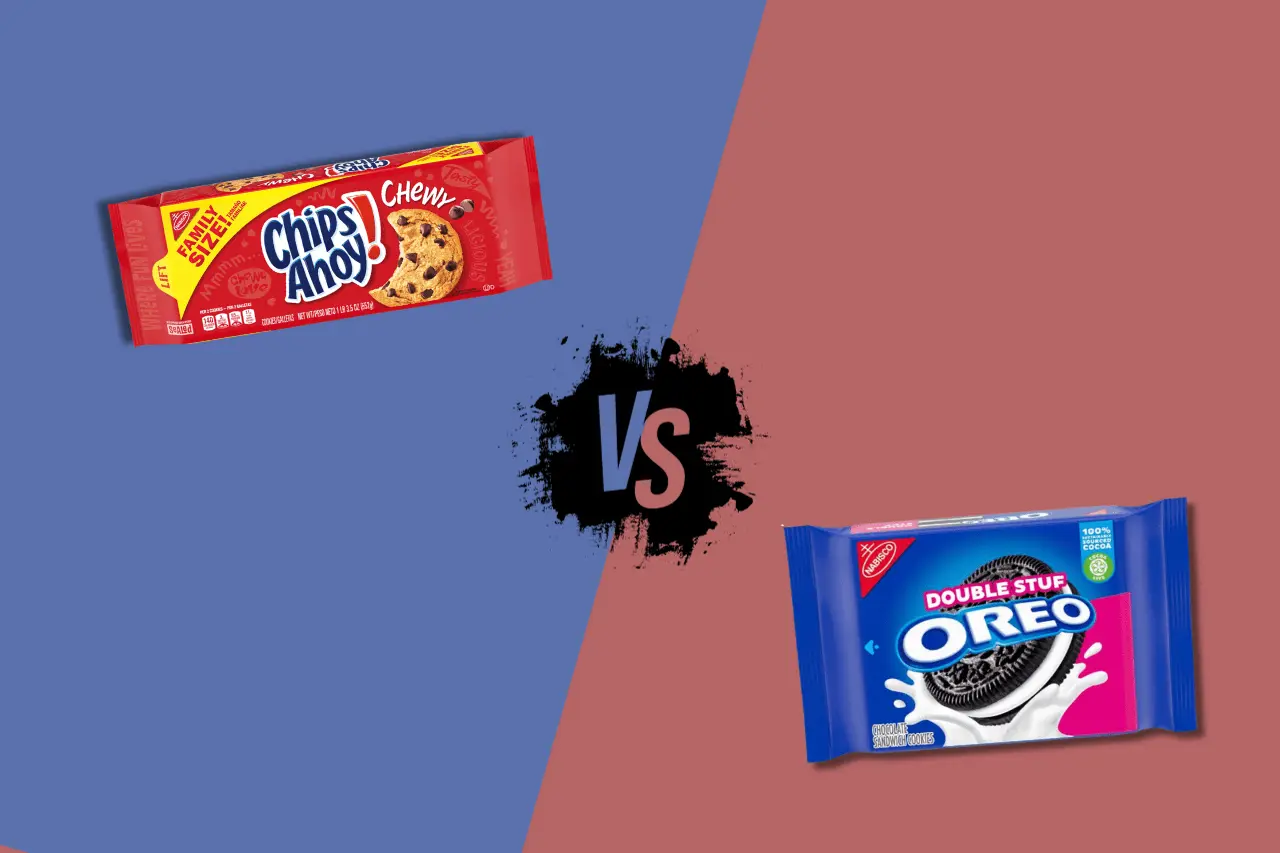
You’re standing in the cookie aisle, staring at two blue packages that have defined American childhoods for decades. On your left: Chips Ahoy, the classic chocolate chip cookie that’s been satisfying cravings since 1963. On your right: Oreo, the twist-lick-dunk legend that’s been around since 1912.
You know neither is exactly a health food. But you’re buying cookies anyway (we all deserve treats!), and you’re trying to make the “smarter” choice. The one that won’t completely derail your diet. The one you can feel slightly less guilty about demolishing while watching Netflix.
So which is it? Team Chips Ahoy or Team Oreo?
I had the same question, so I did what any rational person would do: I bought both, analyzed the nutrition labels, compared ingredients across multiple flavors, and spent way too much time researching cookies.
Here’s what I discovered – and spoiler alert: the answer might disappoint you, but at least you’ll know the truth.
The Bottom Line Up Front (For the Impatient Cookie Lovers)
Neither Chips Ahoy nor Oreo is healthier. Both are made with refined flour, loaded with added sugar (8-17g per serving), contain high fructose corn syrup, offer virtually no protein or fiber, and include artificial flavors. Some varieties even have artificial colors.
They’re equally unhealthy in slightly different ways. It’s like asking whether a Snickers or a Milky Way is healthier – you’re splitting hairs on junk food.
BUT – and this is important – if you’re going to eat cookies anyway (and let’s be real, you are), there are some differences worth knowing about.
Let me break down exactly how these iconic cookies compare.
First, Let’s Address the Elephant in the Room
Full disclosure: I’m about to spend 2,000 words comparing two cookies that are both objectively unhealthy.
This isn’t a comparison of broccoli versus spinach. This is a comparison of sugar delivery systems that happen to taste amazing and trigger powerful childhood nostalgia.
When I talk about which is “healthier,” I mean which one has slightly fewer problematic ingredients. Which one will spike your blood sugar a little less. Which one contains marginally less high fructose corn syrup.
We’re looking for the lesser of two evils here.
Now that we’ve established realistic expectations, let’s dive in.
The Nostalgia Factor (Why This Comparison Actually Matters)
Before we get into nutrition, let’s acknowledge why people care about this debate:
Chips Ahoy represents:
- Classic American chocolate chip cookie
- Chewy vs crunchy debates
- “Just like homemade” (spoiler: not really)
- The satisfying chocolate chip-to-cookie ratio
- Lunch box staple for millennials
Oreo represents:
- The twist, lick, dunk ritual
- White cream filling obsession
- Dunking in milk as a sacred act
- Limited edition flavor madness
- Global icon status (sold in 100+ countries)
Both cookies have massive brand loyalty. People are passionate about their preference. So when you’re trying to justify your cookie choice with health claims, I get it.
Let’s see if the nutrition supports any bragging rights.
Chips Ahoy vs Oreo: The Ingredient Showdown
I analyzed the ingredient lists for both classic varieties and multiple flavors. Here’s what I found:
Chips Ahoy Ingredients (Original)
Top 3 ingredients:
- Unbleached enriched flour (wheat flour, niacin, reduced iron, thiamine, riboflavin, folic acid)
- Sugar
- Vegetable oils (soybean and/or canola)
Other ingredients include:
- Palm oil
- Cocoa (processed with alkali)
- High fructose corn syrup
- Salt
- Baking soda
- Soy lecithin
- Natural and artificial flavor
- Milk (in some varieties)
Artificial colors in certain flavors:
- Candy Blasts: Red 40, Yellow 5, Blue 1
- Red Velvet: Red 40, Blue 2
- Confetti Cake: Red 40, Yellow 5, Blue 1, Red 3
Oreo Ingredients (Original)
Top 3 ingredients:
- Sugar (listed FIRST – that tells you something)
- Unbleached enriched flour
- Palm and/or canola oil
Other ingredients include:
- Cocoa (processed with alkali)
- High fructose corn syrup
- Baking soda
- Cornstarch
- Salt
- Soy lecithin
- Artificial flavor
- Chocolate
Artificial colors in certain flavors:
- Birthday Cake: Red 40, Yellow 5, Blue 1
- Mint: Blue 1
- Toffee Crunch: Red 40
- Carrot Cake: Red 40, Yellow 5
The Ingredient Verdict
Key differences I noticed:
Oreo lists sugar FIRST. This means there’s more sugar by weight than flour. Chips Ahoy at least lists flour first, though sugar is a close second.
Both contain high fructose corn syrup. This is the controversial sweetener linked to metabolic issues, obesity, and fatty liver disease in research studies. Neither cookie gets points here.
Both use refined flour. “Enriched” flour means they stripped away the nutritious parts (bran, germ) and added back synthetic vitamins. You’re getting empty carbs, not whole grains.
Both contain artificial flavors. The “natural and artificial flavor” on Chips Ahoy and “artificial flavor” on Oreo are vague umbrella terms that could include dozens of chemical compounds.
Multiple flavors contain artificial colors. These synthetic dyes (Red 40, Yellow 5, Blue 1, etc.) have been linked to hyperactivity in children and are banned in some European countries.
Both contain inflammatory oils. Palm oil, soybean oil, canola oil – these are highly processed vegetable oils that contribute to inflammation.
Winner: NEITHER. Both ingredient lists are nearly identical in their problems. It’s a tie for last place.
Chips Ahoy vs Oreo: The Nutrition Numbers
Let me break down the actual nutrition facts. But first, we need to address the serving size problem.
The Serving Size Deception
Chips Ahoy serving size: Typically 3 cookies (32g)
Oreo serving size: Typically 3 cookies (34g)
The problem: Who actually stops at 3 cookies?
When I tracked my real consumption:
- I ate 6-8 Oreos in a sitting (double the serving)
- I ate 5-7 Chips Ahoy (1.5-2x the serving)
So when you see the nutrition facts, mentally double them for what you’ll actually consume.
Calories: The Energy Bomb
| Cookie | Calories per Serving (3 cookies) |
|---|---|
| Chips Ahoy (Original) | 160 |
| Chips Ahoy (Chewy) | 140 |
| Oreo (Original) | 160 |
| Oreo (Double Stuf) | 140 |
What I found: Basically identical calorie counts in the classic versions (160).
The reality: If you eat 6 cookies (realistic), you’re consuming 320 calories – that’s the equivalent of a small meal, from cookies.
Winner: TIE – Both deliver the same calorie punch.
Sugar: The Real Problem
| Cookie | Sugar per Serving (3 cookies) |
|---|---|
| Chips Ahoy (Original) | 11g |
| Chips Ahoy (Chewy) | 9g |
| Chips Ahoy (Candy Blasts) | 13g |
| Oreo (Original) | 14g |
| Oreo (Double Stuf) | 13g |
| Oreo (Thin) | 12g |
Daily sugar limits (AHA):
- Men: 36g per day
- Women: 25g per day
What shocked me: Original Oreos contain 14g of sugar per 3 cookies. That’s 56% of the daily limit for women in just 3 cookies.
Chips Ahoy Original has 11g – still 44% of the daily limit for women.
And remember: Most people eat 6+ cookies, which means you’re consuming 22-28g of sugar in one sitting. That’s your entire day’s sugar allowance.
Where does the sugar come from?
- Refined white sugar
- High fructose corn syrup
- Both sources cause blood sugar spikes and crashes
Winner: CHIPS AHOY (barely). Original Chips Ahoy has 3g less sugar than Original Oreos. But we’re talking 11g vs 14g – both are way too high.
Fat Content: Not the Worst Part
| Cookie | Total Fat | Saturated Fat |
|---|---|---|
| Chips Ahoy (Original) | 8g | 2.5g |
| Oreo (Original) | 7g | 2g |
What I found: Pretty similar fat content. The fat comes from vegetable oils (soybean, canola, palm).
The saturated fat (2-2.5g) isn’t terrible compared to the sugar problem. That’s about 10-12% of the daily limit.
Winner: TIE – Negligible difference.
Protein: Pathetically Low
Both Chips Ahoy and Oreo: 1-2g of protein per serving
For context:
- A protein bar has 10-20g
- Greek yogurt has 15-20g
- A handful of almonds has 6g
What this means: These cookies won’t satisfy you. You’ll eat them, get a sugar rush, crash 30 minutes later, and crave more food. The lack of protein means zero satiety.
Winner: TIE – Both fail spectacularly.
Fiber: Also Pathetically Low
Both Chips Ahoy and Oreo: Less than 1g of fiber (often 0g)
Daily fiber needs: 25-30g
What this means: No fiber to slow sugar absorption, no digestive benefits, no feeling of fullness. Just pure refined carbs hitting your bloodstream fast.
Winner: TIE – Both fail equally.
Sodium: The One Thing They Don’t Screw Up
| Cookie | Sodium per Serving |
|---|---|
| Chips Ahoy | 50-110mg |
| Oreo | 65-135mg |
Daily sodium limit (AHA): 1,500mg ideal, 2,300mg maximum
What I found: Both are relatively low in sodium (under 10% of daily limit). This is actually one of the few things these cookies don’t completely mess up.
Winner: TIE – Both are fine on sodium.
The Special Flavors: Which Varieties Are “Least Unhealthy”?
I analyzed multiple flavors to find which versions are the least bad:
Chips Ahoy Varieties Ranked (Least to Most Unhealthy)
- Chips Ahoy Chewy – 140 cal, 9g sugar (lowest sugar option)
- Chips Ahoy Original – 160 cal, 11g sugar
- Chips Ahoy Chunky – 170 cal, 10g sugar (higher calories)
- Chips Ahoy Candy Blasts – 150 cal, 13g sugar + artificial colors
Oreo Varieties Ranked (Least to Most Unhealthy)
- Oreo Thins – 140 cal, 12g sugar (fewer cookies, less total junk)
- Oreo Original – 160 cal, 14g sugar
- Oreo Double Stuf – 140 cal, 13g sugar (per 2 cookies instead of 3)
- Oreo Mega Stuf – 180 cal, 17g sugar (basically just eating frosting)
My take: If you’re going to eat Chips Ahoy, get Chewy (lowest sugar). If you’re eating Oreos, get Thins (portion control built in).
The Real-World Eating Experience
Let’s talk about how people actually consume these cookies:
Chips Ahoy Eating Style
Typical consumption:
- Grab a handful from the package
- Eat 5-8 cookies while working/watching TV
- Maybe pair with milk
The problem: Chips Ahoy doesn’t have a built-in “pause.” You don’t dunk them (usually), you don’t twist them apart. You just mindlessly eat them until the package is empty.
Oreo Eating Style
Typical consumption:
- Twist apart, lick the cream
- Dunk in milk (if you’re civilized)
- The ritual slows you down slightly
- Still eat 6-10 cookies
Advantage: The twist-lick-dunk ritual creates small pauses between cookies, which might help you eat slightly fewer. Emphasis on might.
Which One Disappears Faster?
In my household: Oreos last 2 days. Chips Ahoy last 3 days.
Why? Oreos trigger a stronger nostalgia/ritual response that makes them slightly more addictive.
Can You Make Either Cookie “Healthier”?
Short answer: Not really. But here are strategies to minimize the damage:
Damage Control Strategies
Portion control (essential):
- Pre-portion 3-4 cookies in a bowl
- Close the package and put it away
- DO NOT eat from the package
Protein pairing:
- Eat cookies with a glass of milk (adds protein)
- Pair with Greek yogurt
- Have some almonds alongside
Timing matters:
- Eat after a protein-rich meal (less blood sugar spike)
- Avoid eating on an empty stomach
- Don’t make them your “breakfast” (I’ve seen people do this)
Frequency:
- Treat them as occasional treats (1-2x per week max)
- Not daily snacks
- Not meal replacements
The Final Verdict: Which Should You Choose?
After analyzing ingredients, nutrition, and real-world eating patterns, here’s my honest conclusion:
For Pure Nutrition: TIE
Neither Chips Ahoy nor Oreo is healthier. Both are:
- Made with refined flour
- Loaded with added sugar (9-14g per serving)
- Containing high fructose corn syrup
- Offering virtually no protein or fiber
- Including artificial flavors
- Featuring some varieties with artificial colors
If I had to pick based on sugar alone: Chips Ahoy Chewy wins with 9g sugar vs Oreo Original’s 14g.
For Portion Control: Oreo Thins
Oreo Thins are specifically designed to be thinner cookies, which means you’re getting less total junk even if you eat the same number.
Plus, the ritual of twisting/dunking creates small pauses that might prevent mindless consumption.
For Taste (Let’s Be Honest): Personal Preference
This is what really matters, right?
- Love chocolate chips? Get Chips Ahoy.
- Love cream filling? Get Oreos.
- Want chewy texture? Chips Ahoy Chewy.
- Want dunking experience? Oreos.
The truth: You’re not eating these for health. You’re eating them because they taste good and trigger happy childhood memories. Pick the one you enjoy more and eat it in moderation.
Better Alternatives (If You Actually Care About Health)
If you want cookies that don’t completely destroy your nutrition goals:
Healthier Store-Bought Options
Simple Mills Crunchy Cookies – Almond flour-based, 4g sugar, no refined flour
Partake Foods Cookies – Allergen-friendly, 5g sugar, vegan
Catalina Crunch Cookies – Keto-friendly, plant-based protein, low sugar
Lenny & Larry’s Complete Cookie – 16g protein, 8g fiber (still has sugar but better macro balance)
DIY Option (Best Choice)
Make your own chocolate chip cookies with:
- Whole wheat flour or almond flour
- Coconut sugar or honey (less processed)
- Dark chocolate chips (antioxidants!)
- No high fructose corn syrup
- Control the sugar amount
Reality check: Homemade cookies still aren’t health food, but at least you know exactly what’s in them.
My Final Take After All This Research
Are Chips Ahoy or Oreo healthy? Absolutely not. Neither one.
Is one significantly better than the other? No. They’re essentially identical in their unhealthiness.
Should you eat them anyway? Look, I’m not your nutritionist or your mom. If you want cookies, eat cookies. Life is short.
Here’s what I recommend:
Choose based on enjoyment, not health. Since neither is healthy, pick the one you actually love. Don’t eat Chips Ahoy because it has “3g less sugar” if you prefer Oreos – the difference is negligible.
Practice portion control. This is 100x more important than which cookie you choose. Pre-portion your cookies. Eat them mindfully. Close the package.
Treat them as occasional treats. Not daily snacks. Not meal replacements. Special occasion indulgences.
If you eat 6+ cookies in one sitting, which brand you chose doesn’t matter – you’ve consumed 300+ calories and 20-30g of sugar either way.
Balance with real nutrition. If you demolish a sleeve of Oreos, make your next meal extra nutritious. Have a protein-packed breakfast. Eat vegetables. Drink water.
Don’t fool yourself with health claims. Neither of these cookies is “better for you.” Both are processed junk food that happens to taste amazing.
The bottom line: I still eat both cookies occasionally. I just don’t pretend either one is a smart nutritional choice. They’re treats. I enjoy them, keep portions reasonable, and move on with my life.
And honestly? That’s probably the healthiest approach to cookies anyway.
Found this helpful? Check out my other food comparisons: