
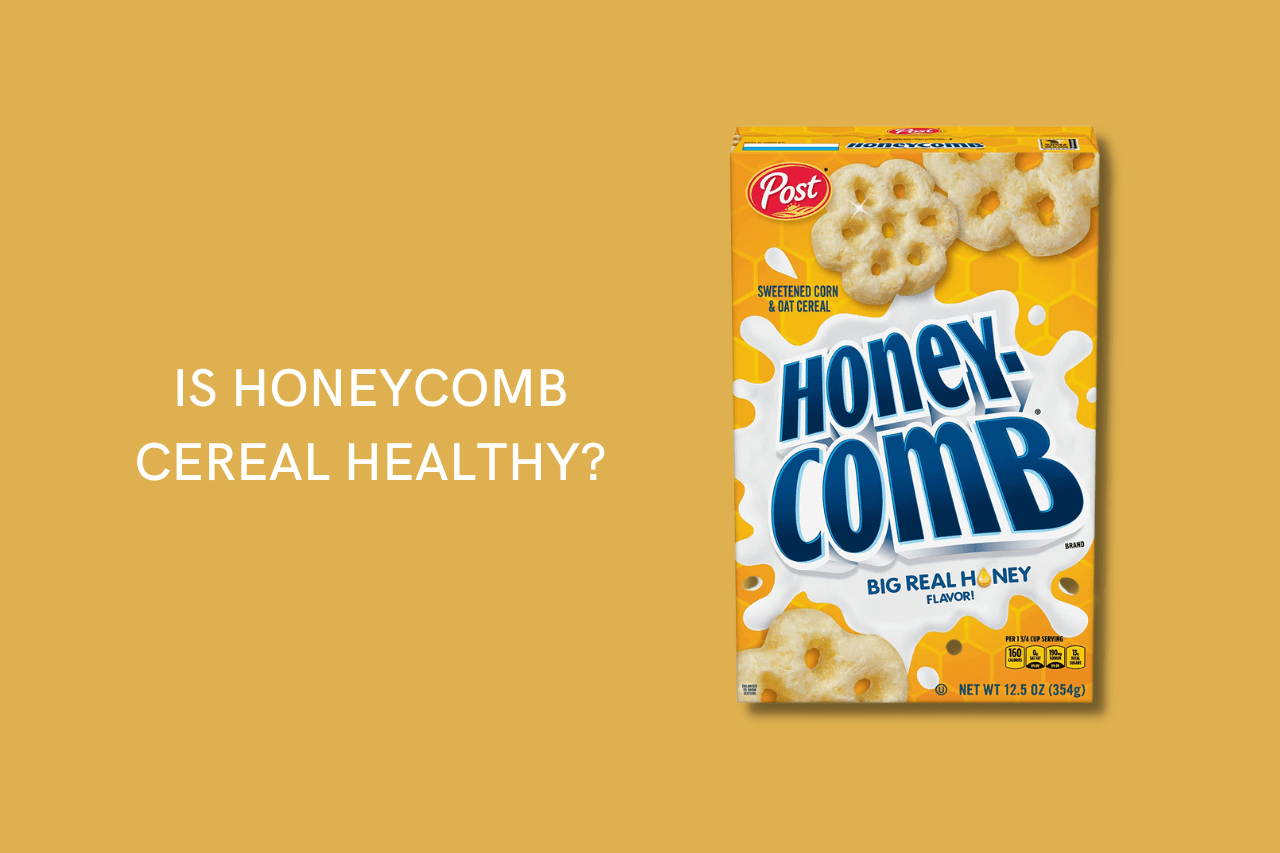
You spot that familiar yellow box in the cereal aisle, and suddenly you’re seven years old again. Honeycomb cereal—those giant hexagonal pieces that crunch so satisfyingly in milk. The box proudly displays “Honey” in big letters, and there’s something about that word that just sounds wholesome and natural.
Your hand reaches for the box. After all, honey is natural, right? Better than plain sugar. And look—it says “made with real honey” right on the front. Plus, those huge honeycomb shapes are fun, and the cereal tastes amazing. Maybe it’s not so bad?
Here’s where I need to stop you.
Honeycomb cereal is not healthy. At all. Yes, there’s honey in there—but it’s buried beneath corn flour and sugar. The second ingredient is literally sugar, and honey comes way down the list. Even worse, that bright yellow color? It comes from Yellow 5 (tartrazine), an artificial dye that’s been linked to allergic reactions, behavioral issues in some children, and potential health concerns.
The honest truth: Honeycomb is sugar-coated corn puffs with artificial coloring, marketed with a health halo because “honey” sounds natural. With 13g of sugar per serving, only 1g of fiber, and barely any protein, Honeycomb will spike your blood sugar, leave you hungry within an hour, and provide almost zero nutritional value.
It tastes great—I won’t argue with that. Those giant hexagonal pieces are engineering marvels of cereal design. But great taste doesn’t equal healthy breakfast.
In this review, I’ll break down what’s really in Honeycomb cereal, why the Yellow 5 artificial color is concerning, and whether this honey-flavored classic deserves any place in a healthy diet.
What Exactly Is Honeycomb Cereal?
Honeycomb cereal burst onto the breakfast scene in 1965, created by Post Cereals. For nearly 60 years, it’s been a childhood staple—beloved for its unique hexagonal shape that mimics an actual honeycomb and its sweet honey flavor.
The cereal’s claim to fame is those enormous honeycomb-shaped pieces. They’re bigger than most cereals, incredibly crunchy, and engineered to hold up in milk longer than your average flake. Kids love them because they’re fun to eat. Adults love them because they trigger instant nostalgia.
What makes Honeycomb unique:
- Giant hexagonal honeycomb shape (legitimately cool design)
- Sweet honey flavor (though mostly from sugar, not honey)
- Ultra-crunchy texture that stays crispy in milk
- Bright yellow color (from artificial dye, unfortunately)
Honeycomb is marketed with a “honey = healthy” psychology. The name, the hexagonal shape, the warm yellow color—it all screams “natural sweetness from honey.” But here’s the reality: honey is way down the ingredient list, and the sweetness comes primarily from added sugar.
It’s brilliant marketing. Less brilliant nutrition.
The Honey Illusion: What’s Really Inside Those Honeycombs?
Let’s tear apart what you’re actually eating when you pour a bowl of Honeycomb.
Main Ingredients:
- Corn flour (the base)
- Sugar (second ingredient—here we go)
- Whole grain oat flour (one small positive)
- Whole grain corn flour
- Honey (finally appears, but way down the list)
- Salt
- Natural flavor
- Yellow 5 (tartrazine) – artificial color
- Wheat starch
- BHT (preservative)
Fortified vitamins and minerals:
- Reduced iron
- Zinc oxide
- Vitamins A, B1, B2, B3, B6, B9, B12, D3
The reality check:
Sugar is the second ingredient. Not honey. Sugar. The honey comes later, almost as an afterthought—just enough to justify putting “honey” on the box.
The whole grain oat and corn flour are legitimately positive ingredients. They provide some nutritional value and are better than refined grains. But they’re overshadowed by the sugar content and artificial coloring.
The Yellow 5 Problem:
This is where Honeycomb gets genuinely concerning. Yellow 5 (tartrazine) is an artificial azo dye that gives Honeycomb its distinctive bright yellow color.
Here’s what research shows about Yellow 5:
- Can cause allergic reactions in some people, including asthma and hives
- May contribute to hyperactivity in some children
- When metabolized by gut bacteria, it can potentially form harmful compounds
- Classified as an azo dye, which some studies link to potential long-term health concerns
Why does Post use Yellow 5 instead of natural coloring? Because it’s cheaper and more stable. Natural yellow colorings (like turmeric or beta-carotene) cost more and fade over time.
Is Yellow 5 going to immediately harm you? Probably not. But if you’re feeding this to kids every morning, the cumulative exposure to artificial dyes is worth considering—especially when healthier cereals exist without them.
The Sugar Reality: How Sweet Is This Honeycomb?
Let’s talk about what really makes Honeycomb taste good: sugar. Lots of it.
Honeycomb cereal contains 13g of sugar per 40g serving.
That’s 4 teaspoons of sugar in one bowl. And despite “honey” being in the name, most of that sugar is added sugar—not natural honey.
American Heart Association recommends:
- Men: Max 36g added sugar per day
- Women: Max 25g added sugar per day
One bowl of Honeycomb = 36% of the daily sugar limit for men, 54% for women.
More than half your sugar budget gone before you’ve even left the house. And that’s before you add fruit, drink juice, or eat anything else sweet throughout the day.
How Honeycomb compares to other cereals:
| Cereal | Sugar (g) |
|---|---|
| Kellogg’s Raisin Bran | 17g |
| Honeycomb | 13g |
| Cheerios (Honey Nut) | 12g |
| Vector | 11g |
| Honey Bunches of Oats | 9g |
| Life | 8g |
| Total | 6g |
| Special K | 5g |
| Cornflakes | 4g |
Honeycomb sits in the middle-to-high range for sugar content. It’s not the worst offender (Raisin Bran takes that crown), but it’s definitely on the “way too much sugar” side.
Why this matters:
Eating 13g of sugar for breakfast spikes your blood sugar quickly. You’ll feel energized for 20-30 minutes, then crash hard by mid-morning. You’ll be tired, irritable, hungry, and craving more sugar.
This blood sugar rollercoaster is exactly what you don’t want from breakfast. A good breakfast stabilizes your energy and keeps you satisfied—not sets you up to crash before 10 AM.
The Protein & Fiber Disaster
If the sugar content is bad, the protein and fiber situation is even worse.
Protein: 2g per serving
This is pathetically low. Two grams of protein does essentially nothing for:
- Keeping you full
- Stabilizing blood sugar
- Supporting muscle maintenance
- Providing sustained energy
The only way Honeycomb becomes remotely acceptable protein-wise is if you add milk. One cup of milk adds about 8g protein, bringing your total to 10g—which is decent but still not impressive for a complete breakfast.
How Honeycomb’s protein compares:
| Cereal | Protein (g) |
|---|---|
| Special K | 7g |
| Vector | 5.5g |
| Kellogg’s Raisin Bran | 5g |
| Life | 4g |
| Total | 3g |
| Cheerios (Honey Nut) | 3g |
| Honey Bunches of Oats | 3g |
| Cornflakes | 3g |
| Honeycomb | 2g |
Honeycomb has the lowest protein content of all major cereals. That’s embarrassing.
Fiber: 1g per serving
This is even worse than the protein. One gram of fiber is less than 5% of your daily needs (25-38g for adults).
Compare this to:
- A medium apple: 4g fiber
- One cup of raspberries: 8g fiber
- Two slices whole grain bread: 6g fiber
- A bowl of oatmeal: 4g fiber
For a cereal that contains “whole grain oat flour” and “whole grain corn flour,” 1g of fiber is shockingly low. The processing and sugar coating strip away most of the fiber benefit.
How Honeycomb’s fiber compares:
| Cereal | Fiber (g) |
|---|---|
| Kellogg’s Raisin Bran | 7g |
| Total | 4g |
| Vector | 3.2g |
| Life | 3g |
| Cheerios (Honey Nut) | 3g |
| Honey Bunches of Oats | 2g |
| Honeycomb | 1g |
| Cornflakes | 1g |
| Special K | <1g |
Tied for second-to-last place. Only Special K has less fiber.
Why fiber matters: Fiber slows down sugar absorption, preventing blood sugar spikes. It keeps you full longer, supports digestive health, and helps maintain stable energy. With only 1g of fiber, Honeycomb can’t do any of these things.
The bottom line: With only 2g protein and 1g fiber, Honeycomb won’t keep you satisfied. You’ll eat your bowl at 7 AM, be starving by 9 AM, and end up snacking all morning. That’s terrible for weight management and energy levels.
The Sodium Situation: Actually Not Bad
Here’s one area where Honeycomb doesn’t completely fail: sodium content.
Honeycomb contains 190mg of sodium per serving. That’s about 13% of the ideal daily sodium limit (1,500mg recommended by the American Heart Association).
How Honeycomb’s sodium compares:
| Cereal | Sodium (mg) |
|---|---|
| Cornflakes | 300mg |
| Special K | 270mg |
| Vector | 220mg |
| Cheerios (Honey Nut) | 210mg |
| Kellogg’s Raisin Bran | 200mg |
| Honeycomb | 190mg |
| Total | 190mg |
| Honey Bunches of Oats | 190mg |
| Life | 170mg |
Honeycomb is on the lower end for sodium, which is genuinely positive.
However—and this is important—low sodium doesn’t make a sugary cereal with artificial coloring healthy. It’s like saying candy is healthy because it’s low in sodium. Technically true, but completely missing the point.
Is Honeycomb Cereal Good for Weight Loss?
Let me be direct: No. Honeycomb is terrible for weight loss.
Why Honeycomb sabotages weight loss:
❌ High sugar content – 13g of sugar triggers insulin spikes that promote fat storage
❌ Almost no fiber – 1g won’t keep you full or stabilize blood sugar
❌ Minimal protein – 2g provides zero satiety or muscle support
❌ Blood sugar crash – You’ll be hungry and craving more sugar within 2 hours
❌ Empty calories – 160 calories with almost no nutritional value
The calorie perspective:
Honeycomb has 160 calories per serving without milk. Add a cup of whole milk and you’re at 310 calories total.
That’s not terrible calorie-wise. But what are you getting for those 310 calories?
- 13g sugar from cereal + 12g natural sugar from milk = 25g total sugar
- Only 10g protein (with milk)
- Only 1g fiber
- Artificial coloring
- Almost no satiety
Compare this to a 310-calorie breakfast of scrambled eggs with whole grain toast:
- 20g protein
- 6g fiber
- Healthy fats
- No added sugar
- Keeps you full until lunch
The realistic take:
If you’re trying to lose weight, Honeycomb should be completely off your shopping list. Choose breakfasts that support your goals:
- High protein (15-30g minimum)
- Rich in fiber (8-10g or more)
- Low in added sugar (0-5g)
- Keeps you satisfied for 4-5 hours
Honeycomb checks exactly zero of these boxes.
Special Dietary Considerations
Is Honeycomb cereal gluten-free?
No. Honeycomb contains wheat starch, which means it has gluten. If you have celiac disease or gluten sensitivity, avoid Honeycomb entirely.
Is Honeycomb cereal vegan?
The cereal itself contains no animal-derived ingredients, so it’s technically vegan. However, it does contain vitamin D3, which is sometimes derived from animal sources (though it can also be plant-based). If you’re strictly vegan, you may want to contact Post to verify the source of their vitamin D3.
Can diabetics eat Honeycomb cereal?
Absolutely not recommended. Honeycomb is one of the worst cereals for diabetics:
- 13g sugar per serving
- Only 1g fiber (not nearly enough to slow sugar absorption)
- Will spike blood sugar dramatically
- Contains honey, which raises blood sugar quickly
If you’re diabetic and want cereal, look for high-fiber, low-sugar options like plain Cheerios or Fiber One. Or better yet, skip cereal altogether and choose eggs, Greek yogurt, or low-carb alternatives.
Is Honeycomb cereal keto-friendly?
No way. Honeycomb has 34g of net carbs per serving, which will instantly kick you out of ketosis. Keto dieters need to avoid all grain-based cereals, especially sweet ones like Honeycomb.
Is Honeycomb cereal safe for kids?
It won’t poison them, but there are real concerns:
- Yellow 5 (tartrazine) may cause hyperactivity in some children and allergic reactions
- 13g sugar conditions kids to expect sweetness at every meal
- Low nutrition means kids start their day with empty calories
- Energy crashes lead to poor focus and behavior issues at school
Occasional treat (once every couple weeks)? Fine. Daily breakfast? You can do much better for your kids’ health and development.
Better Alternatives to Honeycomb Cereal
If you love the honey flavor but want something healthier, try these:
1. Cheerios (original or Honey Nut)
- Much less sugar (1-12g depending on variety)
- 3g fiber
- No artificial coloring
- Still honey-flavored if you choose Honey Nut
2. Nature’s Path Honey’d Corn Flakes
- Organic ingredients
- No artificial colors
- 4g sugar (way less than Honeycomb)
- Made with real honey
3. Barbara’s Honey Rice Puffins
- 5g sugar
- 5g fiber (5x more than Honeycomb!)
- No artificial anything
- Genuinely made with honey
4. DIY Honey Oatmeal
- Cook plain oats
- Add a drizzle of real honey (you control the amount)
- Top with fresh fruit
- High fiber, high protein, actually nutritious
5. Greek Yogurt with Honey and Granola
- Plain Greek yogurt (15-20g protein)
- Drizzle of real honey
- Low-sugar granola
- Fresh berries
- Sweet, satisfying, and actually healthy
6. Whole Grain Toast with Honey and Nut Butter
- Whole grain bread (fiber!)
- Almond or peanut butter (protein and healthy fats)
- Light drizzle of honey
- Keeps you full for hours
For more cereal reviews, check out Is Vector Cereal Healthy?, Are Coco Pops Healthy?, or Is Total Cereal Healthy?.
Frequently Asked Questions
How much sugar is in Honeycomb cereal?
Honeycomb cereal contains 13g of sugar per 40g serving. That’s 4 teaspoons of sugar and represents 36% of men’s daily limit or 54% of women’s daily limit.
Is Honeycomb cereal made with real honey?
Yes, Honeycomb contains real honey, but it’s not the primary sweetener. Sugar is the second ingredient, and honey appears much lower on the ingredient list. Most of the sweetness comes from added sugar, not honey.
What is Yellow 5 in Honeycomb cereal?
Yellow 5 (tartrazine) is an artificial azo dye that gives Honeycomb its bright yellow color. It has been linked to allergic reactions, asthma, hives, and potential hyperactivity in some children. Some studies also suggest long-term concerns with azo dyes.
Can I eat Honeycomb cereal every day?
Not recommended. The high sugar content (13g), artificial coloring (Yellow 5), and minimal nutritional value make Honeycomb a poor choice for daily consumption. Treat it as an occasional indulgence (once a month max), not a regular breakfast.
Is Honeycomb cereal healthier than other sweet cereals?
It depends on the comparison. Honeycomb has less sugar than Raisin Bran or Honey Nut Cheerios, but it also has less fiber and protein than most other cereals. The Yellow 5 artificial coloring is a unique concern that many other cereals don’t have.
How many calories are in Honeycomb cereal?
Honeycomb contains 160 calories per 40g serving without milk. With one cup of whole milk, that increases to approximately 310 calories.
Does Honeycomb cereal have whole grains?
Yes, Honeycomb is made with whole grain oat flour and whole grain corn flour. However, the first ingredient is corn flour (likely refined), sugar is second, and the minimal fiber (1g) suggests the whole grain benefit is limited.
Where can I buy Honeycomb cereal?
Honeycomb is sold at most major grocery stores including Walmart, Target, Kroger, Safeway, and online at Amazon. Look in the cereal aisle near other Post cereals.
The Final Verdict: Is Honeycomb Cereal Healthy?
Let me be absolutely clear: No, Honeycomb cereal is not healthy.
It’s sugar-coated corn puffs with artificial yellow dye, marketed with a health halo because “honey” sounds wholesome and natural.
The reality:
- 13g sugar per serving (4 teaspoons!)
- Only 1g fiber (worst in its category)
- Only 2g protein (won’t keep you full)
- Contains Yellow 5 artificial coloring (linked to health concerns)
- Blood sugar spike and crash guaranteed
- Honey is way down the ingredient list—sugar dominates
However, Honeycomb does have a couple positives:
✅ Contains some whole grain oat and corn flour
✅ Low in sodium (190mg)
✅ Fortified with vitamins and minerals
✅ No high fructose corn syrup
✅ Lower sugar than some cereals (but still way too much)
My honest recommendation:
Stop buying Honeycomb as a regular breakfast. It’s a dessert—sugar-coated corn with artificial coloring that you’re eating in the morning.
If you absolutely love Honeycomb and can’t give it up, enjoy it as a rare treat (once a month max). Pour a small bowl, eat it mindfully, and acknowledge what it is: a nostalgic indulgence, not a nutritious breakfast.
For everyday breakfasts, choose foods that actually fuel your body:
- Oatmeal with real honey and fruit
- Greek yogurt with granola and berries
- Eggs with whole grain toast
- Smoothies with protein, greens, and healthy fats
The “made with real honey” claim on the Honeycomb box is technically true but deeply misleading. The honey content is minimal, and what you’re really eating is sugar and corn flour shaped like honeycombs and dyed bright yellow.
Those giant hexagonal pieces are fun. They crunch satisfyingly. They taste sweet and nostalgic. But fun and tasty don’t equal healthy.
Save Honeycomb for special occasions when you want a trip down memory lane, and choose real breakfast foods that actually nourish your body for your daily routine.
Have you tried Honeycomb cereal? Do you remember eating it as a kid? Share your thoughts in the comments!