
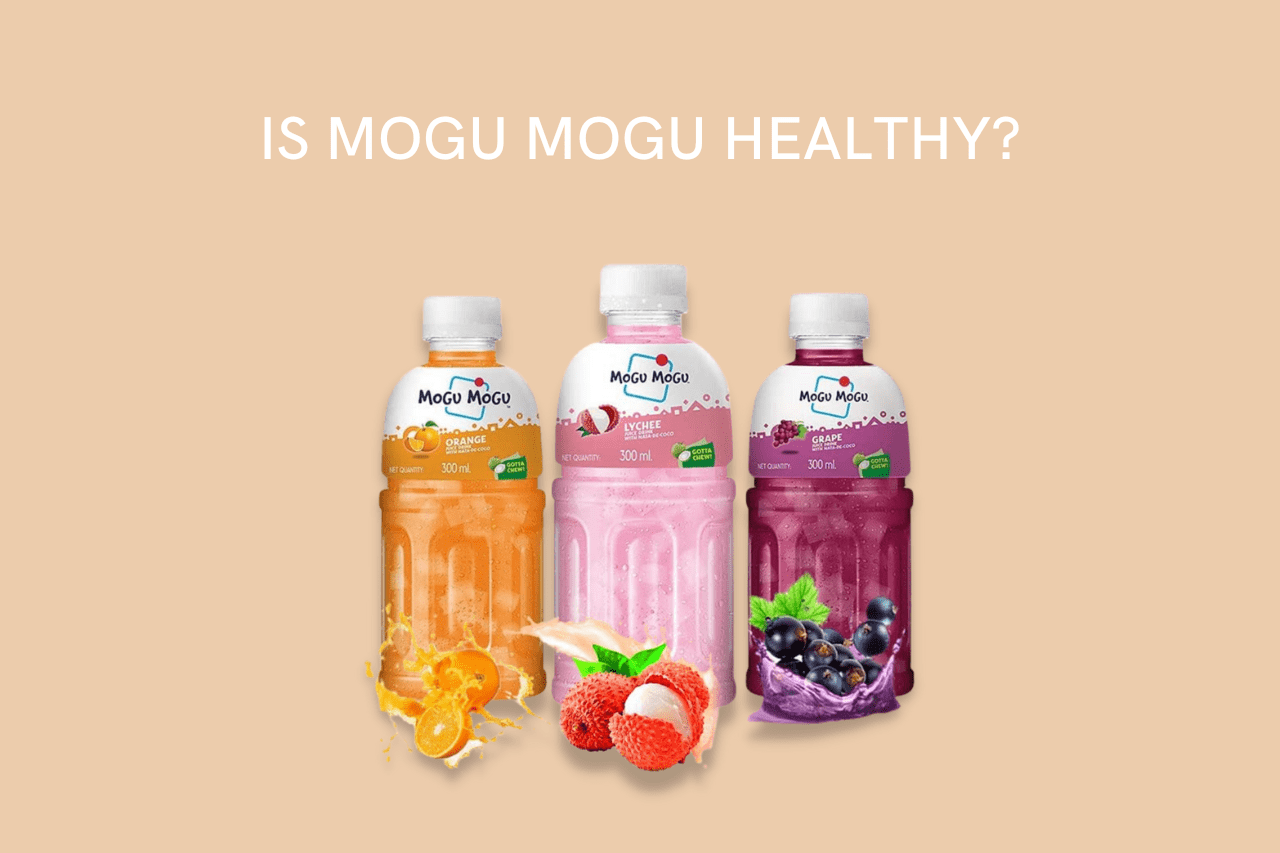
Your kid spots those colorful bottles at the Asian grocery store and starts begging. “Please, can I get Mogu Mogu? It has fruit juice AND those chewy coconut things!”
You’ve seen these drinks everywhere—bright packaging, exotic flavors like lychee and mango, and those satisfying little coconut jelly cubes that make drinking feel like a fun experience rather than just hydration.
The bottles look appealing. The concept is unique. And honestly, slurping up those chewy nata de coco pieces through a straw is genuinely enjoyable in a way that regular juice just isn’t.
But here’s the question nagging at you: Is Mogu Mogu actually healthy, or is this just cleverly marketed sugar water with artificial ingredients?
You’re right to wonder. Since launching in Thailand in 2001, Mogu Mogu has exploded across 60+ countries, becoming a cult favorite among kids and adults who love the playful texture. It’s positioned as a fruit juice drink with real coconut jelly.
But when you flip that bottle around and scan the ingredient list—especially the sugar content and those artificial colors—the “fun fruit drink” image starts to look a lot more concerning.
The honest truth? Mogu Mogu is basically a sugar bomb with artificial additives and chewy coconut bits. It’s a treat drink, not a healthy beverage. Yes, it contains some real fruit juice (25%), but it also contains a shocking amount of sugar and several questionable artificial ingredients.
In this review, I’ll break down exactly what’s in Mogu Mogu, how much sugar you’re really drinking, and whether these fun drinks deserve a spot in your shopping cart.
What Exactly Is Mogu Mogu?
Mogu Mogu is a fruit-flavored drink that combines fruit juice (25% of the drink) with chewy coconut jelly pieces called nata de coco (another 25% of the drink). The rest? Mostly water and sugar.
What makes it unique?
The texture. Those little coconut jelly cubes create a fun, interactive drinking experience. You’re not just sipping—you’re chewing. It’s like bubble tea’s simpler, more accessible cousin.
Nata de coco is a jelly-like substance made from fermented coconut water. It’s naturally white, chewy, and slightly crunchy. In Mogu Mogu, these jellies are flavored to match the drink (strawberry jellies taste like strawberry, mango jellies taste like mango, etc.).
Popular flavors:
- Lychee
- Mango
- Strawberry
- Orange
- Grape
- Pineapple
- Apple
- Peach
- Passion Fruit
The variety is impressive, and they genuinely taste fruity and refreshing. The bottles are eye-catching with their bright colors. Kids especially love the novelty of “eating” their drink.
But fun and tasty doesn’t equal healthy. Let’s look at what you’re actually consuming.
What’s Inside: Mogu Mogu Ingredients
The ingredient list is where things get concerning.
Main ingredients:
- Water (the base)
- Fruit juice (25% – based on the flavor)
- Nata de coco (25% – the coconut jelly pieces)
- Sugar
- Invert sugar (another form of sugar used to prevent crystallization)
Additives:
- Acidity regulators (E330, E327) – to maintain pH levels
- Preservatives (E202, E211) – to extend shelf life
- Stabilizer (E418) – for texture and consistency
- Natural color (150g)
- Artificial colors (E124, E122, E102)
- Artificial flavors
What’s concerning here:
❌ Artificial colors – E124 (Cochineal Red), E122 (Carmoisine), E102 (Tartrazine) are banned in several countries including the US, Norway, Sweden, and Austria due to health concerns.
❌ Sodium benzoate (E211) – A preservative linked to hyperactivity in children when combined with certain artificial colors.
❌ Multiple forms of sugar – Both regular sugar AND invert sugar means you’re getting a double sugar hit
The combination of artificial colors and sodium benzoate is particularly problematic. Research has linked this combination to increased hyperactivity in children, which is why several European countries have restricted or banned these additives.
The Sugar Reality: Let’s Break Down the Numbers
This is where Mogu Mogu’s “fun fruit drink” image completely falls apart.
Complete Mogu Mogu Nutrition Breakdown:
| Flavor | Calories | Carbs (g) | Sugar (g) | Fiber (g) | Sodium (mg) |
|---|---|---|---|---|---|
| Lychee | 150 | 38 | 35 | 1 | 160 |
| Mango | 160 | 40 | 37 | 1 | 160 |
| Apple | 120 | 31 | 29 | 1 | 160 |
| Strawberry | 150 | 37 | 33 | <1 | 125 |
| Orange | 150 | 37 | 35 | 1 | 190 |
| Grape | 150 | 38 | 35 | 1 | 100 |
| Pineapple | 160 | 40 | 36 | 1 | 100 |
Per 300ml bottle (one serving)
What This Actually Means:
The American Heart Association recommends:
- Men: Max 36g added sugar per day
- Women: Max 25g added sugar per day
- Children (2-18 years): Max 24g added sugar per day
With 29-37g of sugar per bottle, Mogu Mogu delivers:
- 80-103% of a man’s daily sugar limit in one drink
- 116-148% of a woman’s daily sugar limit in one drink
- 121-154% of a child’s daily sugar limit in one drink
Let that sink in. One bottle of Mogu Mogu exceeds the entire daily sugar recommendation for women and children. Before lunch. From a single drink.
How does this compare to other drinks?
Let’s look at orange flavor across different brands (per 250ml):
| Juice Brand | Added Sugar (g) | Total Sugar (g) |
|---|---|---|
| Mogu Mogu | Not specified | 29 |
| Real | 17 | 27 |
| Tropicana | Not specified | 30 |
| Paper Boat | 21.7 | 32.2 |
| B Natural | 25.5 | 30.7 |
| Raw Pressery | 0 | 21.9 |
Mogu Mogu has similar or even higher sugar than other juice brands, including sodas like Coca-Cola (which has about 27g sugar per 250ml). You’re basically drinking soda with fruit flavoring and coconut jellies.
The Fiber & Nutrient Problem
Beyond the sugar bomb, Mogu Mogu falls painfully short on actual nutrition.
Fiber content: Only 1g per bottle
This is pathetic for something that claims to contain fruit. Compare this to:
- A medium orange: 3g fiber
- A cup of fresh mango: 3g fiber
- An apple: 4g fiber
Even though nata de coco is often marketed as a fiber source, the processing removes most of its nutritional value. You’re getting virtually no fiber to slow down sugar absorption or keep you full.
Vitamin and mineral content: Almost nothing
One bottle of Mogu Mogu orange has:
- 47mg calcium (4% of daily needs)
- 190mg sodium
- Zero protein
- No vitamin C (despite being orange-flavored!)
- No other vitamins or minerals
Compare this to an actual orange, which provides vitamin C, folate, potassium, thiamine, and numerous antioxidants. The processing involved in making Mogu Mogu strips away nearly all the beneficial nutrients that make fruit healthy in the first place.
You’re left with flavored sugar water, essentially.
The Artificial Ingredient Concerns
This is where Mogu Mogu becomes genuinely problematic from a health perspective.
Artificial colors used:
E124 (Cochineal Red/Ponceau 4R):
- Linked to hyperactivity in children
- Can cause problems for asthmatics
- Banned as a potential carcinogen in some countries
E122 (Carmoisine):
- When combined with preservatives (like the sodium benzoate in Mogu Mogu), suspected of causing hyperactivity in children
- Can trigger allergic reactions
E102 (Tartrazine):
- Associated with allergies, anxiety, hyperactivity, and abdominal pain
- Found to contain potential carcinogens
- Banned in the United States, Norway, Sweden, and Austria
Why these matter:
The combination of these artificial colors with sodium benzoate (the preservative in Mogu Mogu) is particularly concerning. The UK Food Standards Agency found this combination increased hyperactive behavior in children, leading to voluntary removal from many UK products.
Artificial flavors:
The processing of fruits eliminates much of their natural flavor, so Mogu Mogu relies heavily on artificial flavoring to create that “fruit taste.” These synthetic flavors don’t provide any nutritional value and are purely for taste manipulation.
Is Mogu Mogu Healthy for Kids? (Absolutely Not)
If you’re a parent wondering whether Mogu Mogu is okay for your kids, here’s the reality: it’s one of the worst drink choices you can make.
Why it’s particularly bad for children:
❌ Exceeds entire daily sugar limit in one bottle (kids should have max 24g sugar/day)
❌ Artificial colors linked to hyperactivity – the exact thing parents are trying to avoid
❌ Zero nutritional value – no vitamins, minerals, or fiber to support growing bodies
❌ Promotes sugar dependence – trains taste buds to crave intensely sweet drinks
❌ Risk of dental cavities from constant sugar exposure to teeth
The occasional treat argument:
Can you let your kid have Mogu Mogu once in a while? Technically yes, but given the artificial ingredients (especially those banned colors), even occasional consumption is questionable.
If you’re going to allow it, limit it to once a month maximum—not weekly, and definitely not daily.
Better alternatives for kids:
- Fresh fruit smoothies made at home
- Coconut water (if they like the coconut element)
- 100% fruit juice diluted with water (50/50 ratio)
- Infused water with fresh fruit
- Homemade fruit popsicles
For more details on healthier juice options, check out Is Raw Pressery Juice Healthy?
Is Mogu Mogu Good for Weight Loss? (No Way)
If you’re trying to lose weight, Mogu Mogu works directly against your goals.
Why it’s terrible for weight loss:
❌ High sugar triggers insulin spikes and promotes fat storage
❌ Liquid calories don’t satisfy hunger – you’ll still be hungry after drinking it
❌ No protein or fiber – nothing to keep you full
❌ Easy to overconsume – drinking 300ml takes 2 minutes, but those calories add up
❌ Displaces healthier options – every Mogu Mogu is a missed opportunity for actual nutrition
The calorie perspective:
At 120-160 calories per bottle, it’s not extremely high. But those are completely empty calories from sugar with zero nutritional benefit. You could eat a banana (105 calories) with a tablespoon of peanut butter (95 calories) for similar calories but with actual fiber, protein, vitamins, and sustained energy.
The realistic take:
Weight loss requires a calorie deficit combined with nutrient-dense foods that keep you satisfied. Mogu Mogu offers neither—just a quick sugar rush followed by a crash and continued hunger.
Skip it entirely if weight loss is your goal.
Is Mogu Mogu Good for Boosting Energy?
Mogu Mogu markets itself as an energy-boosting drink, and technically, it will give you energy—but not in a good way.
How it “boosts” energy:
The 29-37g of sugar gets rapidly absorbed into your bloodstream, causing a quick spike in blood glucose. This triggers an energy rush.
The problem:
This energy doesn’t last. Within 30-60 minutes, you’ll experience:
- An insulin crash as your body overcompensates for the sugar spike
- Energy levels dropping below where you started
- Cravings for more sugar to get that energy back
- The cycle of sugar dependency
Better energy solutions:
- Eating balanced meals with protein, healthy fats, and complex carbs
- Staying hydrated with water
- Getting adequate sleep
- Regular physical activity
For a more sustained energy option, check out Is Sting Energy Drink Good For Health? for comparison.
Mogu Mogu vs. Other Drinks: How Does It Compare?
Mogu Mogu vs. Soda (Coca-Cola, Pepsi):
Both are terrible for you. Mogu Mogu has similar or higher sugar than most sodas. The only slight advantage Mogu Mogu has is 25% real fruit juice (vs. zero fruit in soda), but that’s barely an improvement given everything else.
Soda is more acidic and can cause digestive issues for some people, while Mogu Mogu’s artificial colors present different health concerns.
Bottom line: Neither is healthy. Both should be rare treats.
Mogu Mogu vs. Real Fruit Juice (100% juice):
Real fruit juice is better—it contains actual vitamins, minerals, and antioxidants from fruit. However, it’s still high in natural sugar without the fiber of whole fruit.
For healthier juice comparisons, read Are Paper Boat Juices Healthy? and Is Tropicana Juice Healthy?
Mogu Mogu vs. Bubble Tea:
Bubble tea typically has similar sugar levels but uses tapioca pearls instead of coconut jelly. Both are dessert drinks, not health drinks. Bubble tea at least offers customization (you can reduce sugar levels).
Mogu Mogu vs. Coconut Water:
Not even close. Coconut water is hydrating, naturally low in calories, contains electrolytes, and has no added sugar or artificial ingredients. If you like the coconut element of Mogu Mogu, switch to plain coconut water.
Mogu Mogu vs. Fresh Fruit:
Fresh fruit wins in every category: fiber, vitamins, minerals, antioxidants, satiety, and no artificial ingredients. Always choose whole fruit over any processed fruit drink.
When Is It Okay to Drink Mogu Mogu?
I’m not here to tell you that you can never enjoy Mogu Mogu. Life includes treats, and sometimes you just want something fun and different.
When Mogu Mogu might be acceptable:
✅ Very rare treat (once a month maximum)
✅ Special occasions or celebrations
✅ When you’re fully aware it’s a dessert drink, not a healthy choice
✅ Sharing one bottle among multiple people to minimize sugar intake
✅ After you’ve already met your daily nutrition needs with whole foods
When you should absolutely skip Mogu Mogu:
❌ Daily or weekly consumption
❌ As a regular beverage for children
❌ If you’re trying to lose weight
❌ If you have diabetes or blood sugar issues
❌ As a post-workout “recovery” drink
❌ When you’re actually thirsty (drink water instead)
❌ If you’re concerned about artificial ingredients
Frequently Asked Questions
How much sugar is in Mogu Mogu?
29-37g per 300ml bottle, depending on the flavor. That’s more than the entire daily recommended sugar intake for women and children.
Can I drink Mogu Mogu every day?
Absolutely not. The extreme sugar content and artificial ingredients make daily consumption harmful to your health. Even occasional consumption should be limited to once a month maximum.
Is Mogu Mogu vegan?
Most flavors appear to be vegan as they don’t contain dairy or obvious animal products. However, some artificial colors are derived from insects (like cochineal), so check specific flavors if strict veganism matters to you.
Does Mogu Mogu have caffeine?
No, Mogu Mogu does not contain caffeine. The “energy boost” comes entirely from sugar.
Is the nata de coco healthy?
In its natural form, nata de coco contains some fiber and is relatively healthy. However, the processed version in Mogu Mogu has been sweetened and flavored, removing most nutritional benefits.
Where can I buy Mogu Mogu?
Mogu Mogu is available at Asian supermarkets, some regular grocery stores, international food markets, and online retailers like Amazon.
Can diabetics drink Mogu Mogu?
No. The 29-37g of sugar per bottle will cause dangerous blood sugar spikes. Diabetics should avoid Mogu Mogu completely.
Is Mogu Mogu banned in any countries?
The drink itself isn’t banned, but some of its artificial color ingredients (E124, E122, E102) are banned or restricted in countries like the US, Norway, Sweden, and Austria.
The Final Verdict: Is Mogu Mogu Healthy?
Let me be crystal clear: No, Mogu Mogu is absolutely not healthy.
It’s fun. It’s tasty. The coconut jelly texture is genuinely enjoyable. But none of that makes it healthy.
The reality:
Extremely high sugar (29-37g per bottle)
Contains artificial colors banned in multiple countries
Zero nutritional value (no fiber, vitamins, or minerals)
Linked to hyperactivity in children
No better than soda from a health perspective
However, let’s acknowledge what Mogu Mogu does offer:
✅ Fun, unique drinking experience
✅ Interesting texture from coconut jelly
✅ Contains some real fruit juice (25%)
✅ Refreshing taste
✅ Lower in calories than some dessert drinks
My honest recommendation:
Stop thinking of Mogu Mogu as anything resembling a healthy beverage. It’s a dessert drink—a liquid candy with artificial ingredients.
If your kids love it and you’ve already bought it, here’s the deal: limit it to special occasions only (birthdays, holidays, once-a-month treats maximum). Share one bottle among multiple kids to reduce individual sugar intake. And always pair it with a healthy meal to minimize blood sugar spikes.
For adults, if you genuinely enjoy the taste and texture, have it as a rare indulgence knowing exactly what it is—a treat, not a beverage choice.
For everyday drinking, stick to water, herbal tea, coconut water, or fresh fruit smoothies. Save Mogu Mogu for what it actually is: an occasional fun drink that tastes good but offers nothing nutritionally.
Your body deserves better than artificial colors, excessive sugar, and zero nutrients. Choose wisely.
Have you tried Mogu Mogu? What’s your take on these coconut jelly drinks? Share your thoughts in the comments!
Related Reviews:
- Is Raw Pressery Juice Healthy? 6 Things You Need To Know
- Is Tang Good For Health? The Truth Behind This Popular Drink
- Are Paper Boat Juices Healthy? Everything You Need To Know
- Is Tropicana Juice Healthy As Everyone Thinks? Let’s Find Out
- Is Sting Energy Drink Good For Health? Everything You Need To Know