
You’re about to spend $10 on a single box of cereal.
Not just any cereal – a revolutionary, high-protein, low-sugar cereal that promises to deliver childhood nostalgia without the sugar crash and guilt.
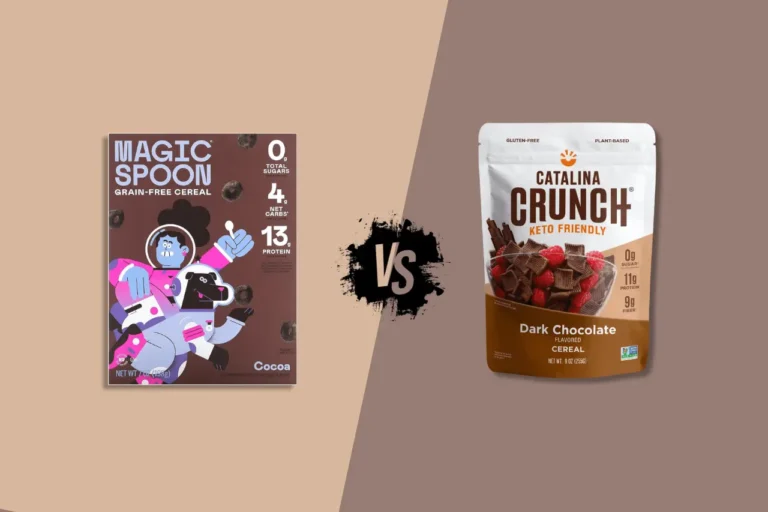
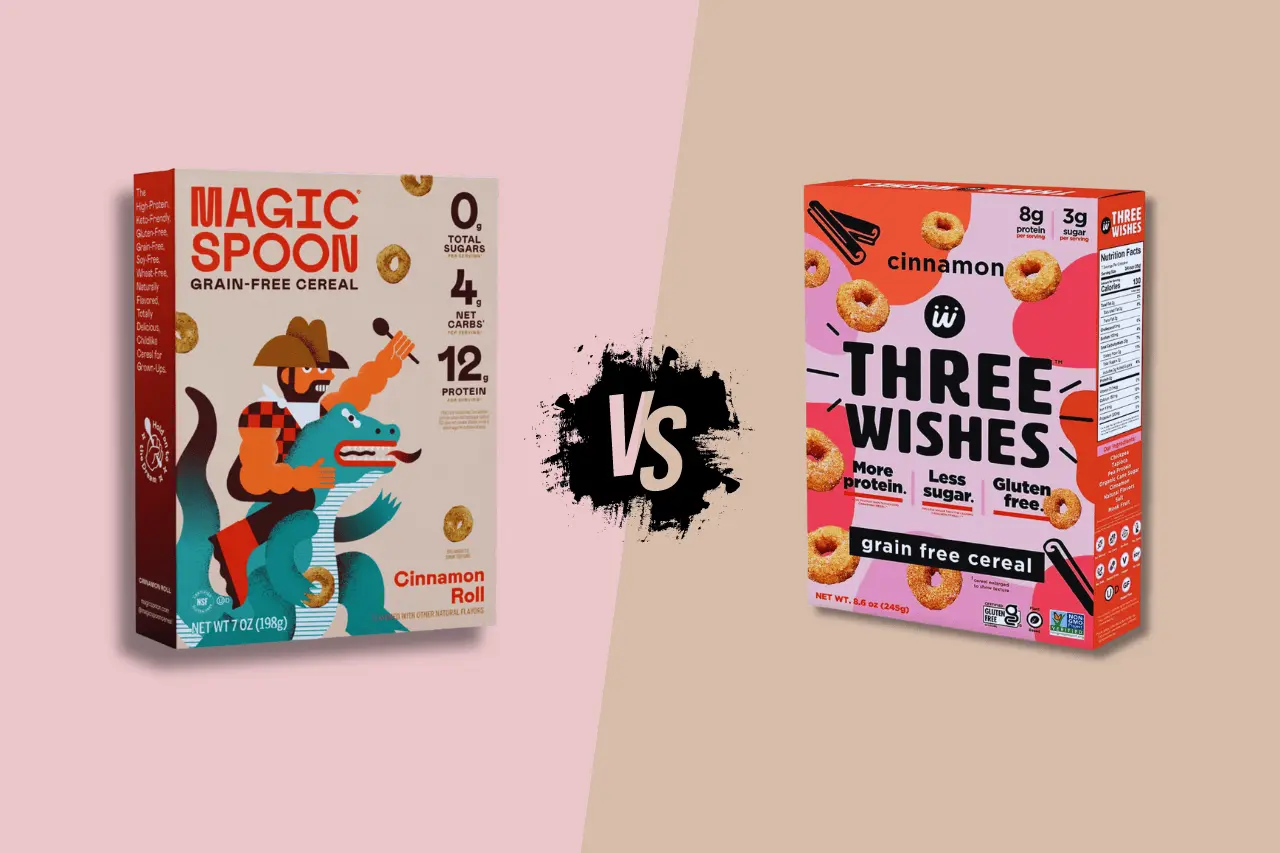
Magic Spoon on the left. Three Wishes on the right. Both brands screaming “we’re nothing like those processed sugar bombs you grew up with!”
Both cost roughly the same outrageous price. Both claim to be healthier. Both have cult followings on social media.
So which expensive cereal actually deserves your hard-earned money?
Let’s settle this once and for all.
The Verdict: It Depends on Your Diet (But Here’s the Guide)
There’s no clear winner because Magic Spoon and Three Wishes are designed for different people.
Choose Magic Spoon if: You’re doing keto or low-carb, want maximum protein (12-14g), need zero added sugar, and don’t mind dairy-based ingredients. It has 4-5g net carbs and uses high-quality whey/casein protein.
Choose Three Wishes if: You’re vegan or avoid dairy, want lower calories and fat, prefer plant-based protein, need more fiber (3-4g), or want to avoid vegetable oils. It has a small amount of organic cane sugar (3g) but still beats regular cereal by miles.
Both are lightyears better than Frosted Flakes or Lucky Charms. But they’re solving different nutritional problems for different audiences.
Let me break down exactly who should buy which cereal and why.
Who Are These Cereals Actually For?
Before we dive into nutrition, let’s talk about the target audience – because these aren’t for everyone.
Magic Spoon Is For:
- Keto dieters who need low net carbs (4-5g)
- Bodybuilders and fitness enthusiasts who want high protein (12-14g)
- Sugar-avoiders who refuse any added sugar
- People okay with dairy who want complete protein sources
- Anyone willing to pay premium for convenience and nostalgia
Three Wishes Is For:
- Vegans who need plant-based protein
- Calorie counters who want the lowest-calorie option (120-130 cal)
- People avoiding vegetable oils (no sunflower or avocado oil)
- Fiber seekers who want more digestive support (3-4g)
- Those okay with minimal sugar (3g organic cane sugar)
If you’re just looking for “healthy cereal” without specific dietary needs, either works. But understanding your priorities will make the choice obvious.
The Philosophy Split: Dairy vs Plant-Based
These brands took completely different approaches to reinventing cereal.
Magic Spoon: Built around dairy protein (whey and casein). This gives them superior protein content and complete amino acid profiles perfect for muscle building. They compensated for carbs by using alternative sweeteners (monk fruit and allulose) and keeping net carbs ultra-low. The trade-off? Higher fat from oils and strictly not vegan.
Three Wishes: Built around chickpeas as the grain-free base. This keeps it plant-based, vegan-friendly, and naturally higher in fiber. They use pea protein for extra protein and a touch of organic cane sugar for palatability. The trade-off? Lower protein and higher net carbs than Magic Spoon.
It’s not that one is better – they’re playing different games entirely.
Ingredients Showdown: What’s Actually Inside
Magic Spoon Ingredients
Magic Spoon comes in flavors like Peanut Butter, Cocoa, Cinnamon Roll, Frosted, Fruity, and more.
Core ingredients:
- Milk protein blend (whey protein concentrate and casein) – main ingredient
- Sweetener blend (monk fruit and allulose)
- Oil blend (high oleic sunflower and avocado oil)
- Tapioca starch
- Chicory root inulin (prebiotic fiber)
- Natural flavors
- Salt
- Vegetable juice (for color)
What’s notable:
- Zero added sugar – uses only natural sweeteners
- High-quality dairy protein – whey and casein are gold standard
- Vegetable oils – some people actively avoid these
- Allulose – doesn’t spike blood sugar, doesn’t count toward net carbs
- No artificial anything – clean ingredient deck
Three Wishes Ingredients
Three Wishes offers flavors like Strawberry, Cinnamon, Honey, Unsweetened, and Fruity.
Core ingredients:
- Chickpea – main ingredient
- Tapioca
- Pea protein
- Organic cane sugar
- Natural flavors
- Vegetable juice (for color)
- Monk fruit
- Salt
What’s notable:
- Plant-based and vegan – no dairy whatsoever
- Small amount of added sugar (3g organic cane sugar)
- No vegetable oils – major win for oil-avoiders
- Chickpea base – naturally higher fiber
- Unsweetened version available – zero sugar option exists
- No artificial anything – also clean
Ingredients Winner: Depends on Your Priorities
Magic Spoon wins if: You want zero added sugar, maximum protein quality, and don’t care about vegetable oils or dairy.
Three Wishes wins if: You’re vegan, avoid oils, and don’t mind 3g of organic cane sugar.
Both are clean-ingredient cereals. Both avoid the junk in traditional cereals. The difference is philosophy, not quality.
Nutrition Face-Off: The Numbers That Matter
Let’s compare these cereals across every metric, with context for what actually matters.
Sugar: Magic Spoon Wins (Unless You Choose Unsweetened Three Wishes)
Magic Spoon: 0g per serving (35g)
Three Wishes: 3g per serving (37-39g)
Three Wishes Unsweetened: 0g per serving
Magic Spoon contains zero added sugar. Instead, it uses monk fruit and allulose for sweetness.
Three Wishes contains 3g of organic cane sugar per serving. That’s genuinely low – most regular cereals pack 10-15g – but it’s still added sugar.
However, Three Wishes offers an Unsweetened version with 0g sugar if you want to avoid it entirely.
The allulose/monk fruit experience: Some people love these sweeteners. Others find them weird-tasting or notice digestive issues from allulose (it can cause bloating in sensitive individuals). If you’ve never tried allulose, know that it’s not identical to sugar.
Winner: Magic Spoon for zero-sugar dieters. Tie if you choose Three Wishes Unsweetened.
Calories: Three Wishes Is Lighter
Magic Spoon: 140-170 per serving (35g)
Three Wishes: 120-130 per serving (37-39g)
Despite having added sugar, Three Wishes is lower in calories.
Why? Because Magic Spoon is higher in fat from those vegetable oils (7-9g vs 2g).
If you’re counting calories for weight loss, Three Wishes gives you more cereal for fewer calories.
Winner: Three Wishes.
Fat: Three Wishes Wins for Low-Fat Dieters
Magic Spoon: 7-9g per serving (35g)
Three Wishes: 2g per serving (37-39g)
Magic Spoon packs significantly more fat thanks to avocado and sunflower oils.
But here’s the nuance: Most of that fat is unsaturated (the “good” fat). If you’re not specifically avoiding fat, this isn’t a problem. In fact, fat helps with satiety.
Three Wishes gets its minimal fat naturally from chickpeas – no added oils.
Winner: Three Wishes for low-fat dieters. Neutral for everyone else.
Carbohydrates: Magic Spoon Destroys for Keto
Magic Spoon: 10-15g total carbs, 4-5g net carbs per serving (35g)
Three Wishes: 17-20g total carbs, 14-17g net carbs per serving (37-39g)
This is where Magic Spoon absolutely dominates for keto and low-carb diets.
Total carbs look similar, but Magic Spoon uses allulose and chicory root fiber – neither count toward net carbs.
After subtracting fiber and allulose, Magic Spoon has only 4-5g net carbs. That’s solidly keto-friendly (under 20g net carbs daily).
Three Wishes has 14-17g net carbs – too high for strict keto, but fine for general low-carb eating.
Winner: Magic Spoon, decisively, for keto dieters.
Protein: Magic Spoon Wins by a Lot
Magic Spoon: 12-14g per serving (35g)
Three Wishes: 8g per serving (37-39g)
Magic Spoon delivers 50-75% more protein than Three Wishes.
But protein quality matters too:
Magic Spoon uses whey protein and casein – complete proteins with all essential amino acids. These are the gold standard for muscle building and recovery. Fast-absorbing whey + slow-digesting casein = ideal combo.
Three Wishes uses chickpea and pea protein – plant-based but not complete proteins on their own. Still decent, especially combined, but not as bioavailable as dairy protein.
For muscle building and satiety, Magic Spoon wins. For vegans who need plant protein, Three Wishes is your only option here.
Winner: Magic Spoon for protein content and quality.
Fiber: Three Wishes Delivers More
Magic Spoon: 1-2g per serving (35g)
Three Wishes: 3-4g per serving (37-39g)
Three Wishes packs twice the fiber of Magic Spoon.
That fiber comes naturally from chickpeas. Magic Spoon’s fiber comes from chicory root inulin (a prebiotic fiber, which is good, but less total amount).
A serving of Three Wishes gives you 12-16% of daily recommended fiber (25g for adults). That’s meaningful.
Fiber helps with digestion, blood sugar control, and keeping you full longer.
Winner: Three Wishes.
Sodium: Three Wishes Is Way Lower
Magic Spoon: 150-270mg per serving (35g)
Three Wishes: 50-130mg per serving (37-39g)
Three Wishes is the clear low-sodium winner.
Magic Spoon ranges from 150-270mg (10-18% of the 1,500mg daily ideal limit). Not terrible, but definitely higher.
Three Wishes maxes out at 130mg (under 10% daily limit), with some flavors as low as 50mg.
If you’re watching sodium for blood pressure or heart health, Three Wishes is the safer choice.
Winner: Three Wishes.
Vitamins and Minerals: Basically Equal
Neither cereal is fortified with tons of added vitamins (unlike traditional cereals that dump synthetic nutrients in).
Both provide about 10% daily iron per serving.
Three Wishes adds 10% daily calcium as a bonus.
Winner: Slight edge to Three Wishes for calcium.
Taste and Texture: Do They Actually Taste Like Cereal?
Nutrition is great, but if it tastes like cardboard, you won’t eat it.
Magic Spoon
Taste: Surprisingly close to sugary cereals from childhood. The allulose/monk fruit combo mimics sweetness well. Flavors like Fruity and Cocoa genuinely deliver nostalgia.
Texture: Light, crispy, crunchy. Stays crunchier in milk longer than Three Wishes. More “cereal-like” mouthfeel.
Sweetness level: Very sweet despite no sugar. Some people find it too sweet or notice a slight “cooling” aftertaste from allulose.
Three Wishes
Taste: Less sweet overall (only 3g sugar). More neutral, grain-forward flavor. The chickpea base is noticeable but not off-putting. Feels more “wholesome” and less candy-like.
Texture: Denser, heartier pieces. Gets soggy faster in milk. More substantial chew.
Sweetness level: Mild sweetness. Won’t satisfy hardcore sweet-tooth cravings but feels more like actual food.
The Verdict on Taste
Magic Spoon tastes more like traditional sugary cereal – better for nostalgia cravings.
Three Wishes tastes healthier and more wholesome – better if you’ve moved past needing candy-sweet breakfast.
Both are leagues better than eating Froot Loops, but neither is identical to the sugary cereals you grew up with.
The Serving Size Reality Check
Here’s the dirty secret both brands don’t advertise loudly:
Magic Spoon serving size: 35g
Three Wishes serving size: 37-39g
For context, a typical bowl of cereal is 50-60g. Most people pour 1.5-2 servings without realizing it.
That means the nutrition facts you’re reading? Multiply by 1.5-2x for what you’re actually eating.
A “real” bowl of Magic Spoon is closer to:
- 21-28g protein (actually impressive!)
- 210-340 calories
- 6-7.5g net carbs (still keto-friendly)
A “real” bowl of Three Wishes is closer to:
- 12-16g protein (decent)
- 180-260 calories
- 21-25.5g net carbs (not keto)
Just be honest about how much you’re pouring.
Price and Value: Are They Worth It?
Let’s address the elephant in the room: these cereals cost $10-12 per box (sometimes less with subscription discounts).
Regular cereal? $3-5 per box.
You’re paying 2-3x more for these premium cereals.
Are they worth it?
Yes, if:
- You’re serious about keto and need convenient low-carb options
- You’re vegan and struggle to get protein at breakfast
- You genuinely miss cereal but refuse to eat sugar bombs
- Convenience matters and you’d otherwise skip breakfast
No, if:
- You’re on a tight budget (just eat eggs, Greek yogurt, or oatmeal)
- You don’t have specific dietary restrictions
- You could make protein overnight oats for 1/4 the cost
These are luxury cereals. You’re paying for convenience, nostalgia, and specific macros – not superior nutrition per dollar.
Who Should Choose Magic Spoon
Choose Magic Spoon if:
- You’re doing keto or very low-carb (4-5g net carbs is gold)
- You want maximum protein for muscle building (12-14g)
- You’re avoiding all added sugar (0g)
- You’re not vegan (contains dairy)
- You’re okay with vegetable oils
- You want cereal that tastes sweeter and more nostalgic
- You prefer cereal that stays crunchy in milk
Who Should Choose Three Wishes
Choose Three Wishes if:
- You’re vegan or avoiding dairy
- You want lower calories (120-130)
- You’re avoiding vegetable oils
- You want more fiber (3-4g)
- You need lower sodium (50-130mg)
- You’re okay with 3g organic cane sugar (or choose Unsweetened)
- You prefer less sweet, more wholesome taste
- You’re doing moderate low-carb but not keto
How Do These Compare to Regular Cereal?
Let’s get perspective. How do Magic Spoon and Three Wishes stack up against the cereals they’re trying to replace?
vs Frosted Flakes (per serving):
- Sugar: 12g vs 0g (Magic Spoon) or 3g (Three Wishes)
- Protein: 1g vs 12-14g (Magic Spoon) or 8g (Three Wishes)
- Carbs: 36g vs 4-5g net (Magic Spoon) or 14-17g (Three Wishes)
vs Cheerios (per serving):
- Sugar: 1g vs 0-3g (similar)
- Protein: 3g vs 12-14g (Magic Spoon) or 8g (Three Wishes)
- Fiber: 3g vs 1-2g (Magic Spoon) or 3-4g (Three Wishes)
Both Magic Spoon and Three Wishes absolutely destroy traditional cereals nutritionally. The protein alone makes them superior.
If you’re choosing between Froot Loops and either of these, choose these every time.
The Bottom Line: Choose Based on Your Diet
After comparing ingredients, nutrition, taste, and value, here’s the final call:
Magic Spoon is objectively better for:
- Keto dieters (4-5g net carbs)
- High-protein needs (12-14g)
- Zero-sugar goals (0g)
- Muscle building (whey + casein)
Three Wishes is objectively better for:
- Vegans (plant-based)
- Calorie counters (120-130 cal)
- Oil-avoiders (no vegetable oils)
- Fiber needs (3-4g)
- Sodium restriction (50-130mg)
Both are equally good for:
- Avoiding artificial junk
- Clean ingredients
- Ditching sugary cereals
- Convenient healthy breakfast
Don’t overthink this. Know your dietary priorities, pick the one that aligns, and enjoy your expensive cereal guilt-free.
Just don’t convince yourself that paying $10+ for cereal makes you healthier than someone eating scrambled eggs and oatmeal.
Convenience has a price. Sometimes it’s worth it.
Found this helpful? Check out these other cereal comparisons: