
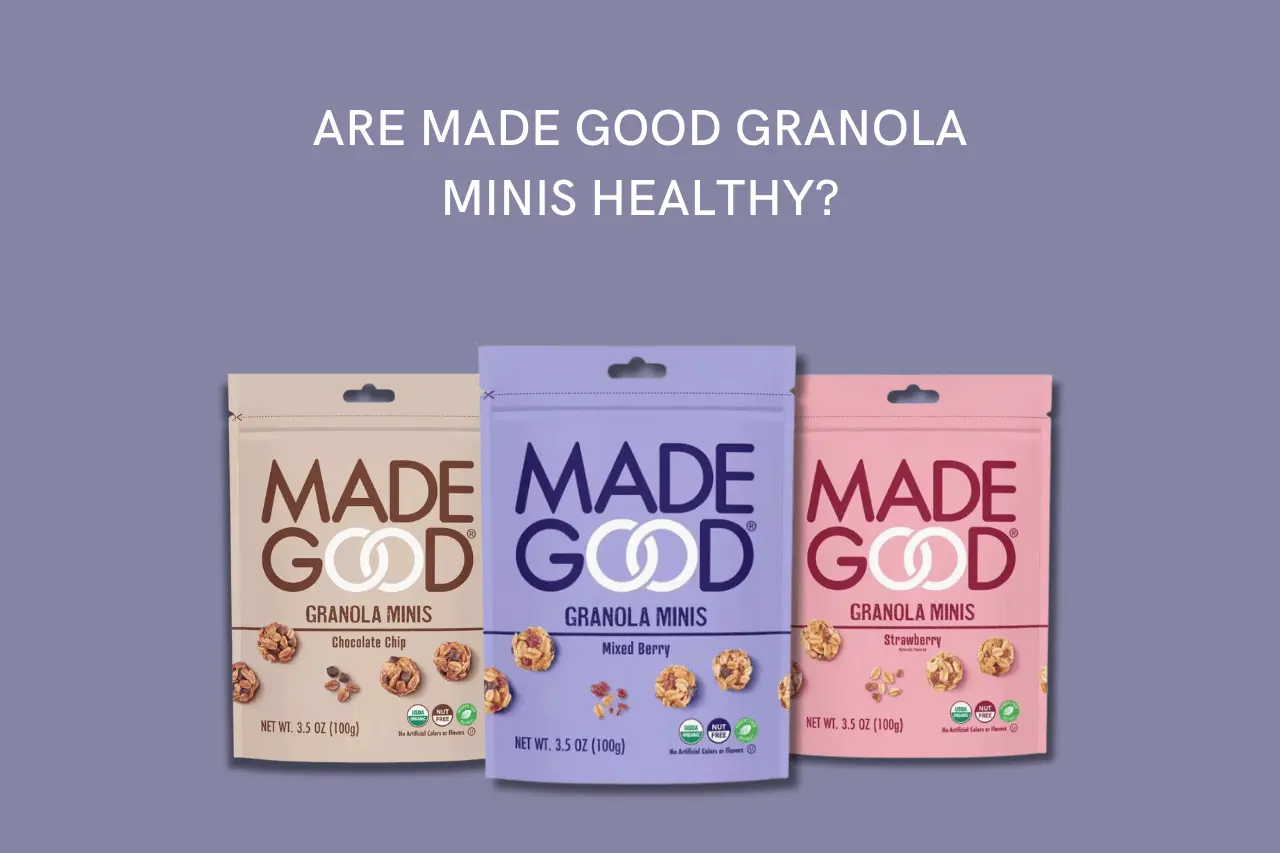
You’re standing in the Target snack aisle, and those colorful little pouches catch your eye.
Made Good Granola Minis. Organic. Gluten-free. Veggies hidden inside (somehow?). The packaging screams “guilt-free snacking for your kids!”
Your kid grabs a box. You flip it over, squint at the ingredient list, and see… wait, four different types of sugar? But also vitamins. And vegetables?
So what’s the verdict—are Made Good Granola Minis actually healthy, or just clever marketing?
Let’s break it down like you’re chatting with a nutritionist friend who’s not trying to sell you anything.
What Are Made Good Granola Minis, Anyway?
These bite-sized, round granola snacks come in kid-friendly flavors like Chocolate Chip, Strawberry, Cookies & Crème, Mixed Berry, and Chocolate Banana.
They’re marketed as a healthier alternative to traditional processed snacks—organic, allergen-free, and even containing vegetable extracts (we’ll get to that).
Each pouch is 24g (about a handful), making them perfect for lunch boxes, after-school snacks, or bribing your toddler to get in the car seat. No judgment.
But here’s the thing: just because something is marketed as healthy doesn’t mean it automatically gets a gold star.
The Ingredient Breakdown: What’s Actually Inside?
Let’s start with what Made Good Granola Minis are made from.
The base:
- Pure gluten-free oats (the star ingredient)
- Sunflower oil
- Brown rice crisps
The sweeteners (buckle up):
- Cane sugar
- Invert cane syrup
- Brown rice syrup
- Agave syrup
Other additions:
- Inulin (a prebiotic fiber)
- Tapioca starch
- Vegetable extracts (spinach, broccoli, carrots, tomatoes, beets, shiitake mushrooms)
- Natural flavor
- Salt
Everything is certified organic, which is a plus. And there are no artificial flavors, colors, or preservatives—something you can’t say about most kids’ snacks.
So ingredient-wise? Pretty clean. Simple, recognizable items you’d find in your own kitchen (well, except maybe invert cane syrup).
But let’s talk about the elephant in the room.
The Four Sugars Situation: Should You Be Concerned?
Here’s where things get interesting.
Made Good Granola Minis contain 6g of sugar per pouch (24g serving).
That’s not terrible compared to, say, a granola bar loaded with 12-15g. But nearly all of it is added sugar from four different sources: cane sugar, brown rice syrup, invert cane syrup, and agave syrup.
Why so many types of sugar? It’s a common food industry trick—using multiple sweeteners pushes each one lower on the ingredient list, making the product appear less sugary at first glance.
How does 6g stack up?
According to the American Heart Association:
- Men should limit added sugar to 36g per day
- Women should cap it at 25g per day
- Kids (ages 2-18) should stay under 25g per day
One pouch of Made Good Granola Minis gives your child 24% of their daily sugar limit (if we’re using the 25g guideline).
Not catastrophic, but if your kid eats two pouches as a snack? That’s nearly half their daily sugar allowance gone.
Here’s the sugar breakdown by flavor:
| Flavor | Added Sugar (g) | Total Sugar (g) |
|---|---|---|
| Chocolate Chip | 6 | 6 |
| Cookies & Crème | 6 | 6 |
| Chocolate Banana | 4 | 6 |
| Mixed Berry | 4 | 6 |
| Strawberry | 4 | 6 |
Per 24g pouch
Bottom line: they’re lower in sugar than many snacks, but portion control matters—especially with kids who’d happily demolish three pouches in one sitting.
Protein and Fiber: The Missing Pieces
Let’s be real: Made Good Granola Minis aren’t winning any awards here.
Protein: 2g per pouch
That’s about as much as a single almond. The protein comes from oats and rice crisps—plant-based, sure, but nothing substantial.
If you’re looking for a protein-packed snack to fuel your kid after soccer practice, these won’t cut it. Pair them with cheese, nut butter, or yogurt instead.
Fiber: 2g per pouch
That’s only 8% of the daily recommended fiber for adults (and even less impressive for growing kids who need around 25g per day).
The fiber comes mainly from oats and inulin, which is great for gut health. But again—not enough to make a real dent in daily needs.
Are they better than Cheez-Its or gummy snacks? Absolutely. But they’re not going to keep your kid full for long.
The Vitamin Boost: Actually Legit or Just Marketing?
Here’s where Made Good Granola Minis surprise you.
Each pouch is fortified with a solid lineup of vitamins:
- 20% daily value of Vitamin A
- 20% daily value of Vitamin C
- 25% daily value of Vitamin B1 (Thiamine)
- 20% daily value of Vitamin B6
- 20% daily value of Vitamin D
- 20% daily value of Vitamin E
That’s… actually impressive for a snack.
Many kids don’t get enough Vitamin D, and picky eaters often fall short on Vitamin A and C. So while these vitamins are added (not naturally occurring from the ingredients), they do provide legitimate nutritional value.
But what about those vegetable extracts?
The packaging loves to mention spinach, broccoli, carrots, beets, and shiitake mushrooms. Sounds healthy, right?
Here’s the truth: these extracts are present in tiny amounts—just enough for the brand to claim “nutrients from vegetables” on the box. You’re not getting a serving of veggies from these minis.
Think of them as a bonus, not the main event.
Sodium: Actually a Win
Made Good Granola Minis contain just 5-10mg of sodium per pouch.
That’s practically nothing.
For context, many packaged snacks clock in at 100-200mg per serving. So if you’re watching sodium (or your kid is), these are a genuinely low-sodium option.
Are Made Good Granola Minis Good for Weight Management?
Each pouch has 110 calories.
That’s reasonable for a snack—not too high, not too low.
The issue? These minis aren’t super filling due to the low protein and fiber. So your kid might eat one pouch, still feel hungry, and reach for another (and another).
If weight management is a concern, these can fit into a balanced diet—but only if you’re mindful of portions and pair them with something more substantial like fruit, nuts, or protein.
Allergen-Friendly and Dietary Wins
Here’s where Made Good really shines.
These granola minis are:
- Gluten-free (certified)
- Vegan (no dairy, eggs, or animal products)
- Non-GMO
- Free from 8 major allergens: peanuts, tree nuts, dairy, eggs, soy, sesame, fish, and shellfish
If you’re dealing with food allergies or intolerances, Made Good is a safe bet. That’s a huge relief for parents navigating school snack policies or playdates.
How Do They Compare to Other Lunch Box Snacks?
Let’s put Made Good Granola Minis side-by-side with similar options:
vs. Annie’s Organic Bunny Grahams:
Annie’s have similar sugar content but less vitamin fortification. Made Good wins on nutrients.
vs. Simple Mills Soft Baked Bars:
Simple Mills use almond flour and have more protein/fat, making them more filling. But Made Good is allergen-friendlier.
vs. Kodiak Bear Bites:
Kodiak has way more protein (4-5g) but also more sugar. If protein is your priority, Kodiak edges ahead.
vs. Regular granola bars:
Made Good has fewer calories and less sugar than most Quaker or Nature Valley bars, plus cleaner ingredients.
The Bottom Line: Should You Buy Made Good Granola Minis?
Here’s my honest take.
Made Good Granola Minis are a solid choice for a kids’ snack if you’re looking for:
- Something allergen-free and safe for schools
- Organic, clean ingredients without artificial junk
- A lower-sugar option compared to cookies or gummies
- Vitamin-fortified snacks for picky eaters
But they’re not perfect:
- Low in protein and fiber (won’t keep kids full long)
- Contains four types of added sugar (though total amount is moderate)
- The veggie extracts are more marketing than meaningful nutrition
- Easy to overeat since they’re not very satiating
My recommendation?
Use them as part of a balanced snack—not the whole thing.
Pair a pouch with:
- Apple slices and peanut butter
- String cheese
- A hard-boiled egg
- A handful of nuts (if no allergies)
That way, your kid gets the crunch and sweetness they crave, plus the protein and fat they actually need to stay full.
Are they the healthiest snack on the planet? No. But they’re way better than most processed options out there—and sometimes, that’s good enough.
Looking for more honest snack reviews? Check out these: