
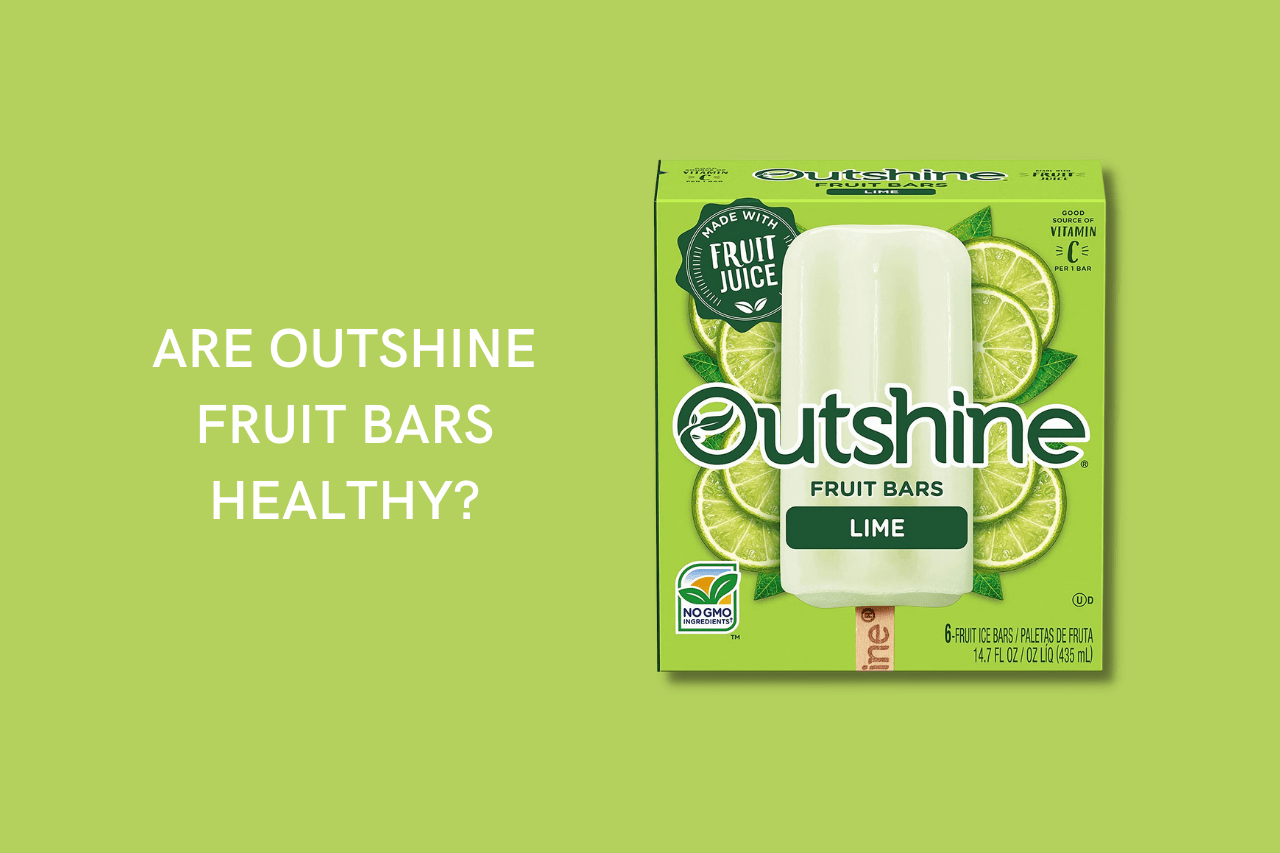
It’s a sweltering summer afternoon. You open the freezer looking for something cold, refreshing, and—ideally—not completely terrible for you. There, between the ice cream tubs and frozen pizza, sits a box of colorful Outshine fruit bars.
They look promising. The packaging screams “REAL FRUIT!” and shows vibrant strawberries, mangoes, and pineapples. No artificial flavors. Made with juice. They seem like the perfect guilt-free alternative to ice cream, right?
But here’s the question that stops you mid-reach: Are Outshine bars actually healthy, or is this just clever marketing?
You’re not alone in wondering. These frozen fruit bars have exploded in popularity over the past few years, positioned as a lighter, more wholesome frozen treat. Parents buy them for their kids. Fitness enthusiasts grab them post-workout. Health-conscious adults stock their freezers with them.
But when you actually look at the nutrition label—especially that sugar content—the “healthy” image starts to crack.
The truth? Outshine bars sit in that frustrating gray area. They’re definitely better than a bowl of ice cream, but they’re not the nutritious snack the branding suggests. They have some redeeming qualities, but also some serious nutritional shortcomings worth knowing about.
In this honest review, I’ll break down everything—ingredients, sugar content, how they compare to alternatives, and whether they deserve a spot in your freezer.
What Exactly Are Outshine Fruit Bars?
Outshine bars are frozen treats made primarily from fruit puree and juice, sweetened with cane sugar, and fortified with vitamin C. They come in vibrant fruity flavors and are sold in the freezer aisle alongside ice cream and popsicles.
Popular Outshine flavors:
- Strawberry
- Pineapple
- Mango
- Watermelon
- Lime
- Grape
- Peach
- Pomegranate
- Tangerine
- Mango with Tajín (with a spicy kick!)
- Creamy Coconut (made with coconut milk)
What sets Outshine apart from regular popsicles is their emphasis on real fruit as the first ingredient. No artificial colors, no high fructose corn syrup, no weird chemicals you can’t pronounce.
Sounds great so far, right? Let’s dig deeper.
What’s Really Inside an Outshine Bar?
The ingredient list is relatively clean compared to many frozen treats. Here’s what you’re eating:
Main Ingredients:
Real fruit puree – The first ingredient in most flavors. This is actual fruit that’s been blended into a smooth paste. It provides natural sweetness, flavor, and some nutrients.
Fruit juice from concentrate – Adds extra fruitiness and helps with color. Remember, “from concentrate” means they removed water from fresh juice, then added it back later. You lose some nutrients in this process.
Cane sugar – Here’s where things get dicey. While cane sugar is technically “less processed” than white refined sugar, it still affects your body the same way. And there’s a lot of it.
Water – The base that holds everything together.
Citric acid – A natural preservative found in citrus fruits. Adds tartness and extends shelf life.
Guar gum and carob bean gum – Natural thickeners from plants. These give the bars their smooth texture. Completely safe.
Natural flavors – The vague catch-all ingredient. Could be anything, really, but supposedly derived from natural sources.
Ascorbic acid (Vitamin C) – Added to boost nutrition and act as a preservative.
The verdict on ingredients: Pretty clean overall. No artificial junk, no weird chemicals. The main concern is the sugar content, which we need to talk about seriously.
The Sugar Problem: Let’s Talk Numbers
This is where Outshine’s healthy image takes a major hit.
Sugar per serving (2 bars): 26-35g depending on flavor
Let that sink in. Two bars—which isn’t a huge amount—contain as much sugar as a can of soda (39g) or a Snickers bar (27g).
Sugar Breakdown by Flavor:
| Flavor | Added Sugar | Total Sugar | Per Serving |
|---|---|---|---|
| Pineapple | 29g | 35g | 2 bars |
| Pomegranate | 30g | 30g | 2 bars |
| Peach | 25g | 30g | 2 bars |
| Mango | 23g | 32g | 2 bars |
| Tangerine | 22g | 29g | 2 bars |
| Grape | 21g | 29g | 2 bars |
| Strawberry | 24g | 28g | 2 bars |
| Mango w/Tajín | 20g | 28g | 2 bars |
| Lime | 27g | 27g | 2 bars |
| Watermelon | 23g | 26g | 2 bars |
| Creamy Coconut | 15g | 20g | 1 bar |
| Strawberry (Sugar-Free) | 0g | 4g | 2 bars |
Putting this in perspective:
The American Heart Association recommends:
- Men: Max 36g added sugar per day
- Women: Max 24g added sugar per day
A single serving of Outshine bars (2 bars) gives you:
- 70-97% of the daily limit for men
- 100-146% of the daily limit for women
Yeah, that’s right. Women exceed their entire daily sugar allowance with just two Outshine bars.
But Wait—Isn’t Fruit Sugar Different?
Here’s a common misconception: “It’s natural sugar from fruit, so it’s fine!”
Not quite. While Outshine bars do contain some natural fruit sugars, the majority of sugar is added cane sugar. Look at that table again—added sugar makes up 70-90% of total sugar in most flavors.
And here’s the thing: once sugar hits your bloodstream, your body doesn’t really care if it came from an apple or a candy bar. Too much is too much.
The advantage of eating whole fruit is the fiber that slows sugar absorption. Outshine bars have almost no fiber, so that sugar hits fast.
Where’s the Fiber and Protein?
Despite being made from “real fruit,” Outshine bars are nutritionally stripped down.
Fiber content: Less than 1g per bar for most flavors (only Strawberry and Peach have 1g per bar)
Compare this to:
- A medium apple: 4g fiber
- A cup of strawberries: 3g fiber
- A banana: 3g fiber
When you juice or puree fruit and remove the pulp, you lose most of the fiber. That’s exactly what happened here.
Protein content: Essentially zero (except Creamy Coconut with 4g per bar)
Fiber and protein are what keep you satisfied, stabilize blood sugar, and support gut health. Outshine bars offer neither.
The One Redeeming Quality: Vitamin C
Here’s where Outshine deserves credit. Every bar (except Creamy Coconut) is fortified with vitamin C.
Vitamin C content: 26-72mg per serving (2 bars)
The standout is Mango with Tajín at 72mg—that’s 80% of your daily needs!
Vitamin C supports:
- Immune system function
- Collagen production for skin
- Iron absorption
- Antioxidant protection
However—and this is important—the vitamin C is synthetically added, not naturally occurring from the fruit. You could get the same benefit from an orange or a supplement without the sugar bomb.
Are Outshine Bars Good for Weight Loss? (Absolutely Not)
If you’re trying to lose weight, Outshine bars are working against you.
Why they’re bad for weight loss:
❌ Sugar overload – 26-35g per serving causes insulin spikes that promote fat storage
❌ Empty calories – 60-70 calories per bar with minimal nutrition
❌ No satiety – Zero fiber and protein means you’ll be hungry again soon
❌ Blood sugar crash – The spike leads to cravings for more sugar
❌ Easy to overconsume – “It’s just fruit!” mentality leads to eating multiple servings
Here’s the reality: That “innocent” serving of 2 Outshine bars contains roughly the same sugar as:
- 2/3 of a Snickers bar
- A can of Sprite
- 8 Oreo cookies
Would you eat any of those while trying to lose weight? Probably not.
If you’re occasionally having one bar (not two) as a treat, that’s manageable. But positioning them as a “healthy snack” while dieting is self-sabotage.
How Do Outshine Bars Compare to Alternatives?
Let’s see how Outshine stacks up against other popular frozen treats and bars.
Outshine vs. That’s It Fruit Bars
Winner: That’s It Bars (by a mile)
That’s It bars are made from literally two ingredients: fruit and fruit. No added sugar, high fiber (3-5g per bar), and actual nutrition from whole fruit.
The catch: They’re not frozen, and they’re chewier/denser. Different product category, but if you want a truly healthy fruit bar, That’s It wins.
Outshine vs. Yasso Frozen Yogurt Bars
Winner: Yasso Bars (slightly ahead)
Yasso bars have less sugar (13-17g per bar), provide 5-6g of protein, and include probiotics for gut health. They’re more filling and nutritionally balanced.
The catch: They’re dairy-based (not suitable for vegans) and don’t have the vitamin C boost.
Outshine vs. Turkey Hill Fruit & Cream Bars
Winner: Outshine (barely)
Turkey Hill bars have less sugar but are higher in calories, fat, and sodium. Outshine is the lighter option if you’re watching overall intake.
The catch: Neither is particularly healthy. You’re choosing the lesser evil here.
Outshine vs. Regular Ice Cream
Winner: Outshine (obviously)
A typical serving of ice cream has more calories (200-300), more fat (10-20g), and similar sugar. Outshine is definitely the better choice if you’re craving something frozen.
The catch: Better than ice cream doesn’t mean “healthy.” It just means less unhealthy.
For more frozen treat comparisons, check out options like Pure Organic Fruit Bars or other alternatives like Think Keto Bars if you’re looking for lower-sugar options.
Special Considerations: Dietary Restrictions
Are Outshine bars gluten-free?
Yes! All flavors are gluten-free since they’re fruit-based with no wheat ingredients.
Are Outshine bars vegan?
All flavors except Creamy Coconut are vegan. The Coconut flavor contains skim milk.
Are Outshine bars keto-friendly?
Absolutely not. With 14-18g net carbs per bar, they’ll kick you out of ketosis immediately. Even the sugar-free Strawberry has 15g net carbs.
Do Outshine bars contain xylitol?
No added xylitol. However, strawberries naturally contain trace amounts, so if you or your dog have xylitol sensitivity, use caution with Strawberry flavor.
Are Outshine bars safe for diabetics?
Not recommended. The high sugar content and lack of fiber will spike blood sugar significantly. Consult your doctor, but there are much better options for managing diabetes.
When Is It Okay to Eat Outshine Bars?
Look, I’m not here to tell you that you can never enjoy an Outshine bar. Life is about balance, and sometimes you just want something cold and fruity.
When Outshine bars are a reasonable choice:
✅ Hot summer day treat – As an occasional indulgence (once or twice a week max)
✅ Better than ice cream – If you’re choosing between Outshine and Ben & Jerry’s, go Outshine
✅ Post-workout quick sugar – If you need fast carbs to replenish glycogen (though there are better options)
✅ Kids’ special treat – Better than giving them a bowl of ice cream, but still shouldn’t be daily
When you should skip them:
❌ Daily snack habit
❌ While actively trying to lose weight
❌ If you have diabetes or insulin resistance
❌ As a “healthy” meal replacement
❌ If you’re eating multiple servings
Pro tip: If you do eat them, stick to ONE bar, not the suggested serving of two. That cuts your sugar intake in half and makes them far more reasonable.
Healthier Alternatives to Outshine Bars
If you want the satisfaction of a frozen fruit treat without the sugar overload, try these:
1. Frozen Fruit (The Simplest Solution)
- Freeze grapes, banana slices, or berries
- No added sugar, all the fiber intact
- Costs way less than Outshine bars
- Kids love frozen grapes especially
2. Homemade Fruit Popsicles
- Blend real fruit with a tiny bit of honey or dates
- Pour into molds and freeze
- You control exactly what goes in
- Way more nutritious than Outshine
3. Sugar-Free Outshine Strawberry
- Only 4g sugar per serving (from natural fruit)
- Uses sucralose and sorbitol as sweeteners
- Better option if you must have Outshine
4. Yasso Frozen Greek Yogurt Bars
- More protein, less sugar, probiotics included
- Actually filling unlike Outshine
- Better for weight management
5. Pure Fruit Bars (Not Frozen)
- Brands like That’s It or Pure Organic
- Made from whole fruit with fiber
- Portable and shelf-stable
6. Protein-Based Bars
- Simply Protein Bars or Anabars
- Better macros with actual satiety
- Not frozen, but far more nutritious
For more bar comparisons, check out options like Sunbelt Granola Bars, Zee Zees Bars, or Kodiak Granola Bars.
Frequently Asked Questions
How many calories are in Outshine bars?
60-70 calories per bar for most flavors. Creamy Coconut has 120 calories per bar.
Can I eat Outshine bars every day?
Not recommended. The sugar content is too high for daily consumption. Treat them as an occasional indulgence, not a daily snack.
Are Outshine bars better than popsicles?
Depends on the popsicle. Compared to sugar-water popsicles with artificial everything, yes. Compared to homemade fruit popsicles, no.
Do Outshine bars have probiotics?
No. Unlike yogurt-based bars (like Yasso), Outshine bars don’t contain probiotics.
What’s the healthiest Outshine flavor?
Sugar-Free Strawberry with only 4g sugar. Among regular flavors, Creamy Coconut has the least added sugar (15g) but more calories.
Can toddlers eat Outshine bars?
They’re safe from a food safety perspective, but the high sugar content isn’t ideal for young children. If you do give them, consider half a bar as a serving and save it for special occasions.
The Final Verdict: Are Outshine Bars Healthy?
Let me be crystal clear: No, Outshine bars are not healthy.
They’re better than ice cream and regular popsicles, but “better than junk food” doesn’t equal “healthy.”
The reality:
- Extremely high in sugar (26-35g per serving)
- Almost no fiber or protein
- Minimal nutritional value beyond added vitamin C
- Will spike your blood sugar significantly
- Not filling or satisfying
However, they’re not poison either. In the spectrum of frozen treats, they’re toward the better end.
My honest recommendation:
✅ Occasional treat (1-2 times per week): Perfectly fine as part of an overall balanced diet
❌ Daily snack: Too much sugar, not enough nutrition
✅ Better than ice cream: If you’re choosing between frozen treats, Outshine wins
❌ “Healthy snack”: Don’t fool yourself—these are dessert, not nutrition
If you love Outshine bars, you don’t need to eliminate them completely. Just be honest about what they are—a sugar-heavy frozen treat that happens to contain some fruit—and consume them accordingly.
Better yet, try making your own fruit popsicles at home. You’ll get actual nutrition, control the sugar, and save money. Your body (and your wallet) will thank you.
Take Action: Making Smarter Frozen Treat Choices
Ready to enjoy frozen treats without the guilt or sugar crash?
- Check your freezer – How many boxes of Outshine (or similar) do you currently have?
- Try the one-bar rule – If you eat them, stick to ONE bar instead of two
- Experiment with alternatives – Buy frozen fruit or make homemade popsicles
- Save them for special occasions – Demote from daily snack to weekly treat
- Read labels on everything – Apply this same scrutiny to all “healthy” frozen treats
Small changes compound over time. Your taste preferences will adjust, and you’ll find yourself craving real fruit instead of sugar-loaded frozen bars.
Have you tried Outshine bars? What’s your take on them? Share your thoughts in the comments below!
Related Articles: