
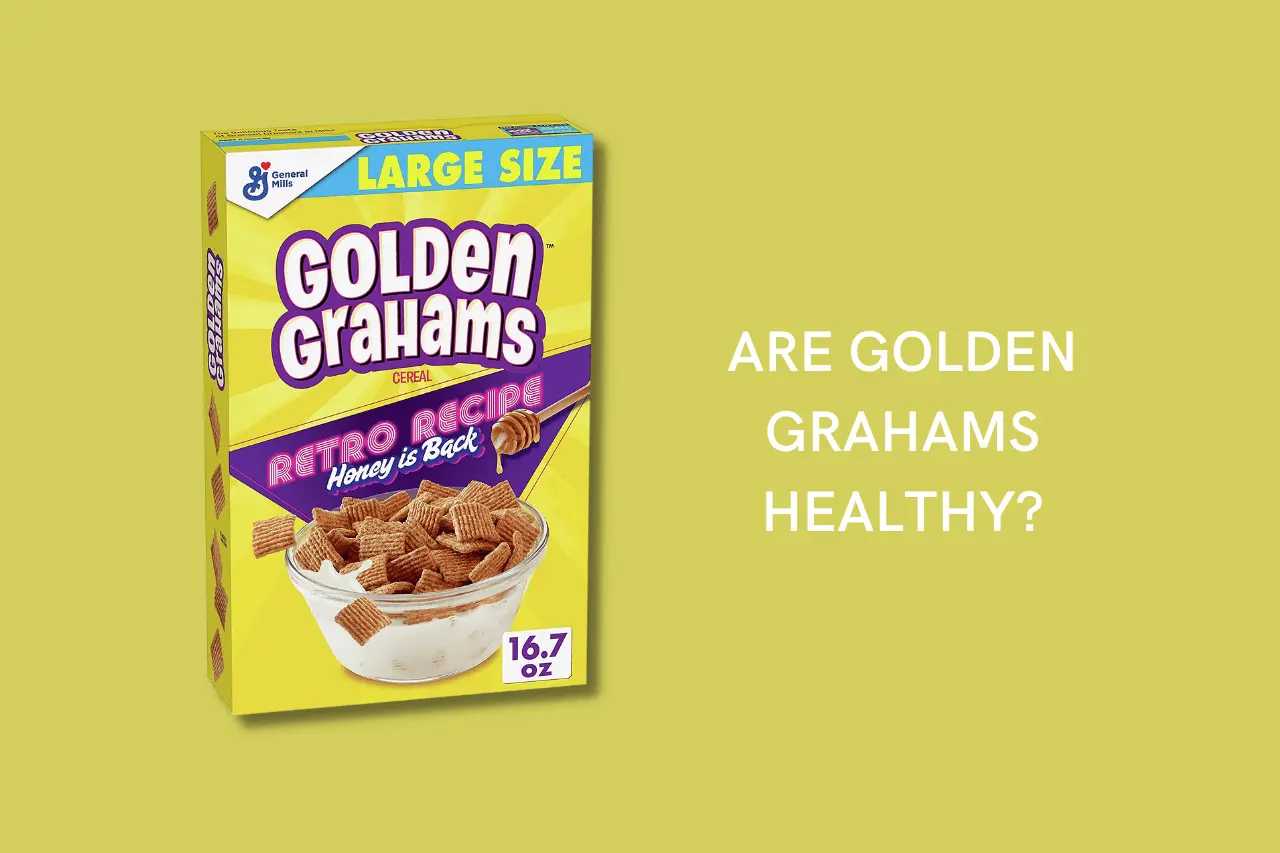
You spot that familiar yellow box in the cereal aisle—those perfect golden squares staring back at you. Golden Grahams. Instantly, you’re transported back to childhood Saturday mornings, that sweet graham cracker flavor, the satisfying crunch in cold milk.
The box proudly displays “Whole Grain” in big letters. There’s something about those golden squares that just feels wholesome. Graham crackers are kind of healthy, right? And “golden” sounds natural and nutritious. Maybe this isn’t such a bad breakfast choice after all.
Here’s where I need to hit the brakes.
Golden Grahams are not healthy. Yes, they’re made with whole grain wheat—that part is true. But they’re also loaded with sugar (9-12g depending on the edition), have barely any fiber, and contain almost no protein. The “golden” color? That’s just marketing magic. The graham cracker connection? It’s a flavor profile engineered to trigger nostalgia, not nutrition.
The honest truth: Golden Grahams are sweet graham crackers shaped like cereal. They taste amazing because they’re designed to—multiple sugar sources, satisfying crunch, that distinctive graham flavor. But tasting good doesn’t make them a healthy breakfast.
With only 1-2g of fiber and 2g of protein, Golden Grahams won’t keep you full, won’t stabilize your blood sugar, and won’t provide the sustained energy you need to start your day. They’re a dessert masquerading as breakfast.
In this review, I’ll break down what’s really inside those golden squares, how much sugar you’re actually eating, and whether this nearly 50-year-old cereal classic deserves any place in a healthy diet.
What Exactly Are Golden Grahams?
Golden Grahams burst onto the breakfast scene in 1975, created by General Mills to capture that beloved graham cracker flavor in cereal form. For nearly 50 years, they’ve been a staple in American breakfast bowls—beloved for their distinctive square shape, sweet honey-graham taste, and satisfying crunch.
The genius of Golden Grahams is the graham cracker association. Graham crackers have this wholesome, almost healthy image—they’re what you make S’mores with, what you give kids as a “not too bad” snack. By turning that flavor into cereal form, General Mills created something that feels less indulgent than it actually is.
What makes Golden Grahams appealing:
- Sweet graham cracker flavor (triggers S’mores nostalgia)
- Perfect square shape (fun and satisfying)
- “Golden” color (sounds natural and wholesome)
- Made with whole grain wheat (legitimate selling point)
- Stays crunchy in milk
The cereal is marketed with a “wholesome goodness” vibe. The word “golden” evokes sunshine, health, and natural ingredients. The graham cracker connection feels comforting and familiar. It’s brilliant marketing.
But here’s the reality: those golden squares are sweetened wheat cereal. The graham flavor comes from sugar and honey, not from anything particularly nutritious. The “whole grain” benefit is real, but it’s undermined by the sugar content and lack of fiber.
What’s Inside Those Golden Squares?
Let’s break down what you’re actually eating when you pour a bowl of Golden Grahams.
Main Ingredients:
- Whole grain wheat (first ingredient—this is good!)
- Corn meal
- Sugar (third ingredient—here we go)
- Brown sugar syrup (more sugar)
- Canola oil
- Dextrose (even more sugar)
- Baking soda
- Salt
- Natural flavor
Some editions also contain:
- Honey (in “Retro Recipe” versions)
- Trisodium phosphate (controversial ingredient, not on General Mills website but listed on some boxes)
Fortified vitamins and minerals:
- Calcium, Iron, Vitamin A, D, C
- B vitamins: Thiamin, Riboflavin, Niacin, B6, B12, Folic Acid
- Zinc
What’s NOT in Golden Grahams:
✅ No high fructose corn syrup
✅ No artificial flavors
✅ No artificial colors
✅ No artificial preservatives
The reality check:
The ingredient list is actually pretty clean. Whole grain wheat as the first ingredient is legitimately positive—better than refined flour. There’s no sketchy artificial junk or HFCS.
However—and this is a big however—look at the sugar sources: sugar, brown sugar syrup, and dextrose. That’s three different forms of added sugar. Some editions also include honey as a fourth sugar source.
The whole grain wheat is there, but it’s swimming in sweetness. And despite being made from whole grain, the fiber content is shockingly low (we’ll get to that).
The Trisodium Phosphate question:
Some Golden Grahams boxes list Trisodium Phosphate as an ingredient, though it’s not mentioned on the official General Mills website. Trisodium Phosphate is FDA-approved and used to adjust acidity and improve texture.
The controversy? It’s also used in industrial cleaning products, which freaks people out. In small food quantities, it’s considered safe. But if you want to avoid it entirely, check your specific box’s ingredient list.
The Sugar Reality: How Sweet Are These Golden Squares?
Here’s where Golden Grahams’ healthy image completely crumbles.
Golden Grahams contain 9g of sugar per 30g serving.
Some editions (like certain store versions) contain up to 12g of sugar per serving.
All of this sugar comes from added sources: sugar, brown sugar syrup, and dextrose. None of it is naturally occurring.
American Heart Association recommends:
- Men: Max 36g added sugar per day
- Women: Max 25g added sugar per day
One bowl of Golden Grahams = 25% of the daily sugar limit for men, 36% for women.
With the higher-sugar editions (12g), you’re consuming 33% of men’s limit or 48% of women’s limit—nearly half your entire day’s sugar budget in one bowl of cereal.
How Golden Grahams compare to other cereals:
| Cereal | Sugar (g) |
|---|---|
| Kellogg’s Raisin Bran | 17g |
| Krave | 15g |
| Morning Summit | 12g |
| Cheerios (Honey Nut) | 12g |
| Cinnamon Toast Crunch | 12g |
| Vector | 11g |
| Golden Grahams | 9g |
| Honey Bunches of Oats | 9g |
| Life | 8g |
| Total | 6g |
| Special K | 5g |
| Cornflakes | 4g |
Golden Grahams sits in the middle-to-high range. It’s not the absolute worst (Raisin Bran and Krave are worse), but it’s definitely in the “too much sugar” category.
Why this matters:
Nine grams of sugar for breakfast spikes your blood sugar quickly. You’ll feel great for about 30 minutes, then crash. By mid-morning, you’ll be tired, irritable, and craving more sugar. This rollercoaster is exactly what you don’t want from breakfast.
A healthy breakfast should stabilize your blood sugar and provide sustained energy—not set you up for a crash before lunch.
The Protein & Fiber Disaster
If the sugar content is concerning, the protein and fiber situation is even worse.
Protein: 2g per serving
This is pathetically low. Two grams of protein provides essentially zero satiety, zero muscle support, and zero sustained energy.
The only way Golden Grahams becomes remotely acceptable protein-wise is if you add milk. One cup of milk adds about 8g protein, bringing your total to 10g—which is decent but still not impressive for a complete breakfast.
How Golden Grahams’ protein compares:
| Cereal | Protein (g) |
|---|---|
| Special K | 7g |
| Morning Summit | 6g |
| Vector | 5.5g |
| Kellogg’s Raisin Bran | 5g |
| Life | 4g |
| Total | 3g |
| Cheerios (Honey Nut) | 3g |
| Krave | 3g |
| Honey Bunches of Oats | 3g |
| Cornflakes | 3g |
| Golden Grahams | 2g |
| Cinnamon Toast Crunch | 2g |
Golden Grahams ties for last place with Cinnamon Toast Crunch. That’s not company you want to keep.
Fiber: 1-2g per serving
This is shockingly low for a cereal made with “whole grain wheat.” One to two grams of fiber is less than 10% of your daily needs (25-38g for adults).
Compare this to:
- A medium apple: 4g fiber
- One cup of raspberries: 8g fiber
- A bowl of oatmeal: 4g fiber
- Two slices whole grain bread: 6g fiber
For a cereal that prominently displays “Whole Grain” on the box, 1-2g of fiber is embarrassing. The processing strips away most of the fiber benefit.
How Golden Grahams’ fiber compares:
| Cereal | Fiber (g) |
|---|---|
| Kellogg’s Raisin Bran | 7g |
| Morning Summit | 5g |
| Total | 4g |
| Vector | 3.2g |
| Cheerios (Honey Nut) | 3g |
| Life | 3g |
| Krave | 2g |
| Cinnamon Toast Crunch | 2g |
| Honey Bunches of Oats | 2g |
| Golden Grahams | 1g |
| Cornflakes | 1g |
| Special K | <1g |
Golden Grahams is near the bottom of the pack. Only Special K has less fiber.
Why fiber matters: Fiber is crucial for slowing sugar absorption and preventing blood sugar spikes. It keeps you full longer and supports digestive health. With only 1g of fiber and 9g of sugar, Golden Grahams is a recipe for blood sugar chaos.
The bottom line: With only 2g protein and 1g fiber, Golden Grahams won’t satisfy your hunger. You’ll eat your bowl at 7 AM, be starving by 9 AM, and reach for snacks all morning. That’s the opposite of what a good breakfast should do.
The Sodium Situation: Moderate but Manageable
Golden Grahams contain 230mg of sodium per serving. That’s about 15% of the ideal daily sodium limit (1,500mg recommended by the American Heart Association).
Some editions contain up to 300mg of sodium per serving, which is higher.
How Golden Grahams’ sodium compares:
| Cereal | Sodium (mg) |
|---|---|
| Cornflakes | 300mg |
| Special K | 270mg |
| Cinnamon Toast Crunch | 230mg |
| Golden Grahams | 230mg |
| Vector | 220mg |
| Cheerios (Honey Nut) | 210mg |
| Kellogg’s Raisin Bran | 200mg |
| Total | 190mg |
| Honey Bunches of Oats | 190mg |
| Life | 170mg |
| Krave | 140mg |
| Morning Summit | 75mg |
Golden Grahams sits in the middle for sodium content. It’s not terrible, but it’s not impressive either.
If you have high blood pressure or follow a low-sodium diet, Golden Grahams aren’t ideal—but they’re also not the worst offender. The bigger concern is the sugar content, not the sodium.
Are Golden Grahams Good for Weight Loss?
Let me be direct: No. Golden Grahams are not good for weight loss.
Why Golden Grahams sabotage weight loss:
❌ High sugar content – 9g of sugar triggers insulin spikes that promote fat storage
❌ Almost no fiber – 1g won’t keep you full or stabilize blood sugar
❌ Minimal protein – 2g provides zero satiety
❌ Blood sugar crash – You’ll be hungry and craving more sugar within 2 hours
❌ Empty calories – Nutritionally poor despite whole grain claims
The calorie perspective:
Golden Grahams have only 110 calories per serving without milk. Add a cup of whole milk and you’re at 260 calories total.
That sounds reasonable calorie-wise. But what are you getting for those 260 calories?
- 9g sugar from cereal + 12g natural sugar from milk = 21g total sugar
- Only 10g protein (with milk)
- Only 1g fiber
- Almost no satiety
Compare this to a 260-calorie breakfast of Greek yogurt with berries and granola:
- 15-20g protein
- 5-8g fiber
- Natural fruit sweetness
- Probiotics for gut health
- Keeps you full until lunch
The realistic take:
If you’re trying to lose weight, skip Golden Grahams entirely. Choose breakfasts that support your goals:
- High protein (15-30g minimum)
- Rich in fiber (8-10g or more)
- Low in added sugar (0-5g)
- Keeps you satisfied for 4-5 hours
Golden Grahams checks zero of these boxes.
Golden Grahams vs. Other Sweet Cereals
Let’s see how Golden Grahams stacks up against similar options.
Golden Grahams vs. Cinnamon Toast Crunch:
- Both have similar sugar (9-12g)
- Both have minimal protein (2g)
- Cinnamon Toast Crunch has slightly more fiber (2g vs. 1g)
- Same sodium (230mg)
Winner: Tie. They’re both equally bad for you.
Golden Grahams vs. Honey Nut Cheerios:
- Honey Nut Cheerios: 12g sugar, 3g fiber, 3g protein
- Golden Grahams: 9g sugar, 1g fiber, 2g protein
Winner: Neither is great, but Honey Nut Cheerios has more fiber and protein.
Golden Grahams vs. Total:
- Total: 6g sugar, 4g fiber, 3g protein
- Golden Grahams: 9g sugar, 1g fiber, 2g protein
Winner: Total, hands down. Less sugar, more fiber, more protein.
Golden Grahams vs. Plain Oatmeal:
- Oatmeal: 0g added sugar, 4g fiber, 5g protein (you control toppings)
- Golden Grahams: 9g sugar, 1g fiber, 2g protein
Winner: Oatmeal, not even close.
Bottom line: Golden Grahams is middle-of-the-pack among sweet cereals, but the entire category is nutritionally poor. Being “better than Cinnamon Toast Crunch” is not an achievement.
Special Dietary Considerations
Are Golden Grahams gluten-free?
No. Golden Grahams are made with whole grain wheat, which contains gluten. If you have celiac disease or gluten sensitivity, avoid Golden Grahams entirely.
Are Golden Grahams vegan?
No. Golden Grahams are not vegan for several reasons:
- Sugar is likely processed using animal bone char (common in non-organic sugar)
- Vitamin D3 is typically derived from lanolin (sheep’s wool)
- Retro Recipe editions contain honey, which vegans avoid
Strict vegans should skip Golden Grahams.
Can diabetics eat Golden Grahams?
Not recommended. Golden Grahams are terrible for diabetics:
- 9g sugar per serving
- Only 1g fiber (not enough to slow sugar absorption)
- Will spike blood sugar significantly
If you’re diabetic and want cereal, look for high-fiber, low-sugar options like Fiber One or plain Cheerios. Or better yet, skip cereal altogether and choose eggs, Greek yogurt, or low-carb alternatives.
Are Golden Grahams keto-friendly?
Absolutely not. Golden Grahams have high carbs and sugar, which will immediately kick you out of ketosis. Keto dieters need to avoid all grain-based cereals.
Are Golden Grahams safe for kids?
They’re safe in the sense that they won’t harm kids immediately, but:
- 9g sugar conditions kids to expect sweetness at every meal
- Low nutrition means kids start their day with empty calories
- Energy crashes lead to poor focus and behavior at school
Occasional treat (once every couple weeks)? Fine. Daily breakfast? You can do better for your kids’ health and development.
Better Alternatives to Golden Grahams
If you love the graham cracker flavor but want something healthier, try these:
1. Plain Cheerios with Cinnamon and Honey
- 1g sugar
- 3g fiber
- Add your own cinnamon and a drizzle of honey
- You control the sweetness
2. Barbara’s Original Puffins
- 5g sugar
- 5g fiber
- No artificial anything
- Slightly sweet, wholesome
3. Nature’s Path Heritage Flakes
- 4g sugar
- 3g fiber
- Organic whole grains
- Simple, clean ingredients
4. DIY Graham Cracker Oatmeal
- Cook plain oats
- Add cinnamon, vanilla, and a touch of honey
- Top with crushed graham crackers (small amount)
- High fiber, you control sugar
5. Greek Yogurt with Graham Crackers
- Plain Greek yogurt (15-20g protein)
- Crumble a few graham crackers on top
- Add berries
- Sweet, satisfying, protein-packed
6. Whole Grain Toast with Almond Butter and Honey
- Whole grain bread (fiber!)
- Almond butter (protein and healthy fats)
- Light drizzle of honey
- Similar sweet graham flavor, way healthier
For more cereal reviews, check out Is Total Cereal Healthy?, Is Krave Cereal Healthy?, Is Honeycomb Cereal Healthy?, or Honey Smacks vs Golden Crisp.
Frequently Asked Questions
How much sugar is in Golden Grahams?
Golden Grahams contain 9g of sugar per 30g serving. Some editions contain up to 12g of sugar. All of this sugar comes from added sources (sugar, brown sugar syrup, dextrose), representing 25-36% of women’s daily limit or 25-33% of men’s daily limit.
Are Golden Grahams made with whole grain?
Yes, whole grain wheat is the first ingredient in Golden Grahams. However, the cereal only contains 1g of fiber per serving, which is shockingly low for a whole grain product. The processing removes most of the fiber benefit.
Can I eat Golden Grahams every day?
Not recommended. The high sugar content (9g), minimal fiber (1g), and low protein (2g) make Golden Grahams a poor choice for daily consumption. Treat them as an occasional indulgence (once every 2-3 weeks max), not a regular breakfast.
Do Golden Grahams contain Trisodium Phosphate?
Some editions of Golden Grahams list Trisodium Phosphate as an ingredient, though it’s not mentioned on the General Mills website. Check your specific box’s ingredient list. Trisodium Phosphate is FDA-approved but controversial because it’s also used in cleaning products.
Are Golden Grahams healthier than other sweet cereals?
Golden Grahams are middle-of-the-pack. They have less sugar than Krave or Raisin Bran, but more sugar than Total or Cornflakes. The real problem is the minimal fiber (1g) and protein (2g), which makes them unsatisfying and nutritionally poor.
How many calories are in Golden Grahams?
Golden Grahams contain 110 calories per 30g serving without milk. With one cup of whole milk, that increases to approximately 260 calories.
What makes Golden Grahams “golden”?
The golden color comes from the natural color of whole grain wheat combined with the browning from baking. It’s not artificial coloring—the term “golden” is primarily marketing to evoke wholesome, natural goodness.
Where can I buy Golden Grahams?
Golden Grahams are sold at most major grocery stores including Walmart, Target, Kroger, Safeway, and online at Amazon. Look in the cereal aisle near other General Mills products.
The Final Verdict: Are Golden Grahams Healthy?
Let me be absolutely clear: No, Golden Grahams are not healthy.
They’re sweet graham cracker-flavored cereal with minimal nutrition, marketed with a wholesome image because “golden” sounds natural and “whole grain” sounds healthy.
The reality:
- 9g sugar per serving (some editions have 12g)
- Only 1g fiber (pathetic for “whole grain”)
- Only 2g protein (won’t keep you full)
- Blood sugar spike and crash guaranteed
- Multiple added sugar sources
- Nutritionally empty despite fortification
However, Golden Grahams do have a few positives:
✅ Made with whole grain wheat (better than refined grains)
✅ No artificial flavors, colors, or preservatives
✅ No high fructose corn syrup
✅ Relatively clean ingredient list
✅ Lower sugar than some cereals (but still too much)
My honest recommendation:
Stop buying Golden Grahams as a regular breakfast. They’re a dessert—sweetened wheat squares that taste like graham crackers because they’re loaded with sugar.
If you absolutely love Golden Grahams and can’t give them up, enjoy them as a rare treat (once or twice a month max). Pour a small bowl, eat it mindfully, and acknowledge what it is: a nostalgic indulgence, not a nutritious breakfast.
For everyday breakfasts, choose foods that actually fuel your body:
- Oatmeal with fruit and nuts
- Greek yogurt with berries and granola
- Eggs with whole grain toast
- Smoothies with protein, greens, and healthy fats
The “Whole Grain” claim on the Golden Grahams box is technically true but deeply misleading. Yes, whole grain wheat is the first ingredient, but with only 1g of fiber and 9g of added sugar, the whole grain benefit is minimal.
Those golden squares taste great—I won’t argue with that. The graham cracker flavor is nostalgic and comforting. But taste and nostalgia don’t equal nutrition.
Save Golden Grahams for special occasions when you want a trip down memory lane, and choose real breakfast foods that actually nourish your body for your daily routine.
Have you tried Golden Grahams? Do they remind you of childhood? Share your thoughts in the comments!
Related Cereal Reviews:
- Is Total Cereal Healthy? The Truth
- Is Krave Cereal Healthy? Everything You Need To Know
- Is Honeycomb Cereal Healthy? Everything You Need To Know
- Honey Smacks vs Golden Crisp: Which Sweet Cereal is Better?
- Are Coco Pops Healthy? The Truth About This Breakfast
- Is Great Grains Cereal Healthy? Here Is The Answer