

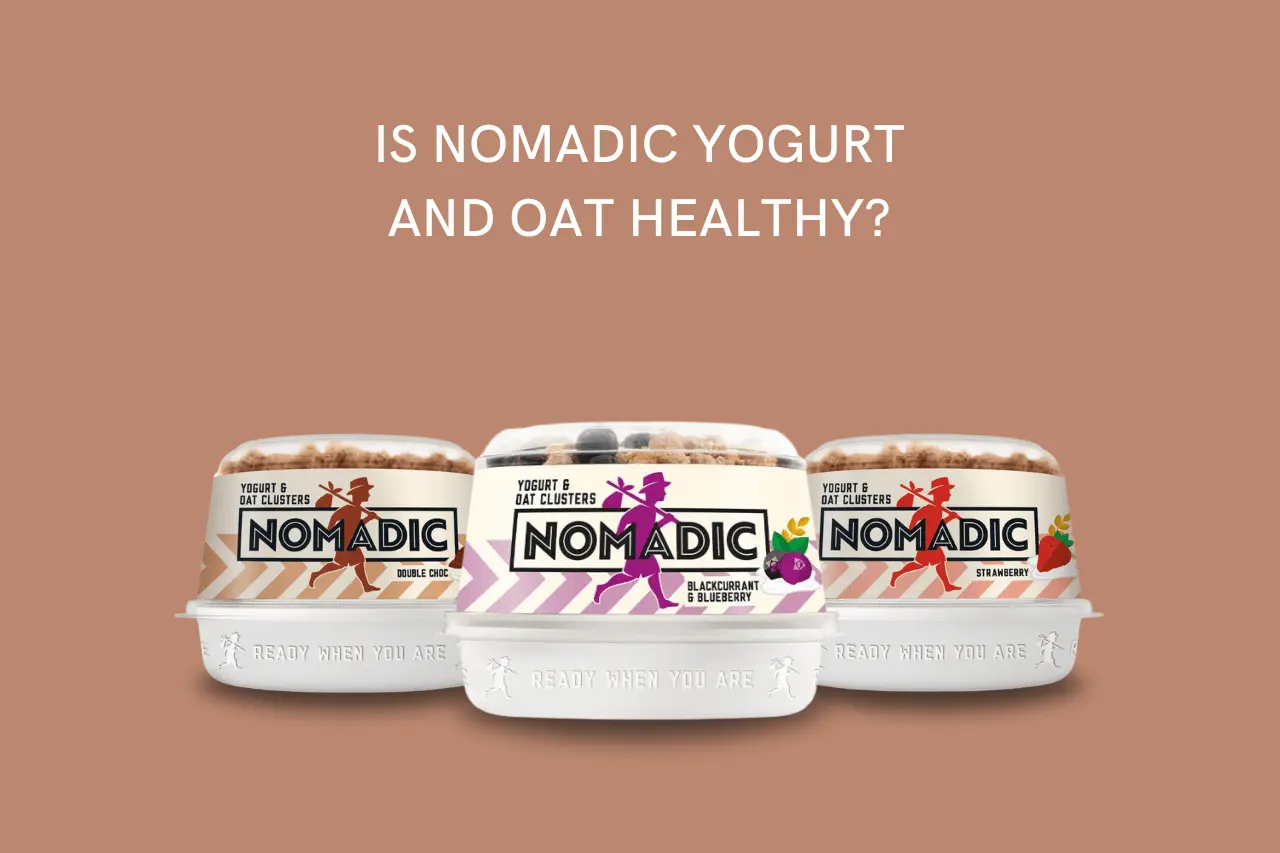
You’re rushing through the breakfast aisle when those colorful pots catch your eye. Nomadic yogurt and oat clusters—yogurt on the bottom, crunchy oat clusters on top. Strawberry. Double chocolate. Raspberry fudge.
They look perfect for your morning routine. Yogurt is healthy, right? Oats are good for you. And that satisfying crunch when you mix them together? Chef’s kiss.
But here’s the nagging question: Is Nomadic actually healthy, or is this just dessert disguised as breakfast?
You’re not alone in wondering. These yogurt pots have become insanely popular as grab-and-go breakfast options. They’re positioned as a nutritious way to start your day—protein-packed yogurt meets fiber-rich oats.
But when you look at that nutrition label—especially the sugar content—the “healthy breakfast” image starts to crumble like those oat clusters.
The truth? Nomadic yogurt pots are basically sweetened yogurt with sugary granola. They’re more convenient than unhealthy, but they’re definitely not the nutritious breakfast they’re marketed to be.
In this review, I’ll break down exactly what’s in Nomadic, how much sugar you’re really eating, and whether these convenient pots deserve a spot in your morning routine.
What Exactly Is Nomadic Yogurt?
Nomadic takes low-fat yogurt (about 70% of each pot) and pairs it with crunchy oat clusters (26-28% of the pot). The concept is simple: creamy yogurt on the bottom, cluster on top, mix and enjoy.
The appeal? Texture. That contrast between smooth yogurt and crunchy clusters is genuinely satisfying. It’s like eating a granola parfait without the prep work.
Popular flavors:
- Strawberry
- Double Chocolate
- Blackcurrant & Blueberry
- Chocolate & Honeycomb
- Raspberry
- Raspberry Fudge
They come in single-serve pots—perfect for throwing in your bag on busy mornings. No spoon needed (it’s attached to the lid). No prep required. Just grab and go.
Sounds ideal, right? That’s exactly what Nomadic is banking on. But convenience doesn’t automatically mean healthy.
What’s Inside: Nomadic Ingredients
Let’s talk about what you’re actually eating.
The yogurt base:
- Low-fat yogurt (makes up 70% of the pot)
- Skimmed milk powder
- Natural flavoring
The oat clusters:
- Oat flakes
- Sugar
- Rapeseed oil
- Cereal crisps (rice flour, fortified wheat flour)
- Malted barley flour
- Sunflower oil
Additional ingredients (depending on flavor):
- Desiccated coconut
- Honey
- Freeze-dried fruits
- Emulsifier (soy lecithin)
- Glucose syrup (in some flavors like chocolate & honeycomb)
What’s NOT in Nomadic:
✅ No artificial colors
✅ No artificial flavors
✅ No artificial preservatives
✅ No high fructose corn syrup
From an ingredient standpoint, Nomadic is cleaner than many processed breakfast options. The ingredient list is long, but there aren’t any major red flags.
However—and this is important—clean ingredients don’t automatically equal healthy. The problem isn’t what’s in it, it’s how much sugar you’re getting and how little fiber and protein.
The Sugar Problem: Let’s Break Down the Numbers
This is where Nomadic’s healthy breakfast image falls apart.
Complete Nomadic Nutrition Breakdown:
| Flavor | Calories | Sugar (g) | Protein (g) | Fiber (g) | Sodium (mg) |
|---|---|---|---|---|---|
| Strawberry | 173 | 11.9 | 4.8 | 2.1 | 70 |
| Double Chocolate | 181 | 11 | 5.1 | 1.5 | 70 |
| Blackcurrant & Blueberry | 175 | 11.5 | 4.7 | 2.2 | 80 |
| Chocolate & Honeycomb | 185 | 11 | 4.9 | 1.1 | 220 |
| Raspberry | 173 | 11.9 | 4.8 | 2.5 | 70 |
| Raspberry Fudge | 180 | 12.4 | 4.8 | 2.2 | 80 |
Per 100g serving
What This Actually Means:
The American Heart Association recommends:
- Men: Max 36g added sugar per day
- Women: Max 24g added sugar per day
With 11-12.4g of sugar per 100g, Nomadic delivers 33-48% of your daily sugar limit in what’s supposed to be a “healthy breakfast.”
And here’s the kicker: most people eat the entire pot (which is often 135-150g), not just 100g. So you’re looking at closer to 15-18g of sugar per pot. That’s nearly 75% of a woman’s daily limit before you’ve even had lunch.
Where does all this sugar come from?
Unlike what the marketing suggests, most of the sugar isn’t from natural fruit sources. It comes from:
- Added sugar in the oat clusters
- Glucose syrup (in some flavors)
- Honey
- The yogurt itself (which contains natural lactose, but also added sugar)
The freeze-dried fruit? That contributes very little. You’re essentially eating sweetened yogurt with sugary granola.
The Protein & Fiber Situation (Not Great)
Beyond sugar, Nomadic falls short on the nutrients that actually matter for a satisfying breakfast.
Protein: 4.7-5.1g per 100g
That’s pretty underwhelming for something marketed as a protein-rich breakfast. Compare this to:
- Plain Greek yogurt: 10g protein per 100g
- One egg: 6g protein
- A scoop of protein powder: 20-25g protein
Even if you eat an entire 150g pot of Nomadic, you’re only getting about 7g of protein. That won’t keep you full until lunch.
Fiber: 1.1-2.5g per 100g
This is pathetic for something that prominently features oats—a fiber-rich ingredient. Compare this to:
- A bowl of porridge: 4g fiber
- One medium apple: 4g fiber
- A serving of actual granola: 3-4g fiber
Why is the fiber so low? Because yogurt makes up 70% of each pot, and dairy contains zero fiber. The small amount of oat clusters (26-28%) just isn’t enough to boost fiber levels significantly.
The bottom line: Without adequate protein or fiber, Nomadic won’t satisfy your hunger. You’ll eat it, feel hungry again within an hour, and reach for more food. That’s not how a proper breakfast should work.
Are Nomadic Yogurts Good for Weight Loss? (Not Really)
If you’re trying to lose weight, Nomadic isn’t helping your cause.
Why it’s problematic for weight loss:
❌ High sugar content triggers insulin spikes and promotes fat storage
❌ Low satiety – minimal protein and fiber means you won’t feel full
❌ Easy to underestimate – feels like “just yogurt” but has candy-level sugar
❌ Displaces better breakfasts – you could be eating something actually nutritious
❌ Not filling enough – you’ll need additional food to feel satisfied
The calorie perspective:
At 173-185 calories per 100g (potentially 260+ for a full pot), Nomadic isn’t terribly high in calories. But those are empty calories from sugar with minimal nutritional benefit.
The realistic take:
If you’re choosing between Nomadic and a chocolate croissant, Nomadic is the better option. You’ll save calories and get some yogurt culture benefits.
But if you’re serious about weight loss, skip Nomadic for your daily breakfast. Save it for an occasional treat (once a week max) and choose breakfasts that actually nourish you—Greek yogurt with fresh fruit and nuts, overnight oats, eggs with vegetables, or a protein smoothie.
Nomadic vs. Other Breakfast Options: How Does It Compare?
Let’s see how Nomadic stacks up against alternatives.
Nomadic vs. Chobani Flips or Muller Corner:
Almost identical nutritionally. All three are sweetened yogurt with mix-ins. All three are more dessert than breakfast. Nomadic’s oat clusters are slightly healthier than chocolate balls or cookie pieces, but not by much.
Nomadic vs. Plain Greek Yogurt with Granola:
Greek yogurt wins on protein (double the amount), and adding your own granola means you control the sugar. But it requires more effort—Nomadic wins on convenience.
Nomadic vs. Actual Porridge:
Porridge crushes Nomadic. More fiber, more protein (if made with milk), less sugar, more filling. The only thing Nomadic has going for it is convenience.
Nomadic vs. Breakfast Protein Bars:
Most protein bars have similar calories but offer 10-20g protein compared to Nomadic’s measly 5g. Better for keeping you full, though also processed.
Nomadic vs. Smoothie:
Depends on the smoothie. A protein-packed smoothie with Greek yogurt, fruit, and nut butter beats Nomadic nutritionally. But store-bought smoothies can be sugar bombs too.
Bottom line: Nomadic is better than skipping breakfast entirely, but it’s near the bottom of the “actual healthy breakfast options” list.
When Is It Okay to Eat Nomadic?
Look, I’m not saying you can never enjoy Nomadic. Sometimes you need something quick, and it tastes good. Life is about balance.
When Nomadic makes sense:
✅ Occasional breakfast when you’re genuinely rushed (1-2 times per week max)
✅ Better than a pastry or muffin when you’re grabbing something on-the-go
✅ Post-workout snack if you need quick carbs (though there are better options)
✅ Afternoon treat instead of a candy bar
✅ Travel or road trips when fresh options aren’t available
When you should skip Nomadic:
❌ Your daily breakfast routine
❌ While actively trying to lose weight
❌ If you have diabetes or blood sugar issues
❌ When you actually have time to make real breakfast
❌ As a “healthy” snack between meals
Pro tip: If you do buy Nomadic, choose flavors with higher fiber (Raspberry has 2.5g) and avoid the chocolate & honeycomb (highest sodium at 220mg).
Special Dietary Considerations
Are Nomadic yogurts gluten-free?
No. Nomadic contains wheat and barley in the oat clusters. Not suitable for celiacs or gluten-sensitive individuals. They may also contain traces of nuts, peanuts, and soya due to cross-contamination.
Are Nomadic yogurts vegan?
Absolutely not. The base is dairy yogurt, and many flavors contain milk powder and honey. Not suitable for vegans. However, they are vegetarian-friendly.
Are Nomadic yogurts keto-friendly?
No way. With 11-12g of sugar per 100g, these will kick you out of ketosis immediately. Keto dieters should avoid.
Can diabetics eat Nomadic?
Not recommended. The combination of high sugar and low fiber will spike blood sugar significantly. There are much better breakfast options for managing diabetes—plain Greek yogurt with berries, eggs, or low-sugar protein options.
Healthier Alternatives to Nomadic
If you want a quick, satisfying breakfast without the sugar bomb, try these:
1. DIY Greek Yogurt Parfait
- Full-fat Greek yogurt (high protein, keeps you full)
- Fresh berries (natural sweetness, fiber, antioxidants)
- Small handful of low-sugar granola or nuts
- Drizzle of honey if needed
2. Overnight Oats
- Mix oats with milk the night before
- Add chia seeds for extra fiber and omega-3s
- Top with fruit and a small amount of maple syrup
- Prep multiple jars for grab-and-go convenience
3. Plain Ratio Yogurt
- Higher protein than Nomadic (15-17g per serving)
- Lower sugar
- Add your own toppings for control
- For more details, check out Is Ratio Yogurt Healthy?
4. Mush Oats
- Ready-to-eat overnight oats
- Better fiber content than Nomadic
- More filling and nutritious
- Read more: Are Mush Oats Healthy?
5. Homemade Yogurt Clusters
- Buy plain yogurt and low-sugar granola separately
- Mix yourself in a container
- Control the sugar and portion sizes
- Costs less too
You can also check out yogurt options like So Delicious Yogurt, Special K Fruit and Yogurt, or Yoplait Yogurt.
Frequently Asked Questions
How many calories are in Nomadic yogurt?
173-185 calories per 100g, depending on the flavor. A full pot (typically 135-150g) contains approximately 230-280 calories.
Can I eat Nomadic yogurt every day?
Not recommended. The sugar content is too high for daily consumption. Treat it as an occasional breakfast option (1-2 times per week max), not your everyday go-to.
What’s the healthiest Nomadic flavor?
Raspberry has the highest fiber (2.5g) and moderate sugar. Avoid chocolate & honeycomb—it has the highest sodium at 220mg and lowest fiber at 1.1g.
Is Nomadic yogurt processed food?
Yes, technically. While it contains real yogurt and oats, the added sugars, oils, and stabilizers make it a processed product. However, it’s less processed than many breakfast pastries and doesn’t contain artificial additives.
Does Nomadic yogurt have probiotics?
The yogurt base likely contains some beneficial bacteria cultures, but this isn’t highlighted on the packaging. If probiotics are your goal, choose plain yogurt with “live active cultures” clearly labeled.
Can kids eat Nomadic yogurt?
It’s safe for kids, but watch the sugar content. One pot as an occasional breakfast (once or twice a week) is fine. Don’t make it a daily habit—kids need more protein and fiber for sustained energy at school.
Where can I buy Nomadic yogurt?
Nomadic is available at major UK supermarkets including Tesco, Sainsbury’s, Waitrose, and Morrisons. Look in the chilled yogurt section.
How long does Nomadic yogurt last?
Check the “use by” date on the pot. Typically, they last 2-3 weeks when refrigerated. Don’t freeze—it will ruin the texture of both the yogurt and clusters.
The Final Verdict: Are Nomadic Yogurts Healthy?
Let me be absolutely clear: No, Nomadic yogurts are not healthy.
They’re better than eating a chocolate bar or pastry for breakfast, but “better than junk food” doesn’t equal “healthy.”
The reality:
High in sugar (11-12g per 100g)
Low in protein (5g per 100g)
Low in fiber (1-2.5g per 100g)
Won’t keep you full or stabilize blood sugar
More like dessert than breakfast
However, Nomadic does have some positives:
✅ Convenient grab-and-go format
✅ Made with real yogurt and oats
✅ No artificial colors, flavors, or preservatives
✅ Lower calories than many breakfast pastries
✅ Satisfying texture combination
✅ Portion-controlled packaging
My honest recommendation:
Stop thinking of Nomadic as a “healthy breakfast.” It’s not. It’s a convenient treat that’s slightly better than stopping at a bakery.
If you love Nomadic, enjoy it occasionally (1-2 times per week) when you’re genuinely rushed and need something quick. Don’t fool yourself into eating it daily because “it has yogurt and oats.”
Save Nomadic for what it actually is: a tasty, convenient yogurt dessert. Enjoy it without guilt, but don’t pretend it’s powering your morning.
Have you tried Nomadic yogurt? What’s your favorite flavor? Share your thoughts in the comments!
Related Reviews: