
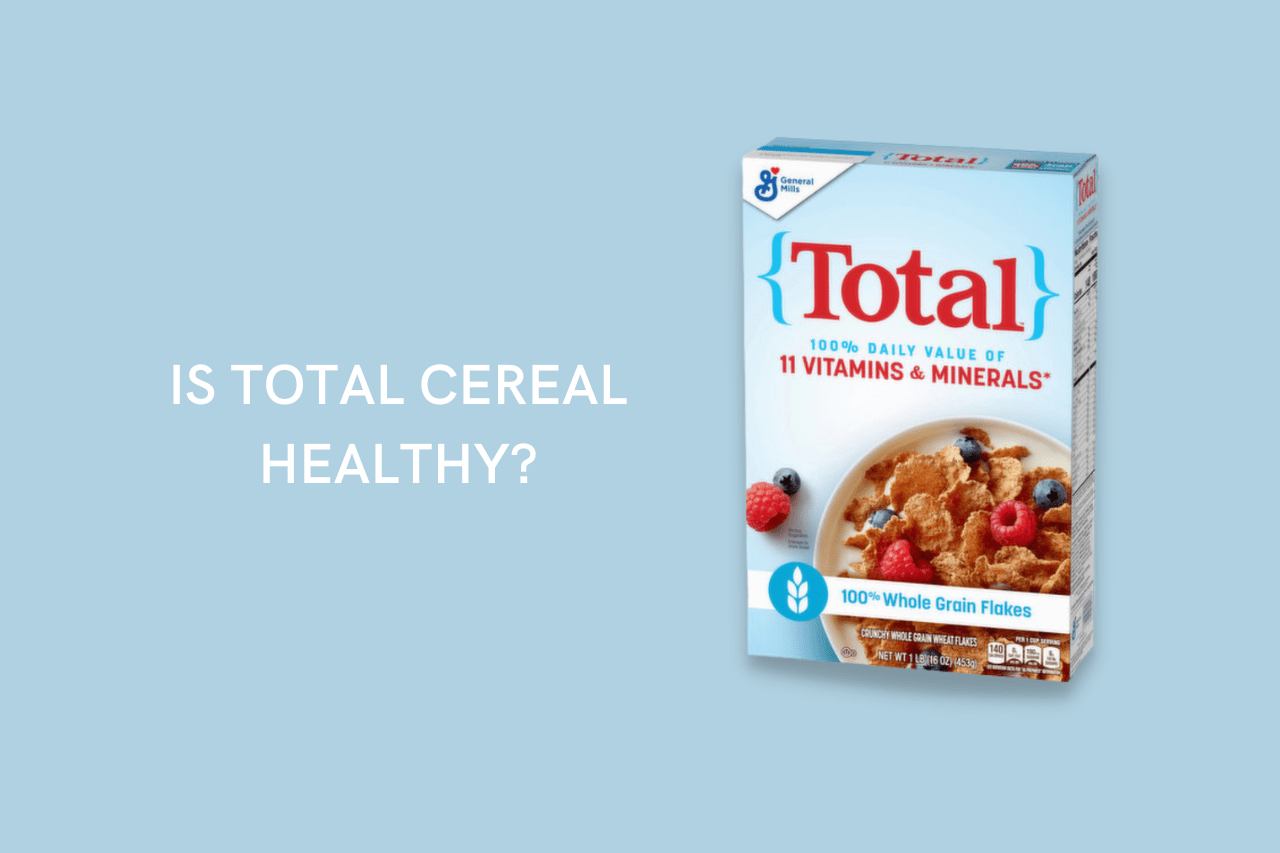
You’re standing in the cereal aisle, staring at that familiar blue box of Total cereal. The front screams “100% DAILY VALUE OF 11 ESSENTIAL VITAMINS & MINERALS!” in bold letters. Sounds impressive, right?
Your hand reaches for the box. After all, if one bowl gives you a full day’s worth of vitamins, that’s got to be healthy. It’s made with whole grains. It’s from General Mills, a trusted brand. And honestly, it tastes way better than plain oatmeal.
But then a nagging question hits you: If Total cereal is so packed with vitamins, where are they all coming from? And more importantly—is eating fortified cereal actually the same as getting nutrients from real food?
Here’s the honest truth: Total cereal is not the health food it pretends to be. Yes, it’s better than Froot Loops or Lucky Charms, but “better than sugar bombs” is a pretty low bar. The whole grain is real, but so is the processing. The vitamins are abundant, but they’re mostly synthetic. The sugar is “low,” but it’s still there.
Total cereal sits in this weird middle ground—healthier than obvious junk cereals, but nowhere near as nutritious as actual whole foods. It’s fortified processed food masquerading as a complete breakfast.
In this review, I’ll break down what’s really in Total cereal, whether those fortified vitamins actually matter, and if this breakfast staple deserves a spot in your pantry.
What Exactly Is Total Cereal?
Total cereal has been around since 1961, making it one of General Mills’ longest-running brands. It’s positioned as the “complete nutrition” cereal—the idea being that one bowl gives you everything you need to start your day.
The original Total is made from whole grain wheat flakes. Over the years, General Mills has introduced variations like Total Raisin Bran and Total Cinnamon Crunch, but the classic whole grain wheat version remains the flagship product.
What makes Total different from other cereals? The extreme fortification. While most cereals add some vitamins, Total goes all-in with 100% of your daily value for 11 different vitamins and minerals. That’s the entire marketing hook.
But here’s what they don’t advertise as loudly: it’s still processed cereal with added sugar. The “total” nutrition comes from a laboratory, not from the wheat itself.
The Fortification Question: Are Synthetic Vitamins Actually Good for You?
Let’s address the elephant in the cereal bowl: Total’s vitamin content is almost entirely synthetic. These aren’t vitamins naturally present in wheat—they’re manufactured nutrients sprayed onto the flakes during processing.
So what does that mean for your health?
Here’s the reality: synthetic vitamins are not the same as vitamins from whole foods. While your body can absorb and use them, food-based nutrients come packaged with cofactors, enzymes, and other compounds that help your body actually utilize them effectively.
For example, the iron in Total is ferric orthophosphate—a synthetic form that’s harder for your body to absorb than the heme iron found in meat or the non-heme iron in beans and spinach.
The vitamin C is ascorbic acid (synthetic), not the vitamin C complex you’d get from an orange. The B vitamins are isolated compounds, not the full spectrum you’d find in whole grains that haven’t been processed.
Does that mean fortified cereals are useless? Not exactly. If you’re severely deficient in certain nutrients, fortification can help. But if you’re eating a reasonably balanced diet, you don’t need 100% of your daily vitamins from cereal. You’re just making expensive urine as your body flushes out what it can’t use.
The bigger question: Why does Total need so much fortification in the first place? Because processing strips away many of the natural nutrients from the whole grain. Then they add synthetic versions back in and call it “complete nutrition.”
It’s like taking apart a car, selling the parts, and then gluing together a cardboard cutout and calling it transportation.
What’s Actually Inside Total Cereal?
Let’s look at what you’re really eating when you pour a bowl of Total.
Total Cereal Nutrition (per 40g serving):
- Calories: 140
- Carbohydrates: 33g
- Sugar: 5-6g
- Added Sugar: 5-6g
- Fat: 1g
- Protein: 3g
- Fiber: 4g
- Sodium: 190mg
- Iron: 18mg (200% DV for men, 120% DV for women)
- Calcium: 40mg (4% DV)
Vitamins at 100% Daily Value: Vitamin A, C, D, E, B1, B2, B3, B5, B6, B9, B12
Key Ingredients:
- Whole Grain Wheat (the base)
- Sugar (second ingredient)
- Corn Syrup (more sugar)
- Salt
- Monoglycerides (emulsifier)
- BHT (preservative)
- Annatto Extract (natural coloring)
- A long list of synthetic vitamins and minerals
What’s NOT in Total:
- No artificial colors
- No artificial flavors
- No high fructose corn syrup
- No hydrogenated oils
From an ingredients perspective, Total is cleaner than many cereals. The whole grain wheat is legitimately the first ingredient. There are no sketchy artificial additives. BHT is present but in trace amounts that aren’t concerning.
But let’s be real—this is still heavily processed food. The wheat has been stripped down, flaked, toasted, and sprayed with synthetic nutrients. That’s not the same as eating actual whole grains.
The Sugar Reality: Is 5-6g Actually “Low”?
Total cereal contains 5-6g of sugar per 40g serving. In the cereal world, this is considered low. Cereals with 5g or less are typically labeled “low sugar.”
But let’s put that in perspective:
American Heart Association recommends:
- Men: Max 36g added sugar per day
- Women: Max 24g added sugar per day
One serving of Total = 14-17% of your daily sugar limit (for men) or 21-25% (for women). And that’s before you add milk, fruit, or anything else.
Is that terrible? No. It’s definitely better than:
- Frosted Flakes: 12g sugar
- Honey Nut Cheerios: 12g sugar
- Raisin Bran: 18g sugar
The sugar in Total comes from added sugar and corn syrup—not from the wheat. This is pure sweetness to make the flakes more palatable.
Here’s the problem: even “low sugar” cereal conditions your palate to expect sweetness at breakfast. You’re training yourself to want sugar first thing in the morning, which can lead to cravings and energy crashes later.
The Fiber & Protein Problem: Will Total Actually Fill You Up?
Total cereal has 4g of fiber and 3g of protein per serving. On paper, that sounds okay. But let’s compare this to what your body actually needs.
Fiber: 4g
This isn’t bad for a cereal, but it’s nothing special. Compare this to:
- A cup of cooked oatmeal: 4g fiber (same amount, but from whole oats)
- A cup of raspberries: 8g fiber
- Two tablespoons of chia seeds: 10g fiber
- Fiber One cereal: 14g fiber
Total’s fiber comes from the whole grain wheat, which is good. But 4g won’t keep you full for long, especially when paired with only 3g of protein.
Protein: 3g
This is pathetic. Three grams of protein does almost nothing for satiety or muscle maintenance. Compare this to:
- Two eggs: 12g protein
- Greek yogurt (1 cup): 15-20g protein
- Protein oatmeal: 10-15g protein
Without adequate protein, Total won’t keep you satisfied. You’ll eat your bowl at 7 AM, feel hungry by 9 AM, and reach for a snack. That’s not how a healthy breakfast should work.
The combination of low protein + moderate fiber + added sugar = blood sugar spike followed by a crash. You’ll get a quick energy boost, then feel tired and hungry within a couple of hours.
If you’re serious about feeling full and energized all morning, Total isn’t the answer.
The Vitamin Overdose Question: Can You Have Too Much?
Here’s where Total gets weird. One serving gives you 100% of the daily value for 11 vitamins. Some, like iron, go way over—200% for men, 120% for women.
Is that safe? And more importantly, do you even need it?
The iron situation:
Most adult men don’t need extra iron. In fact, excessive iron intake can be problematic, potentially increasing oxidative stress and inflammation. The 18mg in Total is way more than most men need.
For women—especially those who are menstruating or pregnant—extra iron can be beneficial. But 18mg from cereal alone, plus iron from other fortified foods and supplements, can add up quickly.
The vitamin overload:
If you eat a bowl of Total, then have a fortified energy bar, a multivitamin, and other fortified foods throughout the day, you’re getting way more than 100% of many nutrients.
For water-soluble vitamins like B and C, your body just pees out the excess. You’re literally flushing money down the toilet.
For fat-soluble vitamins like A, D, and E, excessive intake can accumulate in your body and potentially cause issues over time.
The honest truth: If you’re eating a reasonably balanced diet with fruits, vegetables, whole grains, and protein, you don’t need Total’s vitamin mega-dose. The fortification is overkill.
Total cereal isn’t designed for people eating healthy, varied diets. It’s designed for people who eat processed food all day and need their nutrients from somewhere.
Total Cereal vs. Other “Healthy” Cereals
Let’s see how Total stacks up against other cereals marketed as healthy options.
Total vs. Cheerios:
- Cheerios: 1g sugar, 3g fiber, 3g protein
- Total: 6g sugar, 4g fiber, 3g protein
Winner: Cheerios for lower sugar. Both are similar otherwise.
Total vs. Special K:
- Special K: 4g sugar, 3g fiber, 6g protein
- Total: 6g sugar, 4g fiber, 3g protein
Winner: Special K for double the protein and less sugar.
Total vs. Fiber One:
- Fiber One: 0g sugar, 14g fiber, 4g protein
- Total: 6g sugar, 4g fiber, 3g protein
Winner: Fiber One, hands down. Way more fiber, no sugar.
Total vs. Grape-Nuts:
- Grape-Nuts: 5g sugar, 7g fiber, 6g protein
- Total: 6g sugar, 4g fiber, 3g protein
Winner: Grape-Nuts. More fiber, more protein, similar sugar.
Total vs. Plain Oatmeal:
- Oatmeal: 0g sugar, 4g fiber, 5g protein (can add your own toppings)
- Total: 6g sugar, 4g fiber, 3g protein
Winner: Oatmeal. Complete control over sugar, more protein, less processed.
Bottom line: Total is middle-of-the-pack. It’s healthier than sugary cereals, but there are better options if you actually care about nutrition.
Is Total Cereal Good for Weight Loss?
Let me be blunt: Total cereal is not a great choice for weight loss.
Here’s why:
Low satiety: With only 3g of protein and 4g of fiber, Total won’t keep you full. You’ll be hungry again in 2 hours and eat more calories throughout the day.
Sugar content: Even though 6g seems low, it’s still added sugar that spikes your blood sugar and can trigger cravings.
Easy to overeat: One serving is only 40g (about 1 cup). Most people pour 1.5-2 cups, unknowingly doubling their sugar and calorie intake.
Not filling: Because it’s mostly carbs with minimal protein, your body processes it quickly. No lasting energy or satisfaction.
Displaces better options: Every bowl of Total is a missed opportunity to eat eggs, Greek yogurt, or oatmeal—all of which are far better for weight loss.
The calorie perspective:
At 140 calories per serving, Total isn’t high in calories. But calories aren’t the whole story. Those 140 calories don’t provide the satiety, protein, or sustained energy you’d get from 140 calories of eggs or Greek yogurt.
The realistic take:
If you’re trying to lose weight, choose breakfasts that are:
- High in protein (15-30g)
- Rich in fiber (8-10g minimum)
- Low in added sugar (0-3g)
- Satisfying enough to keep you full until lunch
Total checks none of these boxes.
Save Total for rare occasions (once a week max) if you genuinely enjoy it, but don’t rely on it as a weight-loss breakfast.
Special Dietary Considerations
Is Total cereal gluten-free?
No. Total is made from whole grain wheat, which contains gluten. If you have celiac disease or gluten sensitivity, avoid Total entirely.
Is Total cereal vegan?
Yes, Total cereal is vegan. It contains no animal-derived ingredients—no milk, eggs, or honey.
However, Total does contain bioengineered (GMO) ingredients, which some vegans avoid for ethical or environmental reasons. But GMO ≠ non-vegan. The cereal itself is plant-based.
Can diabetics eat Total cereal?
Total isn’t ideal for diabetics, but it’s not the worst option either.
The 6g of sugar will raise blood sugar, but the 4g of fiber helps slow absorption somewhat. The problem is the low protein—without protein to stabilize blood sugar, you’ll likely see a spike.
If you’re diabetic and love cereal, better options include:
- Fiber One (0g sugar, 14g fiber)
- Plain Cheerios (1g sugar)
- Unsweetened muesli
Or better yet, skip cereal altogether and choose eggs, Greek yogurt, or low-carb oatmeal alternatives.
Is Total cereal keto-friendly?
Absolutely not. With 33g of carbs per serving, Total will kick you out of ketosis immediately. Keto dieters need to avoid all grain-based cereals.
Is Total cereal good for kids?
It’s better than Froot Loops, but that’s a low bar. Total has added sugar, synthetic vitamins, and won’t keep kids full or focused at school.
Better breakfast options for kids:
- Scrambled eggs with veggies
- Greek yogurt with berries
- Whole grain toast with peanut butter
- Oatmeal with fruit and nuts
If your kid insists on cereal, Total is an acceptable compromise 1-2 times per week. Just don’t fool yourself into thinking it’s a nutritious breakfast.
Healthier Alternatives to Total Cereal
If you want a genuinely healthy breakfast, skip Total and try these instead:
1. Steel-Cut Oatmeal
Cook with water or milk, add berries, nuts, and a touch of honey. High fiber, filling, and you control the sugar.
2. Greek Yogurt Bowl
Plain Greek yogurt (15-20g protein) with fresh fruit, granola, and a drizzle of honey. Protein-packed and satisfying.
3. Scrambled Eggs with Veggies
Two eggs (12g protein) with spinach, tomatoes, and avocado. Keeps you full for hours.
4. Protein Oatmeal
Oats cooked with protein powder or mixed with Greek yogurt. High protein, high fiber, genuinely filling.
5. Homemade Muesli
Mix raw oats, nuts, seeds, and dried fruit. Soak overnight in milk or yogurt. No added sugar, tons of nutrients.
6. Smoothie Bowl
Blend frozen fruit, spinach, protein powder, and milk. Top with granola, nuts, and seeds. Nutrient-dense and delicious.
For more breakfast cereals, check out options like Coco Pops, Reese’s Puffs, or Premier Protein Cereal.
Frequently Asked Questions
How many calories are in Total cereal?
Total cereal contains 140 calories per 40g serving (about 1 cup).
Can I eat Total cereal every day?
Not recommended. The added sugar and synthetic vitamin overload aren’t ideal for daily consumption. Treat it as an occasional breakfast (1-2 times per week max), not a daily staple.
Is Total cereal processed food?
Yes. Despite being made from whole grain wheat, Total is heavily processed. The wheat is refined into flakes, sweetened with sugar and corn syrup, and fortified with synthetic vitamins. It’s cleaner than many cereals, but it’s still processed.
What’s the healthiest Total cereal?
The original whole grain wheat Total is the best option. Avoid the sweetened varieties like Total Cinnamon Crunch, which have significantly more sugar.
Does Total cereal have real whole grains?
Yes, Total is made from 100% whole grain wheat. However, the processing reduces the nutritional value compared to eating actual whole grains like steel-cut oats or quinoa.
Where can I buy Total cereal?
Total cereal is sold at most major grocery stores, including Walmart, Target, Kroger, Safeway, and online at Amazon.
How should I store Total cereal?
Keep it in a cool, dry place in an airtight container after opening. It stays fresh for several months but tastes best within a few weeks of opening.
Is the iron in Total cereal too much?
For adult men, yes—18mg is 200% of the daily value, which is excessive. For menstruating women or pregnant women, it’s more beneficial but still high. If you take a multivitamin or eat other fortified foods, you could be getting too much iron.
The Final Verdict: Is Total Cereal Healthy?
Let me be absolutely clear: No, Total cereal is not healthy.
It’s better than eating Cap’n Crunch or Frosted Flakes, but “better than sugar bombs” doesn’t make it a health food.
The reality:
- Heavily processed food with synthetic vitamins
- Added sugar in every serving
- Low protein and moderate fiber won’t keep you full
- The fortification is marketing, not meaningful nutrition
- You’re better off eating actual whole grains and real food
However, Total does have some positives:
✅ Made with 100% whole grain wheat (not refined flour)
✅ Lower sugar than most cereals (5-6g vs. 12-18g)
✅ No artificial colors, flavors, or preservatives
✅ Decent fiber content (4g)
✅ Convenient and shelf-stable
My honest recommendation:
Stop thinking of Total as a “healthy breakfast.” It’s not. It’s a processed cereal that’s less bad than the worst options.
If you love Total, enjoy it 1-2 times per week as a quick breakfast when you’re short on time. But don’t make it your daily go-to.
For everyday breakfasts, choose foods that actually nourish your body:
- Eggs with vegetables
- Greek yogurt with fruit and nuts
- Oatmeal with berries and nut butter
- Smoothies with protein and greens
Save Total for when you want the convenience and nostalgia, and eat it without guilt—just don’t fool yourself into thinking it’s fueling your body optimally.
The “100% daily vitamins” promise sounds impressive, but synthetic nutrients sprayed on processed wheat flakes will never replace real, whole foods.
Have you tried Total cereal? Do you think it’s worth the hype? Share your thoughts in the comments!
Related Cereal Reviews:
- Are Coco Pops Healthy? The Truth
- Is Premier Protein Cereal Healthy? Here’s the Answer
- Is Reese’s Puffs Healthy? The Truth
- Is Grain Berry Cereal Healthy? Honest Review
- Is Krave Cereal Healthy? Everything You Need to Know
- Is Morning Summit Cereal Healthy? The Truth
- Is Honeycomb Cereal Healthy? Here’s the Answer
- Is Coco Wheats Healthy? The Surprising Truth
- Is Great Grains Cereal Healthy? Honest Review